
Why is aluminum hydroxide added to artificial marble and artificial quartz stone?
November 21, 2025 by Lee On
You want your artificial stone countertops to be beautiful, strong, and safe. But the secret to achieving all three isn’t just the resin. It comes down to the filler.
Aluminum hydroxide is added as a key filler to significantly improve the stone’s performance. It increases hardness and wear resistance, provides excellent fire retardancy, and enhances the appearance with high whiteness and a smooth finish. It is a multi-functional and cost-effective choice for manufacturers.
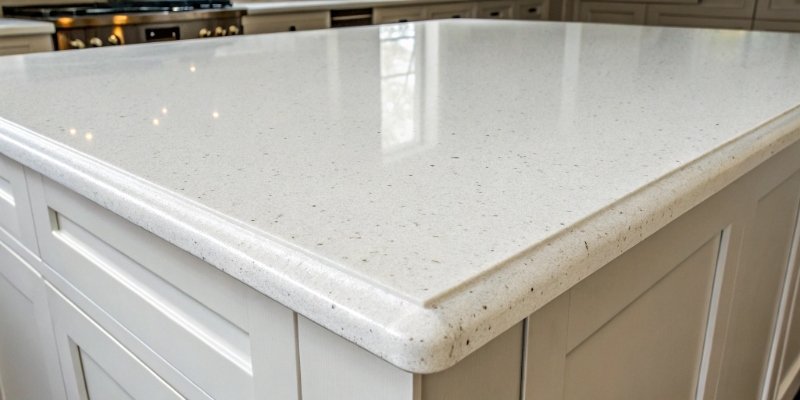
From my experience in production, I know that making a quality product is all about balance. You need the right ingredients in the right amounts. For artificial stone, aluminum hydroxide is not just a simple filler1; it is a performance-enhancing material. It transforms a basic resin block into a durable and elegant surface. I have seen how its properties directly impact the final product’s quality, from the factory floor to a customer’s kitchen. Let’s look deeper into why this one ingredient is so important.
Is aluminum hydroxide harmful to humans?
When you hear the word "chemical," it is natural to worry about safety, especially for things inside your home. You might think an industrial ingredient is automatically unsafe. But aluminum hydroxide is surprisingly stable and safe.
No, aluminum hydroxide is not considered harmful in its solid form inside products like countertops. It is a very stable and non-toxic compound. In fact, its purified forms are even used in common medicines like antacids, which proves its safety for human contact.
As someone who comes from the pharmaceutical industry, Mr. Park, you understand the difference between industrial-grade and pharmaceutical-grade materials. The same principle applies here. The aluminum hydroxide we use in artificial stone is very different from the purified gel in medicine, but its basic chemical nature is the same: it is inert and stable. It is not something that will leach out of your countertop.
Locked in the Matrix
In an artificial stone slab, the aluminum hydroxide particles are not loose. They are physically locked within a hard resin matrix. Think of it like fruit inside a jell-o. The fruit is suspended and held in place. Similarly, the aluminum hydroxide powder is fully encapsulated by the polyester resin. It doesn’t become airborne or dissolve into your food. It simply stays put, providing strength and fire resistance.
Safe Decomposition
One of its biggest safety features is how it reacts to fire. When heated to over 200°C, aluminum hydroxide begins to break down. But its breakdown products are completely harmless. It releases water vapor (H₂O) and turns into aluminum oxide (Al₂O₃), a stable ceramic material. The water vapor helps to cool the surface and dilute oxygen, which stops the fire from spreading. There are no toxic fumes. It is one of the most effective and safest flame retardants available.
What is artificial marble made of?
You see beautiful artificial marble everywhere, from hotel lobbies to kitchen islands. But have you ever wondered what is actually inside it? The recipe is quite simple, but the role of each component is very important.
Artificial marble is a composite material. It is mainly made of a binder, which is usually a resin, and a filler, which is very often aluminum hydroxide. Pigments are then added to create the colors and patterns that mimic natural marble.
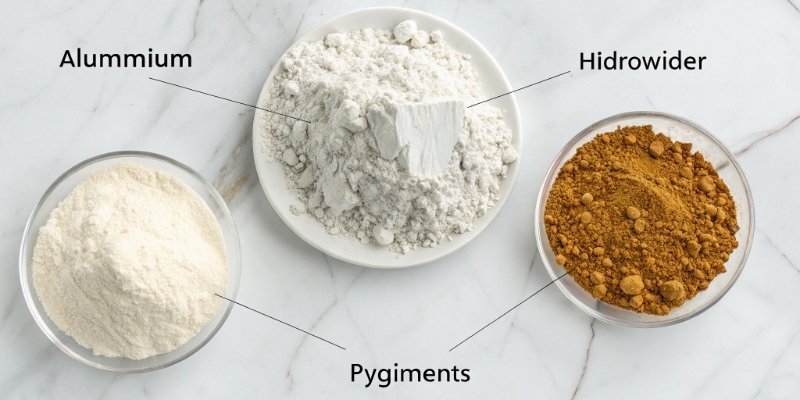
In my factory, we handle these raw materials every day. The quality of the final slab depends completely on the quality and ratio of these ingredients. Using high-purity, fine-particle aluminum hydroxide2 is key to achieving a premium look and feel. A poor-quality filler results in a product that looks dull, stains easily, and may not have good strength. That is why sourcing the right filler is so critical for manufacturers.
The Core Components
The makeup of artificial stone is straightforward. Each part has a specific job.
| Component | Common Material | Main Function |
|---|---|---|
| Binder | Unsaturated Polyester Resin | Acts as the glue, holding all the ingredients together. |
| Filler | Aluminum Hydroxide (ATH) | Adds hardness, fire safety, whiteness, and cuts costs. |
| Coloring Agents | Various inorganic pigments | Provide the color and veining to look like natural stone. |
| Additives/Accelerators | Special chemical agents | Help the resin cure properly and quickly. |
The most important relationship is between the resin and the filler. Aluminum hydroxide can make up over 60% of the total weight. This is important for two reasons. First, it gives the stone its desirable properties. Second, aluminum hydroxide is less expensive than resin, so using it as a filler helps to control the final production cost. For a buyer like you, this means you can get a high-performance material at a more competitive price.
What is Aluminium hydroxide gel used for?
You know aluminum hydroxide as a filler for stone. But its uses are much wider, especially when it is processed into different forms. One very common and important form is a gel used in medicine.
Aluminum hydroxide gel is widely used as an antacid to relieve heartburn, acid indigestion, and upset stomachs. It works by neutralizing excess stomach acid. It is also used in some vaccines as an adjuvant to help improve the body’s immune response.
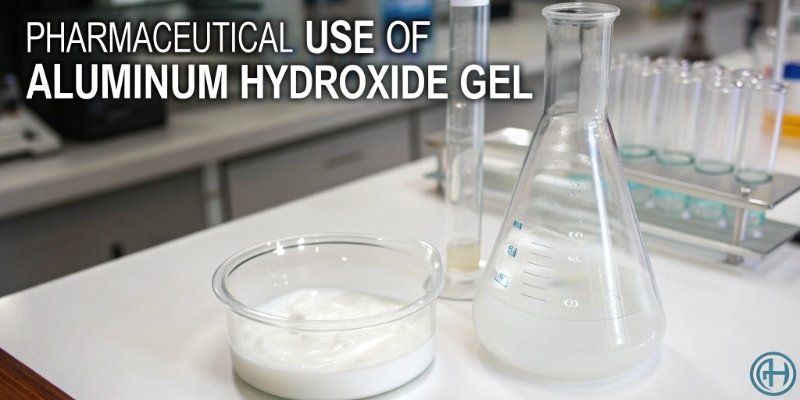
I find this fascinating. The same basic compound we use to make countertops stronger is also used to make people feel better. Of course, the production process and purity levels are worlds apart. Pharmaceutical-grade aluminum hydroxide gel3 is produced under extremely strict, sterile conditions. But its use in medicine, a field you know well, really shows how safe and stable the core chemical is. It’s a testament to the material’s benign nature.
How it Works in Medicine
The functions of aluminum hydroxide gel are based on its chemical properties.
1. As an Antacid
Your stomach produces hydrochloric acid (HCl) to digest food. Too much acid causes heartburn. Aluminum hydroxide is a base, so it neutralizes the acid. The chemical reaction is simple: Al(OH)₃ + 3HCl → AlCl₃ + 3H₂O. It turns the strong acid into harmless aluminum chloride and water. This provides fast relief.
2. As a Vaccine Adjuvant
This is a more complex role. In some vaccines, aluminum hydroxide is added as an "adjuvant." It helps to stimulate a stronger immune response to the vaccine. Essentially, it helps the body "notice" the vaccine better, so your immune system builds more effective, long-lasting protection. It improves the vaccine’s power without being a part of the vaccine’s active ingredient. This shows its utility in even the most advanced medical applications.
Why is aluminum hydroxide in makeup?
You might check the ingredient list on your foundation or face powder. It can be surprising to see a familiar name from the construction materials industry. But yes, aluminum hydroxide plays a key role in many cosmetic products.
In makeup, aluminum hydroxide is used for several reasons. It can act as a coloring agent, an opacifying agent to reduce transparency, and a skin protectant. Its fine particle size and high whiteness help create smooth, evenly-colored cosmetic products.
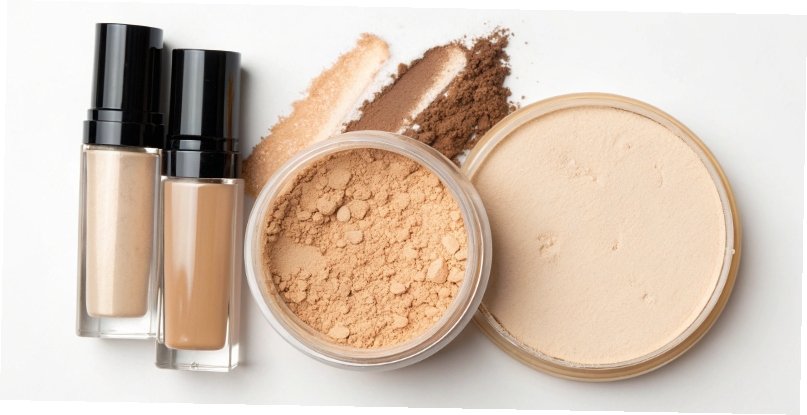
The versatility of this material always amazes me. We produce it in large quantities for industrial applications, but with further processing, it can be refined for personal care products. This requires grinding the particles to be extremely fine and ensuring very high purity. Its presence in makeup again highlights its safety. You would not put something on your face if it were not safe for skin contact.
Its Roles in Cosmetics
Aluminum hydroxide is a true multi-tasker in the cosmetics world.
1. Opacifier and Colorant
Foundations and concealers are designed to provide coverage. They need to be opaque, meaning not see-through. Aluminum hydroxide is a white powder that helps block light, creating this opacity. It provides a neutral white base that can then be tinted with other pigments to create the perfect skin-tone shade.
2. Pigment Coating
Many colored pigments used in cosmetics, like iron oxides or titanium dioxide, can clump together. This results in a streaky or uneven application. Aluminum hydroxide is often used to coat these pigment particles. This coating helps them disperse evenly in the product formula and glide smoothly onto the skin. It improves the texture and feel of the makeup, making it feel silky instead of chalky. This is a very technical application that greatly improves product quality.
Conclusion
In short, aluminum hydroxide is a key, versatile filler. It makes artificial stone strong, fire-safe, and beautiful, while also helping manufacturers control costs. It is an ideal and proven material.

You may also be interested in:

What protective measures should be taken when handling aluminum hydroxide powder in a factory?
Are you worried about worker safety when handling fine powders? Aluminum hydroxide is generally safe, but mishandling its dust can lead to serious respiratory issues and even create explosive conditions.

What Key Technical Indicators Should Be Considered When Purchasing Aluminum Hydroxide?
Are you struggling to find the right aluminum hydroxide for your needs? You might be paying for features you don’t even require. Let’s simplify the technical details. When buying aluminum

What are the market trends for aluminum hydroxide in 2026?
Are you planning your 2026 raw material purchases? Volatile markets make it hard. I will share insights from the factory floor to help you make better decisions for your business.
Is aluminum hydroxide toxic and is it harmful to the human body?
Worried about the word "aluminum" in your products? It sounds scary and can make you question its safety. I’m here to clear up the confusion with simple facts. Aluminum hydroxide

What are the side effects of long-term use of stomach medications containing aluminum hydroxide?
Struggling with constant heartburn? Reaching for that stomach medicine might seem like the only option. But what if that relief comes with hidden long-term costs? The most common side effect

Does ingesting aluminum (such as through aluminum hydroxide) cause Alzheimer's disease?
Are you worried that everyday products containing aluminum might be harmful? This fear connects to serious health concerns like Alzheimer’s, making you question what is safe. Let’s look closely. Based

Why do some vaccines contain aluminum hydroxide (aluminum adjuvant)?
Confused about vaccine ingredients? Seeing aluminum hydroxide listed can be unsettling. I’ll explain its crucial role and why it’s there to help your body build strong immunity. Aluminum hydroxide acts

Is the aluminum adjuvant in vaccines safe for infants or adults?
You read about vaccine ingredients and worry. The word "aluminum" sounds scary, especially when talking about babies. But understanding the facts can give you peace of mind. Yes, the aluminum

What environmental problems are generated during the production of aluminum hydroxide?
Worried about environmental compliance in your supply chain? Sourcing from China can be complex. You need a reliable, eco-conscious partner for your aluminum hydroxide needs. The main environmental issue is

Where are China's main aluminum hydroxide production areas?
Are you struggling to find the right aluminum hydroxide supplier in China? This confusion can lead to higher costs and unstable quality, which hurts your business and your reputation. China’s