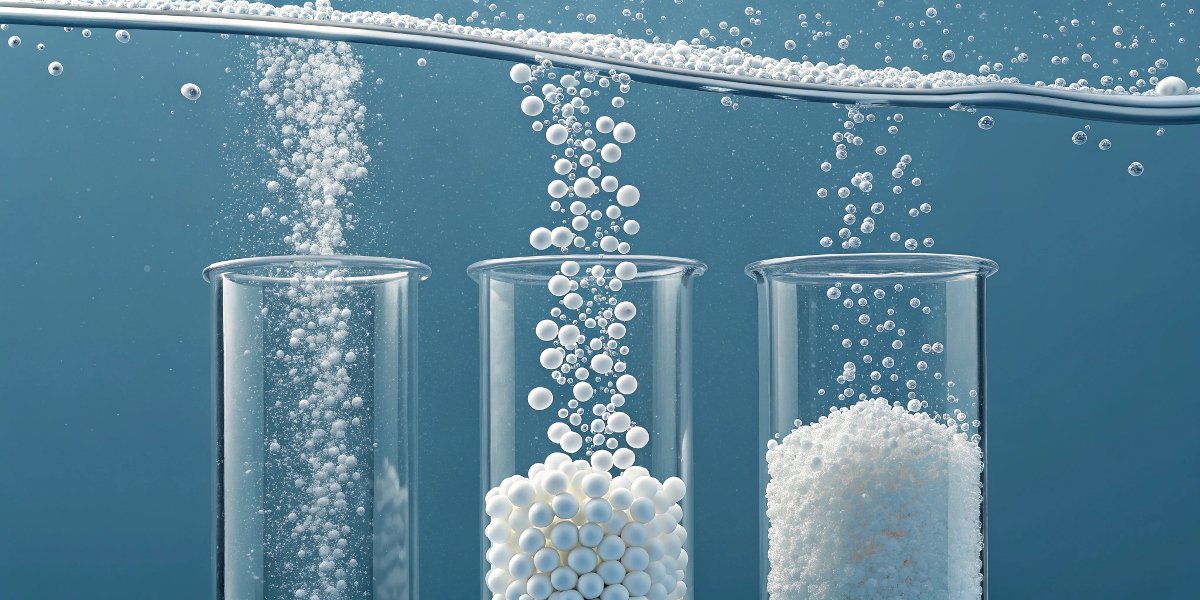
You expect a simple chemical compound to dissolve easily in water, but aluminum hydroxide just sits there as a powder. This can ruin your entire formulation, causing clumps, blockages, and inconsistent products.
Aluminum hydroxide is insoluble because the energy needed to break its powerful internal bonds is far greater than the energy water can provide. Its crystal structure is locked tight by strong ionic forces and an extensive network of hydrogen bonds.
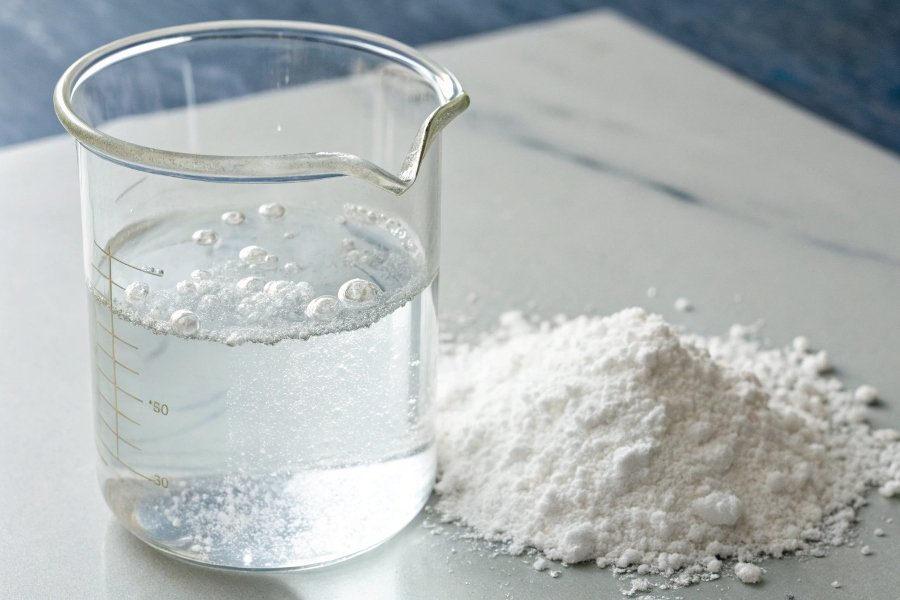
This question seems simple, but the answer is at the core of how our product works. At my factory, we produce thousands of tons of this white powder. New customers often ask me why it doesn’t dissolve. They are used to working with salts that disappear in water instantly. Explaining this property is crucial. For a buyer like Mr. Park in Korea, understanding this insolubility is key to knowing why it’s a slow-acting antacid or a stable flame retardant1. Let’s explore why this happens.
Is Al(OH)₃ insoluble in water?
You’re trying to create a mixture and need a clear answer on solubility. Some technical sheets say "insoluble," while others say "slightly soluble," leaving you unsure of what to expect.
Yes, for all practical purposes, aluminum hydroxide, Al(OH)₃, is classified as insoluble in water. While a microscopic, almost undetectable amount does dissolve, the quantity is so small that it is considered a non-soluble compound in chemistry.
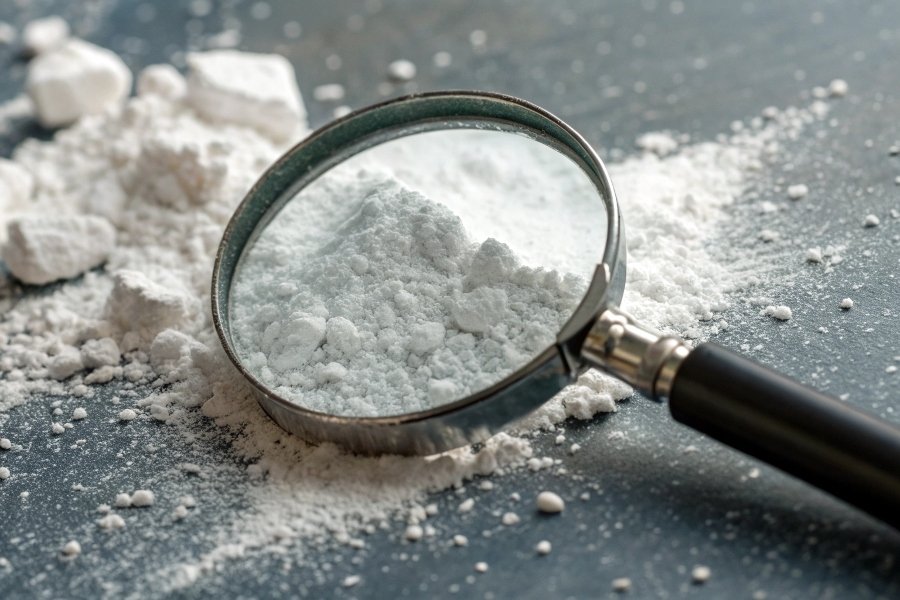
The term "insoluble" can be a bit confusing. In a strict academic sense, no ionic compound is 100% insoluble. A few ions will always break away and enter the water. However, for aluminum hydroxide, that number is incredibly small. We measure this using a value called the solubility product constant2, or Ksp3. The Ksp for Al(OH)₃ is about 3 x 10⁻³⁴. This is a scientific way of saying the number is practically zero. So, when you add our aluminum hydroxide to water, it will remain a solid suspension of fine particles rather than a clear solution. This insolubility is actually a feature, not a bug. In medicine, it allows the antacid to work slowly and for a longer time. In plastics, it ensures the flame retardant stays evenly distributed within the material.
A Practical Guide to Solubility
| Solubility Category | Description | Example |
|---|---|---|
| Soluble | Easily dissolves to form a clear solution. | Table Salt (NaCl) |
| Slightly Soluble | A small but noticeable amount dissolves. | Calcium Sulfate |
| Insoluble | A negligible amount dissolves; remains a solid. | Aluminum Hydroxide |
What is the solubility of Al(OH)₃ in water?
Simply knowing it’s "insoluble" isn’t enough for your technical calculations. You need specific data to design a process or predict chemical behavior, and a vague term isn’t useful.
The specific solubility of Al(OH)₃ in pure, neutral water is extremely low, around 0.00015 grams per liter. However, this value changes dramatically depending on the pH, increasing significantly in strongly acidic or strongly basic solutions.

Solubility is not a fixed number; it’s a variable. While aluminum hydroxide barely dissolves in neutral water (pH 7), its behavior changes completely when the environment becomes acidic or basic. This is because Al(OH)₃ is amphoteric—it can react with both acids and bases.
- In Acid (Low pH): If you add a strong acid like HCl, the Al(OH)₃ will act as a base and dissolve to form soluble aluminum ions (Al³⁺).
- In Base (High pH): If you add a strong base like NaOH, the Al(OH)₃ will act as an acid and dissolve to form soluble aluminate ions ([Al(OH)₄]⁻).
This is why it’s at its least soluble point in neutral water. I remember a customer in the water treatment industry who was using our product to capture impurities. They were confused why it wasn’t dissolving. I explained that its insolubility at neutral pH4 is what makes it work; it acts as a solid surface to which impurities can stick, and then it can be easily filtered out.
Solubility at Different pH Levels
| pH Condition | Al(OH)₃ Behavior | Solubility |
|---|---|---|
| Strongly Acidic (pH < 4) | Acts as a Base | High |
| Neutral (pH ≈ 7) | Insoluble | Very Low |
| Strongly Basic (pH > 10) | Acts as an Acid | High |
Is Al(NO₃)₃ soluble or insoluble in water?
You see the aluminum "Al" and might assume aluminum nitrate, Al(NO₃)₃, is also insoluble like aluminum hydroxide. This assumption can lead to costly mistakes in your experiments or production processes.
Aluminum nitrate, Al(NO₃)₃, is very soluble in water. This is completely different from aluminum hydroxide. The general rule in chemistry is that all nitrate (NO₃⁻) salts are soluble, and aluminum nitrate is no exception.
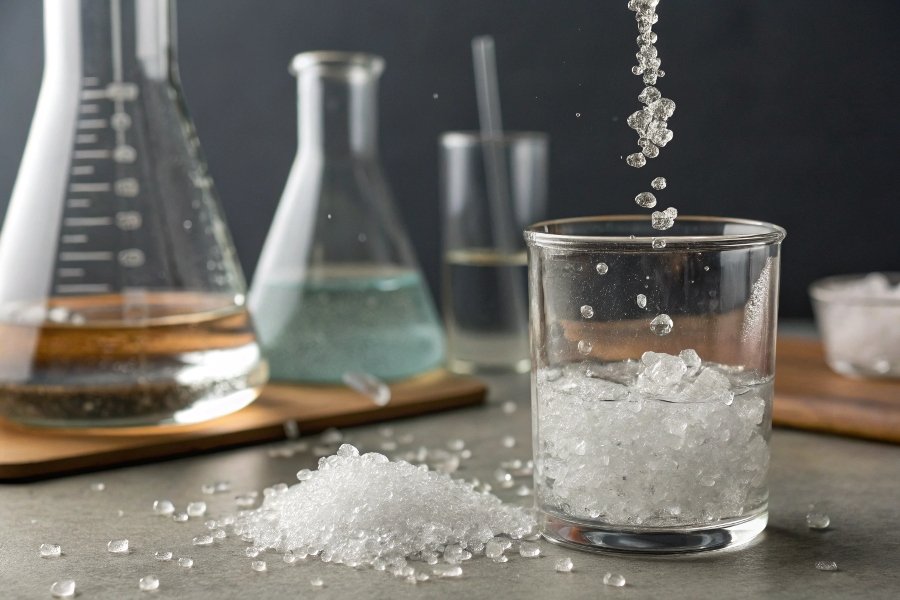
The reason for this huge difference comes down to a battle between two forces: lattice energy5 and hydration energy6.
- Lattice Energy is the energy holding the chemical crystal together.
- Hydration Energy is the energy released when water molecules surround the ions.
For a substance to dissolve, the hydration energy must be strong enough to overcome the lattice energy. In aluminum hydroxide, the lattice energy is incredibly high. The strong ionic bonds between Al³⁺ and OH⁻ ions, plus a tight network of hydrogen bonds7 between the hydroxides, create a fortress that water molecules cannot break apart.
In aluminum nitrate, the situation is different. The nitrate ions (NO₃⁻) are large and have only a single negative charge. They form a much weaker crystal lattice with the Al³⁺ ions. Water molecules can easily pull these ions apart, and the hydration energy released is more than enough to overcome the weak lattice energy. This is why you can dissolve a large amount of aluminum nitrate in water with ease.
Is Al(OH)₃ an acid or base in water?
You know it’s used as an antacid, so it must be a base. But chemists call it amphoteric, which implies it can also be an acid. This contradiction can be very confusing.
In pure water, Al(OH)₃ is effectively neutral because it is too insoluble to change the pH. However, its true nature is amphoteric, meaning it will act as a base when an acid is present and as an acid when a strong base is present.
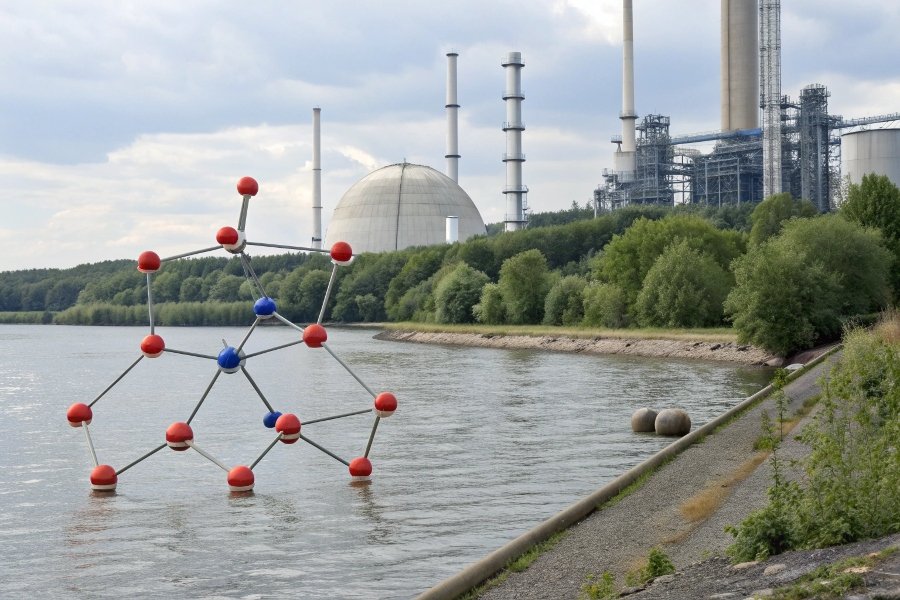
Think of aluminum hydroxide as a chemical agent waiting for instructions. When you add it to a glass of pure, neutral water, almost nothing happens. So little of it dissolves that it can’t release enough hydroxide ions (OH⁻) to make the water basic. The water’s pH stays around 7.
However, its character is revealed when you add something else:
- If you add acid: The Al(OH)₃ immediately reacts as a base. It consumes the acid’s H⁺ ions, neutralizing the solution. This is its antacid function.
- If you add a strong base: The Al(OH)₃ switches roles and reacts as an acid. It donates a proton to the strong base, neutralizing it.
This versatility is a key feature. While our pharmaceutical clients like Mr. Park care about its basic properties for antacids, our customers in industrial synthesis might use our product specifically for its acidic properties when reacting it with strong alkali. Its identity is not fixed; it is defined by its environment.
Conclusion
Aluminum hydroxide is insoluble in water due to its very strong crystal lattice. Although it is amphoteric, it remains neutral in water, only revealing its acidic or basic nature when it reacts.
-
Explore how Aluminum hydroxide functions as a flame retardant in various materials. ↩
-
Discover the significance of the solubility product constant in understanding Aluminum hydroxide’s behavior. ↩
-
Understanding Ksp calculations can enhance your knowledge of solubility in chemistry. ↩
-
Discover the behavior of Aluminum hydroxide in neutral pH and its practical implications. ↩
-
Understanding lattice energy can help explain the solubility of various compounds. ↩
-
Explore how hydration energy influences the solubility of compounds in water. ↩
-
Learn about hydrogen bonds and their crucial role in determining the properties of compounds. ↩

You may also be interested in:

What protective measures should be taken when handling aluminum hydroxide powder in a factory?
Are you worried about worker safety when handling fine powders? Aluminum hydroxide is generally safe, but mishandling its dust can lead to serious respiratory issues and even create explosive conditions.

What Key Technical Indicators Should Be Considered When Purchasing Aluminum Hydroxide?
Are you struggling to find the right aluminum hydroxide for your needs? You might be paying for features you don’t even require. Let’s simplify the technical details. When buying aluminum

What are the market trends for aluminum hydroxide in 2026?
Are you planning your 2026 raw material purchases? Volatile markets make it hard. I will share insights from the factory floor to help you make better decisions for your business.
Is aluminum hydroxide toxic and is it harmful to the human body?
Worried about the word "aluminum" in your products? It sounds scary and can make you question its safety. I’m here to clear up the confusion with simple facts. Aluminum hydroxide

What are the side effects of long-term use of stomach medications containing aluminum hydroxide?
Struggling with constant heartburn? Reaching for that stomach medicine might seem like the only option. But what if that relief comes with hidden long-term costs? The most common side effect

Does ingesting aluminum (such as through aluminum hydroxide) cause Alzheimer's disease?
Are you worried that everyday products containing aluminum might be harmful? This fear connects to serious health concerns like Alzheimer’s, making you question what is safe. Let’s look closely. Based

Why do some vaccines contain aluminum hydroxide (aluminum adjuvant)?
Confused about vaccine ingredients? Seeing aluminum hydroxide listed can be unsettling. I’ll explain its crucial role and why it’s there to help your body build strong immunity. Aluminum hydroxide acts

Is the aluminum adjuvant in vaccines safe for infants or adults?
You read about vaccine ingredients and worry. The word "aluminum" sounds scary, especially when talking about babies. But understanding the facts can give you peace of mind. Yes, the aluminum

What environmental problems are generated during the production of aluminum hydroxide?
Worried about environmental compliance in your supply chain? Sourcing from China can be complex. You need a reliable, eco-conscious partner for your aluminum hydroxide needs. The main environmental issue is

Where are China's main aluminum hydroxide production areas?
Are you struggling to find the right aluminum hydroxide supplier in China? This confusion can lead to higher costs and unstable quality, which hurts your business and your reputation. China’s