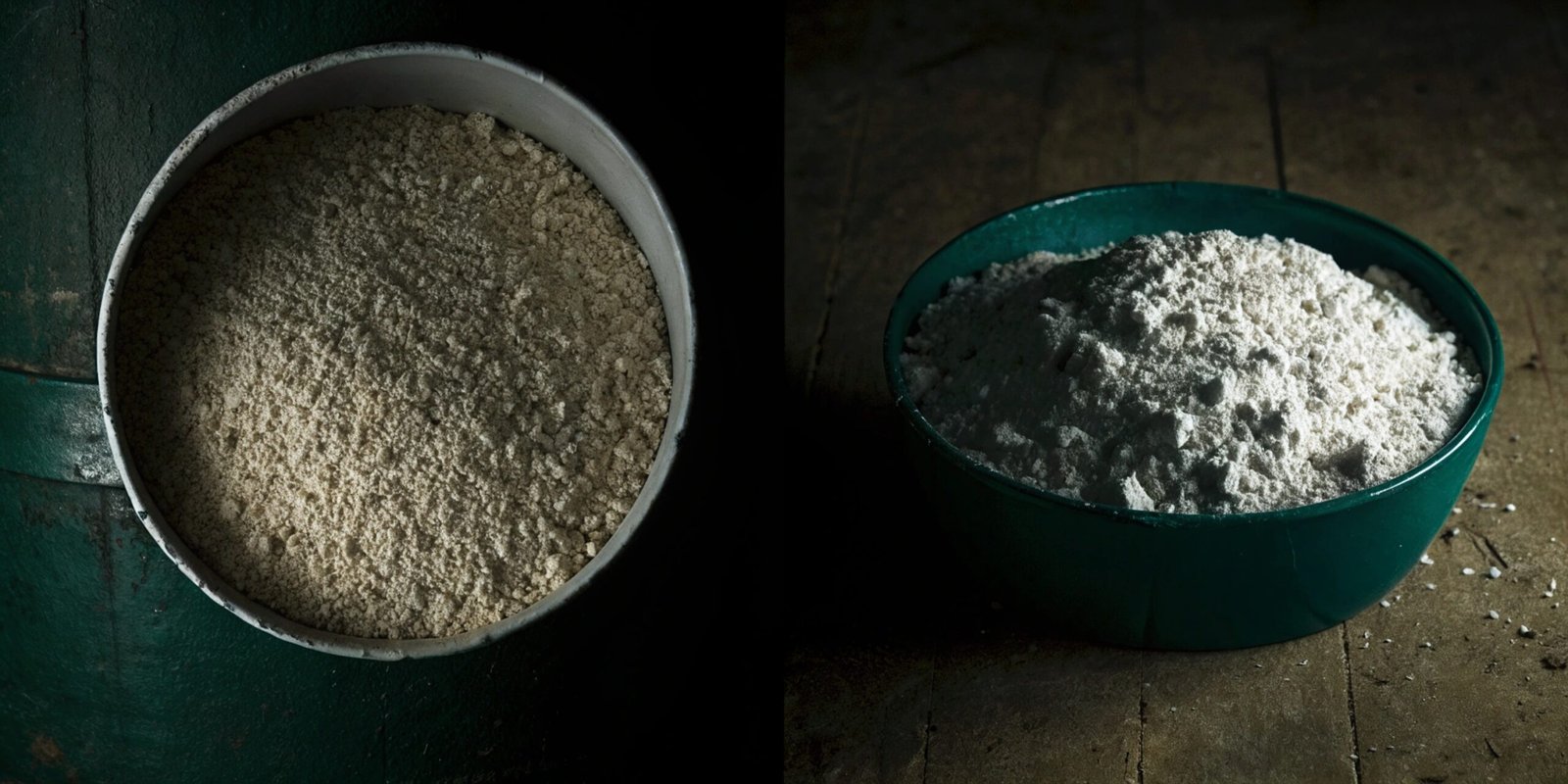
What is the difference between industrial grade aluminum hydroxide powder and general aluminum hydroxide powder?
September 10, 2025 by Lee On
Are you confused by chemical grades when buying raw materials? Ordering the wrong aluminum hydroxide can be a costly mistake. The right choice is critical for your product’s performance and safety.
The main difference is purity and particle size. Industrial grade focuses on physical properties for flame retardancy. General or pharma grade prioritizes extremely high purity with very low heavy metals for safe human consumption as an antacid.
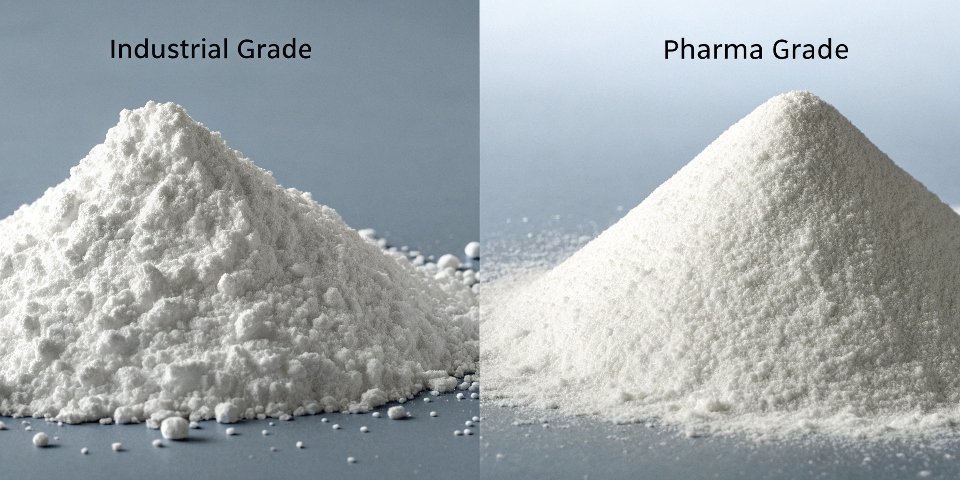
These differences are not just numbers on a spec sheet; they define the product’s function. As someone who has managed production for years, I know that creating these different grades requires totally different controls in our process. For a buyer like Mr. Park, knowing these details is key to sourcing the right material without overpaying or risking product failure. Let’s break down the types so you can see exactly what I mean.
What are the different types of aluminium hydroxide?
Juggling different product names and grades is difficult. You see terms like "technical," "pharma," and "filler," but what do they really mean for your business?
The main types are pharmaceutical grade, used in antacids, and industrial grade, used as a flame retardant. There are also filler grades for solid surfaces and specialized grades for water treatment and other chemical production.
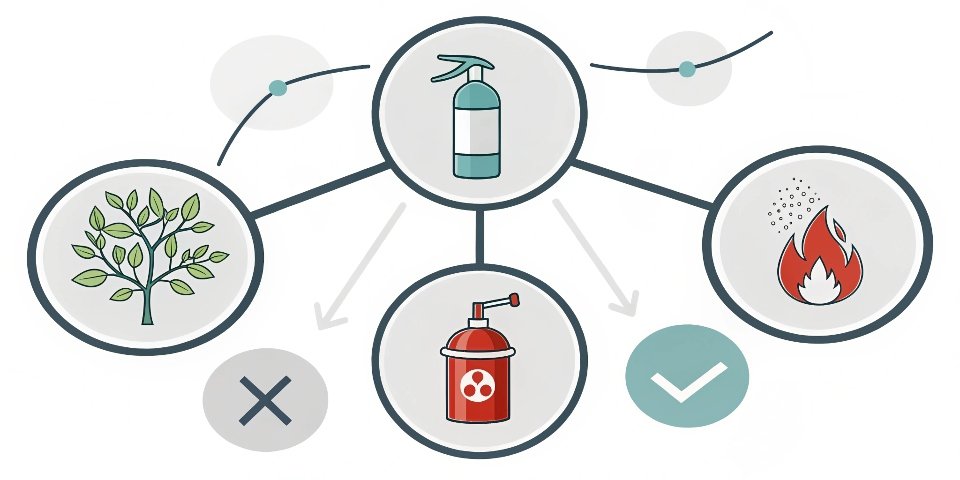
While the powder may look the same, the product’s purpose dictates how we make it. In my factory, we have separate production controls and testing procedures for each major type. Understanding this is the first step to becoming an expert buyer. You need to know which parameters matter for your specific application. Here is a table that simplifies the two main categories that most buyers, including pharmaceutical distributors like Mr. Park, encounter.
| Parameter | Pharmaceutical Grade | Industrial (Technical) Grade |
|---|---|---|
| Primary Goal | Safety & Efficacy in the body | Performance in a material (e.g., plastic) |
| Key Metric | Purity (Low Heavy Metals) | Particle Size & Surface Treatment |
| Governing Standard | USP / EP Pharmacopoeia | Customer Technical Specifications |
| Main Use | Antacids (Active Ingredient) | Flame Retardants (Additive) |
The most significant difference I see daily is in the final testing. For a pharma grade batch, the Certificate of Analysis1 is pages long, detailing tests for arsenic and lead in parts per million. For an industrial batch, the focus is on the particle size2 distribution curve and oil absorption values. They are truly different products.
What is the technical grade of aluminium hydroxide?
Hearing "technical grade" might make you think it’s a lower quality product. This term can be confusing if you are used to sourcing pharmaceutical ingredients and their strict standards.
Technical grade is another name for industrial grade aluminum hydroxide. It means the product is for non-pharmaceutical uses like flame retardants or fillers, where physical properties are more important than absolute chemical purity.
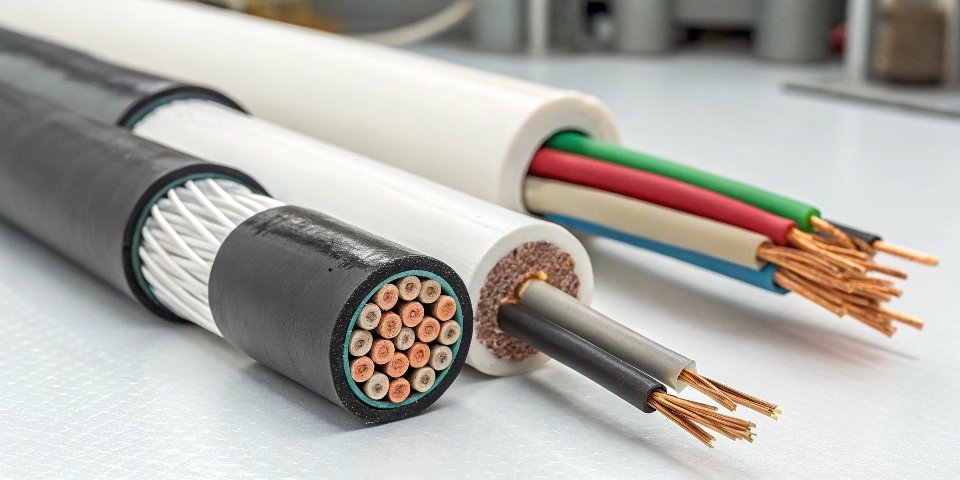
The term "technical" simply refers to the technical performance it brings to a product. For this grade, the most important application is flame retardancy. It is one of the most widely used flame retardant3s in the world because it is effective, non-toxic, and does not produce corrosive smoke. I spend a lot of my time reviewing lab results for particle size distribution (PSD) for our technical grade4 products. If the curve is wrong, our customer’s plastic compound will fail its mechanical strength tests, or it won’t mix properly in their extruders. Purity is still important—you don’t want contaminants discoloring the final plastic—but it takes a back seat to physical properties. We can also apply a surface treatment, often with silane, to the powder. This coating helps the ATH particles bond better with the polymer, which is critical for making a strong, flexible end product like wire insulation. So, technical grade is not "low quality," it is "differently optimized."
What is the industrial use of aluminium hydroxide?
You might think industrial use is just one big category. But the applications are very specific and require different properties. This affects what you need to order from a factory source.
The main industrial use is as a flame retardant in plastics and cables. It is also used as a white filler in solid surfaces like countertops, and as a raw material to produce other aluminum compounds.

While flame retardancy is the biggest market for industrial grade5 ATH, its versatility goes further. The properties we can engineer by controlling the precipitation and grinding process allow it to be used in several other large-scale applications.
Flame Retardant Additive
This is the primary use. When ATH is heated above 200°C, it undergoes an endothermic decomposition. It breaks down into alumina and water vapor (2Al(OH)₃ → Al₂O₃ + 3H₂O). This process attacks fire in three ways: it absorbs heat, the released water vapor cools the surface, and it dilutes the oxygen and flammable gases.
Filler in Solid Surfaces
ATH is a key ingredient in materials like Corian or other "solid surface" countertops. Its fine, white particles provide a smooth, non-porous finish, good chemical resistance, and excellent fire resistance. The high filler loading makes the product feel like stone but allows it to be fabricated like wood.
Chemical Feedstock
We also sell industrial grade ATH to other chemical plants. It is a base material for producing aluminum sulfate ("alum") for water purification, sodium aluminate, and catalysts used in the petroleum industry. Each of these customers has their own specific requirements for purity and reactivity. One customer who makes zeolites needs a totally different particle size from a customer who makes flame retardants. This is why direct communication with the source factory is so important.
What is pharma grade aluminum hydroxide?
Sourcing for pharmaceuticals has zero room for error. You need to guarantee that the material is not just effective but completely safe for human consumption every single time.
Pharma grade aluminum hydroxide is an ultra-high purity product used as an active pharmaceutical ingredient (API) in antacids. It must meet strict standards like USP or EP for heavy metals, arsenic, and assay.

This is the grade that a buyer like Mr. Park would be most interested in. The requirements for this product are absolute and non-negotiable. At my factory, the pharma-grade production line operates under much stricter controls. Access is restricted, and every step is documented. The final product must pass a full analysis based on an official pharmacopoeia. The two most common standards are:
- USP: United States Pharmacopeia
- EP: European Pharmacopoeia
These standards set specific, measurable limits for critical safety and performance factors. Key tests include:
- Assay: The content of pure Al(OH)₃ must be within a very tight range.
- Acid-Neutralizing Capacity (ANC): This is a performance test to ensure it effectively neutralizes a specific amount of acid.
- Heavy Metals: A limit is set for total heavy metals6 like lead and mercury, often less than 20 parts per million.
- Arsenic: A separate, extremely low limit is set for arsenic because of its toxicity.
I personally review the Certificate of Analysis for every pharma-grade batch before it is approved for shipment. For a customer in the pharmaceutical industry, this document is the ultimate proof of quality and safety.
Conclusion
The key difference is purity versus physical properties. Industrial grade is for performance in materials, while pharma grade is for safety in medicine. Understanding this ensures you buy correctly from the source.
-
Discover the significance of a Certificate of Analysis in ensuring product quality and safety. ↩
-
Explore the impact of particle size on the performance of materials in industrial applications. ↩
-
Understand the science behind aluminum hydroxide’s effectiveness as a flame retardant in various applications. ↩
-
Discover the meaning of technical grade and its implications for material performance. ↩
-
Discover the characteristics and uses of industrial grade aluminum hydroxide in manufacturing. ↩
-
Learn about the dangers of heavy metals in pharmaceutical products and the importance of testing. ↩

You may also be interested in:

What protective measures should be taken when handling aluminum hydroxide powder in a factory?
Are you worried about worker safety when handling fine powders? Aluminum hydroxide is generally safe, but mishandling its dust can lead to serious respiratory issues and even create explosive conditions.

What Key Technical Indicators Should Be Considered When Purchasing Aluminum Hydroxide?
Are you struggling to find the right aluminum hydroxide for your needs? You might be paying for features you don’t even require. Let’s simplify the technical details. When buying aluminum

What are the market trends for aluminum hydroxide in 2026?
Are you planning your 2026 raw material purchases? Volatile markets make it hard. I will share insights from the factory floor to help you make better decisions for your business.
Is aluminum hydroxide toxic and is it harmful to the human body?
Worried about the word "aluminum" in your products? It sounds scary and can make you question its safety. I’m here to clear up the confusion with simple facts. Aluminum hydroxide

What are the side effects of long-term use of stomach medications containing aluminum hydroxide?
Struggling with constant heartburn? Reaching for that stomach medicine might seem like the only option. But what if that relief comes with hidden long-term costs? The most common side effect

Does ingesting aluminum (such as through aluminum hydroxide) cause Alzheimer's disease?
Are you worried that everyday products containing aluminum might be harmful? This fear connects to serious health concerns like Alzheimer’s, making you question what is safe. Let’s look closely. Based

Why do some vaccines contain aluminum hydroxide (aluminum adjuvant)?
Confused about vaccine ingredients? Seeing aluminum hydroxide listed can be unsettling. I’ll explain its crucial role and why it’s there to help your body build strong immunity. Aluminum hydroxide acts

Is the aluminum adjuvant in vaccines safe for infants or adults?
You read about vaccine ingredients and worry. The word "aluminum" sounds scary, especially when talking about babies. But understanding the facts can give you peace of mind. Yes, the aluminum

What environmental problems are generated during the production of aluminum hydroxide?
Worried about environmental compliance in your supply chain? Sourcing from China can be complex. You need a reliable, eco-conscious partner for your aluminum hydroxide needs. The main environmental issue is

Where are China's main aluminum hydroxide production areas?
Are you struggling to find the right aluminum hydroxide supplier in China? This confusion can lead to higher costs and unstable quality, which hurts your business and your reputation. China’s