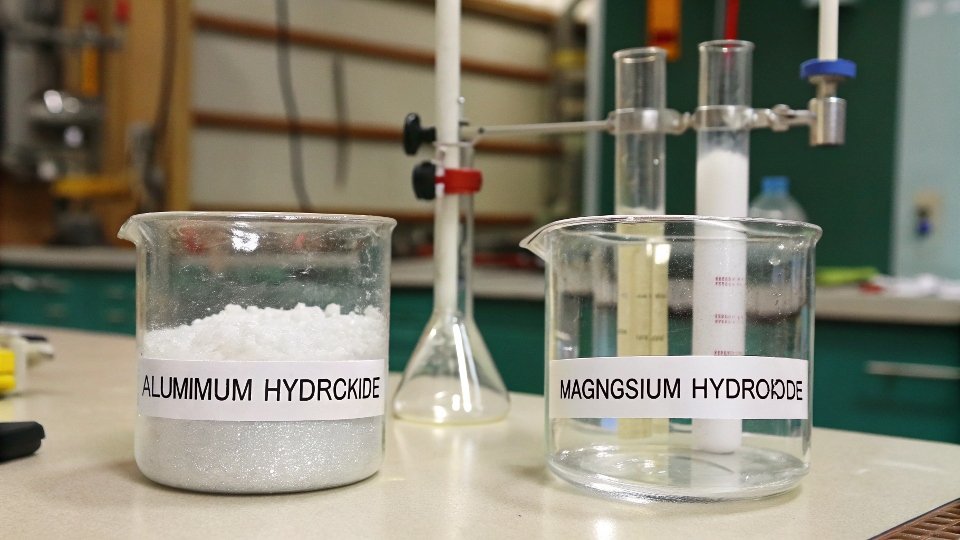
What is the Difference Between Aluminum Hydroxide and Magnesium Hydroxide?
July 11, 2025 by Lee On
Struggling to choose between aluminum hydroxide and magnesium hydroxide? Picking the wrong one can ruin your product’s performance and budget. The key difference is their heat stability.
The main difference is their decomposition temperature. Aluminum hydroxide (ATH) decomposes around 220°C, making it ideal for materials processed below this heat. Magnesium hydroxide (MDH) is more stable, decomposing at 330°C, making it necessary for plastics requiring higher processing temperatures.

This single property—heat stability—is the most important factor when choosing between these two excellent flame retardants. As someone who manages production in China, both are made in huge quantities, and I see customers making this choice every day. The right decision depends entirely on your specific application and processing method. But temperature is just the beginning. Their performance, and especially their price, also differ for very important reasons.
Which is a more effective flame retardant?
You need maximum fire safety for your product. But retardant efficiency varies, and adding too much can weaken your material. Understanding their performance differences ensures optimal protection and quality.
Technically, magnesium hydroxide has a slightly higher heat absorption capacity. However, aluminum hydroxide provides excellent flame retardancy at a more economical price, making it the more efficient and commonly used choice for a vast range of applications where processing heat is lower.

Both materials work in the same way: they release water when heated, which cools the fire and smothers it. They are both excellent, non-toxic choices. In our factory, we focus on producing aluminum hydroxide, and its balance of performance and cost is why it’s the most widely used flame retardant in the world.
Performance Comparison
When you look closely, you see small but important differences in their flame-retardant action. Magnesium hydroxide1 has a slight edge in pure heat absorption, but this doesn’t always make it the better overall choice.
| Feature | Aluminum Hydroxide (ATH) | Magnesium Hydroxide (MDH) |
|---|---|---|
| Decomposition Temp. | ~220°C | ~330°C |
| Endothermic Effect | ~1.1 kJ/g | ~1.3 kJ/g |
| Smoke Suppression | Excellent | Excellent |
| Cost | More Economical | More Expensive |
Impact on Mechanical Properties
The amount of retardant you need to add (the "loading level2") can affect the physical properties of your final product, like its flexibility or strength. Because ATH is so cost-effective, it is often used in applications like PVC cables3 or rubber flooring where high loading level2s are needed. For high-temperature plastics like nylon or polypropylene, MDH must be used despite its cost, because ATH would decompose during the plastic’s mixing and molding process.
Why is there such a big price difference between them?
Shocked by the price of magnesium hydroxide compared to aluminum hydroxide? This cost difference can derail your budget. It stems directly from their different raw materials and manufacturing complexity.
The price gap is due to raw material and production. Aluminum hydroxide comes from abundant bauxite ore. Magnesium hydroxide is sourced from rarer brucite ore or is chemically synthesized from seawater or brine, a much more complex and costly process. This drives the higher price of MDH.

This is something we understand very well from the factory floor. The journey from raw earth to finished white powder is very different for these two products, and that difference is reflected in the final price you pay. It’s not about quality; it’s about the fundamental economics of extracting and refining the base minerals.
Sourcing Raw Materials
The starting point for the price difference is in the ground.
- Aluminum Hydroxide: We make ATH from bauxite ore. Bauxite is one of the most common ores on Earth. It is relatively easy to mine in large quantities, making the raw material inexpensive.
- Magnesium Hydroxide: MDH is much harder to find. It can be mined from a mineral called brucite, but high-quality brucite deposits are much rarer than bauxite.
The Manufacturing Process
The alternative to mining MDH is to create it synthetically. This is usually done by taking magnesium-rich saltwater (brine) or seawater and using a chemical process to precipitate the magnesium hydroxide. This is a multi-stage, energy-intensive process that is far more complex than the Bayer process used to refine bauxite into ATH. The extra steps and higher energy use make synthetic MDH significantly more expensive to produce. So, whether it is mined or synthesized, the starting cost for MDH is just fundamentally higher.
How can you get the best price on these retardants?
Sourcing flame retardants at a fair price is a constant challenge. Middlemen and brokers add hidden costs and uncertainty. The single best way to reduce your cost is buying directly.
To get the best price, buy directly from a source factory in China. This eliminates intermediary markups. Our factories leverage low energy costs and massive scale, offering the most competitive pricing in the world for both aluminum hydroxide and magnesium hydroxide, passing the savings to you.

My entire job is based on this principle. For many years, Chinese factories like ours sold our products through trading companies. But we realized this model only benefited the middleman. Now, we are building direct relationships with our customers overseas to give them better prices and service.
The Power of Direct Sourcing
When you buy directly from us, you get the true factory price. You do not have to pay the 5%, 10%, or even 15% commission that a trading company adds on top. For a buyer like Mr. Park in Korea who deals in large volumes, this translates into huge annual savings.
China’s Unmatched Industrial Ecosystem
This direct model is powerful because it is built on top of China’s other cost advantages.
- Low-Cost Energy: Producing both ATH and MDH requires a lot of electricity. China has the most stable and affordable industrial power in the world.
- Resources and Scale: We have the water resources and the massive scale needed for efficient production.
- Clear Regulations: Our factories have invested in the right purification technology to meet clear national environmental standards, ensuring stable, reliable production.
Even though MDH is naturally more expensive than ATH, you will still get a better price on MDH from a Chinese factory than almost anywhere else in the world, for these very same reasons.
Conclusion
ATH and MDH differ mainly in heat stability, which dictates their best use. For the most cost-effective price on either retardant, sourcing directly from a Chinese source factory is your best strategy.
Footnotes
-
Learn why Magnesium hydroxide is essential for high-temperature applications and its unique properties. ↩
-
Understand how the loading level of flame retardants impacts the physical properties of materials. ↩ ↩
-
Learn why Aluminum hydroxide is a popular choice for PVC cables and its benefits in this application. ↩

You may also be interested in:

What protective measures should be taken when handling aluminum hydroxide powder in a factory?
Are you worried about worker safety when handling fine powders? Aluminum hydroxide is generally safe, but mishandling its dust can lead to serious respiratory issues and even create explosive conditions.

What Key Technical Indicators Should Be Considered When Purchasing Aluminum Hydroxide?
Are you struggling to find the right aluminum hydroxide for your needs? You might be paying for features you don’t even require. Let’s simplify the technical details. When buying aluminum

What are the market trends for aluminum hydroxide in 2026?
Are you planning your 2026 raw material purchases? Volatile markets make it hard. I will share insights from the factory floor to help you make better decisions for your business.
Is aluminum hydroxide toxic and is it harmful to the human body?
Worried about the word "aluminum" in your products? It sounds scary and can make you question its safety. I’m here to clear up the confusion with simple facts. Aluminum hydroxide

What are the side effects of long-term use of stomach medications containing aluminum hydroxide?
Struggling with constant heartburn? Reaching for that stomach medicine might seem like the only option. But what if that relief comes with hidden long-term costs? The most common side effect

Does ingesting aluminum (such as through aluminum hydroxide) cause Alzheimer's disease?
Are you worried that everyday products containing aluminum might be harmful? This fear connects to serious health concerns like Alzheimer’s, making you question what is safe. Let’s look closely. Based

Why do some vaccines contain aluminum hydroxide (aluminum adjuvant)?
Confused about vaccine ingredients? Seeing aluminum hydroxide listed can be unsettling. I’ll explain its crucial role and why it’s there to help your body build strong immunity. Aluminum hydroxide acts

Is the aluminum adjuvant in vaccines safe for infants or adults?
You read about vaccine ingredients and worry. The word "aluminum" sounds scary, especially when talking about babies. But understanding the facts can give you peace of mind. Yes, the aluminum

What environmental problems are generated during the production of aluminum hydroxide?
Worried about environmental compliance in your supply chain? Sourcing from China can be complex. You need a reliable, eco-conscious partner for your aluminum hydroxide needs. The main environmental issue is

Where are China's main aluminum hydroxide production areas?
Are you struggling to find the right aluminum hydroxide supplier in China? This confusion can lead to higher costs and unstable quality, which hurts your business and your reputation. China’s