
You see "ATH" and "aluminum hydroxide" used everywhere. You know it’s a key raw material, but the different names and technical grades make choosing the right one for your application confusing.
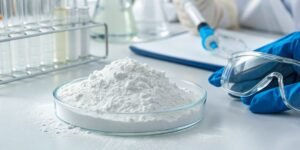
Aluminum Hydroxide Trihydrate (ATH) is the most common form of aluminum hydroxide, with the chemical formula Al(OH)₃. It’s a versatile white powder mainly used as a non-toxic flame retardant and as the primary raw material for producing aluminum metal.

From my viewpoint here at our plant in Henan, ATH is our main product. We see it go to a huge variety of industries, from plastics to chemicals. Many of our customers, especially experienced ones like Mr. Park from a Korean trading company, know the value of getting the right grade directly from the source. The confusion often comes from the different names and uses. Let’s break down what ATH really is and what it’s used for. I will also explain the importance of where you source it from.
What is ATH’s Role in the Aluminum Industry?
You might think ATH is just an additive. But its main role is far more fundamental to the entire aluminum industry. Misunderstanding this can lead to sourcing inefficiencies and missed opportunities.
In the aluminum industry, ATH is the primary raw material used to produce alumina (aluminum oxide, Al₂O₃). The alumina is then smelted through an energy-intensive process to create aluminum metal. ATH is the essential first step in the entire aluminum production chain.

The vast majority of ATH produced in the world is not sold as a powder but is used right away to make aluminum. The process, called the Bayer Process1, extracts a sodium aluminate solution from bauxite ore. From this solution, we precipitate pure ATH powder. This is the parent material. Most of it continues on to the next step: calcination2. It’s heated to over 1100°C to drive off the water, leaving pure, sandy alumina. This alumina is what goes into the giant smelters to become metal. This entire process, especially the smelting, requires a staggering amount of electricity. This is a key reason why China is a hub for this industry. Our massive national power grid provides stable, low-cost electricity that this energy-hungry industry needs to survive. A factory like ours is not just a standalone plant; we are a vital link in a huge industrial ecosystem that leverages this national advantage to provide cost-effective materials to the world.
What is ATH Powder Actually Used For?
Your product needs to meet strict safety standards. You need a flame retardant, but many options are toxic, expensive, or harm your product’s properties. This makes finding a good solution difficult.
ATH powder’s main use is as a non-toxic, halogen-free flame retardant in plastics and rubber. It’s also used as a white filler to add bulk and improve properties in materials like solid surface countertops, and as a chemical feedstock.

When we sell ATH as a powder, it’s usually for these applications. As a flame retardant3, it’s brilliant because of its simplicity. When heated, it breaks down and releases water vapor. This action cools the material down, dilutes the flammable gases a fire needs to burn, and smothers the fire. It does all this without producing the dense, toxic smoke that older, halogenated flame retardants do. This makes it a much safer and more environmentally friendly4 choice. Its other major use is as a filler. In solid surface materials, like countertops, it can make up 70% of the final product. Its bright white color and particle structure are essential for getting that stone-like look and feel. From my production management background, I know that we can produce different particle sizes for different applications. A fine, surface-treated grade is ideal for high-performance cables, while a coarser grade works best for solid surfaces. This is why talking directly to the factory is so important. We can help you get the exact product you need.
What is aluminum trihydrate used for?
You see "aluminum trihydrate" and wonder if it’s different from ATH. This naming confusion can make it hard to be sure you are sourcing the correct material for your needs.
Aluminum trihydrate is simply another name for Aluminum Hydroxide Trihydrate (ATH). It is used for the exact same things: as a primary flame retardant, a filler material, and as the raw material for the production of other aluminum chemicals, like aluminum sulfate.

This is a very common point of confusion, but the answer is simple. "Trihydrate" just refers to the three water (hydrate) molecules that are chemically bonded to the aluminum atom in the Al(OH)₃ structure. So, ATH and aluminum trihydrate are identical. The uses are defined by the grade, not the name. A key application we see is in making other chemicals. For example, our ATH is sold to companies that use it to produce aluminum sulfate5, or "alum." This alum is a critical chemical for water purification plants around the world. It works as a flocculant, causing tiny impurities in the water to clump together so they can be easily filtered out. This demonstrates again the versatility of this basic compound. From stopping fires to cleaning drinking water, it is a true industrial workhorse. As a producer, we ensure our technical grade meets the purity standards required for these downstream chemical reactions.
What is technical grade Aluminium hydroxide?
You need to buy ATH for an industrial application. But you see terms like "pharmaceutical grade" and "technical grade." Choosing the wrong one means overpaying for purity you don’t need or getting a product that fails.
Technical grade aluminum hydroxide is the standard purity material for most industrial applications, like flame retardants, fillers, and chemical manufacturing. It is distinct from the highly purified, more expensive grades required for pharmaceuticals. It is the workhorse grade of the industry.

"Technical grade" is defined by its industrial performance, not by its suitability for human consumption. We control specifications like the percentage of Al(OH)₃, particle size distribution, whiteness, and oil absorption. These factors determine how well it will perform as a flame retardant3 or a filler. In contrast, pharmaceutical grade has extremely strict limits on impurities like heavy metals. This makes it much more expensive to produce. Almost everything we export from our Henan factory for the plastics, rubber, and chemical industries is a technical grade. When an experienced buyer contacts us for a "technical grade," we know exactly what they mean. This is a huge advantage of the new model where factories like ours are selling direct. We can have a precise, technical conversation and provide the most cost-effective solution. You get the performance you need without paying a premium for purity you don’t.
| Grade | Primary Use | Key Characteristic | Relative Cost |
|---|---|---|---|
| Technical Grade | Flame Retardant, Filler | Functional physical properties | Base Cost |
| Pharmaceutical Grade | Antacids, Vaccine Adjuvants | Extreme purity, sterile | Very High |
| Alumina Feedstock | Making Aluminum Metal | High Al(OH)₃ purity, controlled soda | Base Cost |
Conclusion
ATH is the industry’s versatile workhorse, from making aluminum to providing fire safety. Sourcing technical grade ATH directly from a Chinese factory is your most cost-effective and reliable option.
-
Understand the Bayer Process, a vital method for extracting aluminum, and its significance in the industry. ↩
-
Explore the calcination process and its role in transforming ATH into alumina for aluminum production. ↩
-
Learn how ATH acts as a non-toxic flame retardant, enhancing safety in materials without harmful effects. ↩ ↩
-
Explore the environmental benefits of using ATH compared to traditional flame retardants. ↩
-
Discover how ATH is used to produce aluminum sulfate, a key chemical in water purification. ↩

You may also be interested in:

What protective measures should be taken when handling aluminum hydroxide powder in a factory?
Are you worried about worker safety when handling fine powders? Aluminum hydroxide is generally safe, but mishandling its dust can lead to serious respiratory issues and even create explosive conditions.

What Key Technical Indicators Should Be Considered When Purchasing Aluminum Hydroxide?
Are you struggling to find the right aluminum hydroxide for your needs? You might be paying for features you don’t even require. Let’s simplify the technical details. When buying aluminum

What are the market trends for aluminum hydroxide in 2026?
Are you planning your 2026 raw material purchases? Volatile markets make it hard. I will share insights from the factory floor to help you make better decisions for your business.
Is aluminum hydroxide toxic and is it harmful to the human body?
Worried about the word "aluminum" in your products? It sounds scary and can make you question its safety. I’m here to clear up the confusion with simple facts. Aluminum hydroxide

What are the side effects of long-term use of stomach medications containing aluminum hydroxide?
Struggling with constant heartburn? Reaching for that stomach medicine might seem like the only option. But what if that relief comes with hidden long-term costs? The most common side effect

Does ingesting aluminum (such as through aluminum hydroxide) cause Alzheimer's disease?
Are you worried that everyday products containing aluminum might be harmful? This fear connects to serious health concerns like Alzheimer’s, making you question what is safe. Let’s look closely. Based

Why do some vaccines contain aluminum hydroxide (aluminum adjuvant)?
Confused about vaccine ingredients? Seeing aluminum hydroxide listed can be unsettling. I’ll explain its crucial role and why it’s there to help your body build strong immunity. Aluminum hydroxide acts

Is the aluminum adjuvant in vaccines safe for infants or adults?
You read about vaccine ingredients and worry. The word "aluminum" sounds scary, especially when talking about babies. But understanding the facts can give you peace of mind. Yes, the aluminum

What environmental problems are generated during the production of aluminum hydroxide?
Worried about environmental compliance in your supply chain? Sourcing from China can be complex. You need a reliable, eco-conscious partner for your aluminum hydroxide needs. The main environmental issue is

Where are China's main aluminum hydroxide production areas?
Are you struggling to find the right aluminum hydroxide supplier in China? This confusion can lead to higher costs and unstable quality, which hurts your business and your reputation. China’s