Aluminum hydroxide is incredibly versatile. But its uses are so different—from stopping fire to working in vaccines—that it can be confusing. Understanding its core mechanisms unlocks its true potential.
Aluminum hydroxide has three main mechanisms: it neutralizes stomach acid as an antacid, releases water to suppress fire as a flame retardant, and stimulates an immune response when used as a vaccine adjuvant. These distinct actions make it highly versatile across multiple industries.
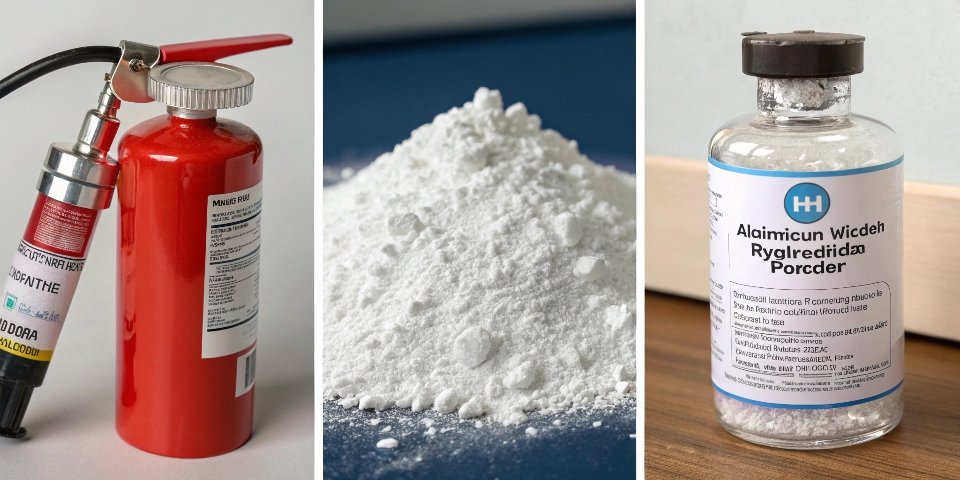
From my perspective here at our production facility in Henan, I see this versatility firsthand. We ship different grades of this simple white powder to customers in completely different industries. One day we’re talking to a plastics manufacturer, the next we’re discussing purity levels with a pharmaceutical company. The common thread is that this material is stable, reliable, and, as the world focuses more on safety and environmental impact, its popularity is only growing. Let’s break down its most important functions one by one.
What is the mechanism of action of aluminum hydroxide?
You need to make your product safe from fire. But many chemical flame retardants are toxic and are being phased out by new regulations, leaving you looking for a better alternative.
As a flame retardant, aluminum hydroxide works through endothermic decomposition. When heated to 220°C, it absorbs a large amount of heat and releases water vapor. This action cools the material, dilutes flammable gases, and smothers the fire without producing toxic smoke.
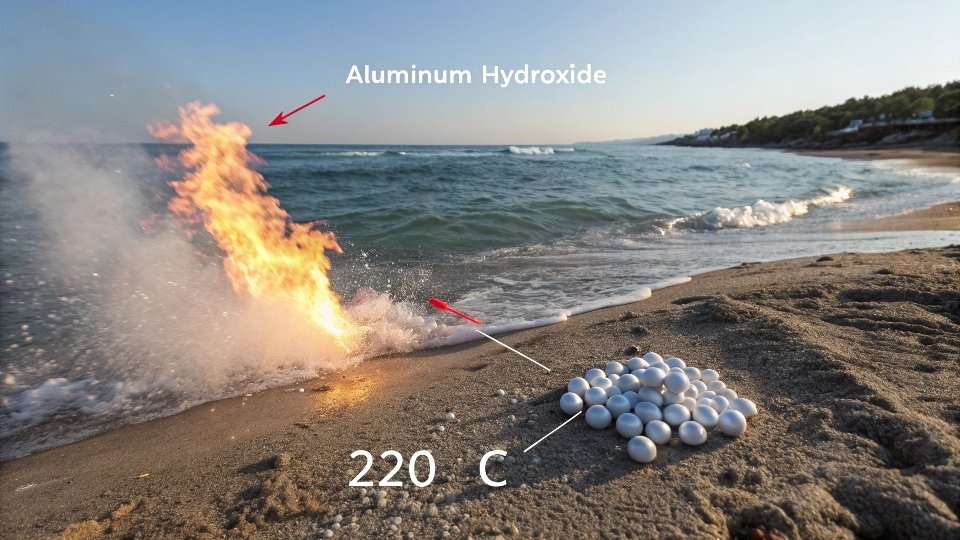
This is by far the largest industrial use for the material we produce. This mechanism is purely physical and chemical, not biological. It’s elegant in its simplicity and highly effective. The key is the water chemically locked inside the aluminum hydroxide crystals. When a fire starts, the ATH becomes an active fire-fighting system built directly into the material itself. Because it’s halogen-free, it’s considered a much safer and more environmentally friendly choice.
The Three-Step Firefighting Process
The effectiveness of Aluminum Hydroxide (ATH) as a flame retardant1 in plastics and rubber can be broken down into three distinct actions that happen almost instantly when heat is applied.
- Cooling: The decomposition process is endothermic, meaning it absorbs heat energy. It draws a significant amount of heat from the fire source, cooling the material below its ignition temperature.
- Diluting: The reaction releases large amounts of harmless water vapor. This steam displaces the oxygen and dilutes the flammable gases that the fire needs to burn. It literally starves the fire.
- Shielding: The layer of water vapor creates a temporary barrier on the surface of the material, shielding it from contact with oxygen and preventing the fire from spreading further. Once fully decomposed, it leaves behind a protective char layer of alumina (Al₂O₃).
This makes it a far superior choice to older technologies.
| Feature | Aluminum Hydroxide (ATH) | Halogenated Retardants |
|---|---|---|
| Action | Cools, dilutes, and shields | Interrupts chemical reaction of fire |
| Byproducts | Water vapor, alumina | Dense, toxic, corrosive smoke |
| Safety | Non-toxic, excellent smoke suppression | Hazardous byproducts (HCl, HBr) |
What are the interactions of aluminum hydroxide?
You need to add a filler or flame retardant to your polymer. But just mixing it in can make your final product brittle or weak, ruining its performance and appearance.
Aluminum hydroxide interacts primarily as a physical filler within a polymer. Its main interactions involve affecting the host material’s physical properties, like stiffness and viscosity. Proper performance depends on particle size, surface treatment, and how well it mixes into the material.
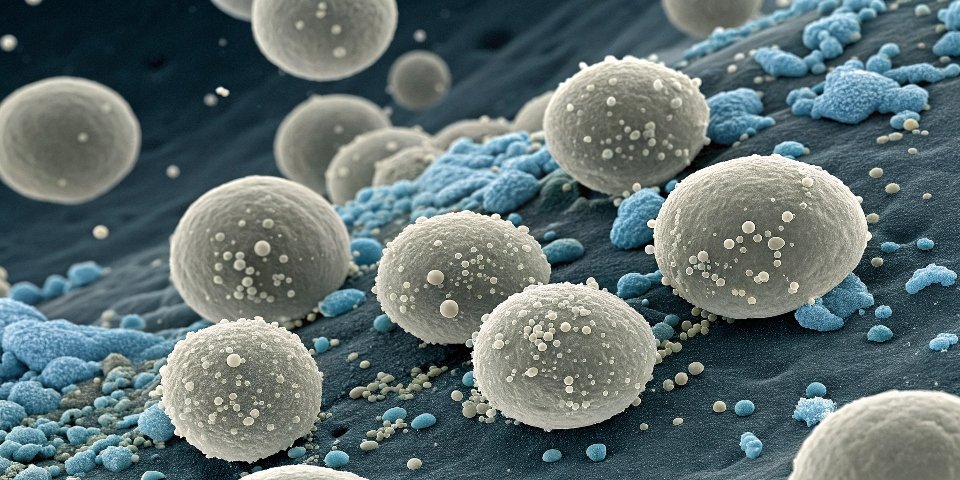
This is a critical area for our customers. How the ATH interacts with their specific type of plastic or rubber is key to their success. It’s not just about fire resistance; it’s about making a high-quality final product. In our factory, we can actually modify the surface of the ATH particles to help them bond better with the customer’s polymer. This improves the physical properties and shows how an inert powder can have very dynamic interactions.
Key Interaction Factors
When you add a filler like aluminum hydroxide to a material, several factors determine the outcome. Getting these right is essential for a good final product.
- Loading Level: This is how much ATH you add, usually expressed as a percentage of the total weight (phr – parts per hundred of resin). A higher loading level gives better fire resistance but can also increase the stiffness and viscosity of the compound, which may make it harder to process.
- Particle Size and Distribution: A smaller, finer particle size2 can result in a smoother surface finish and better maintenance of flexible properties. A larger particle size2 might be easier to mix at high loading levels. We offer different grades to match these needs.
- Surface Treatment: For demanding applications, the ATH particles can be surface-treated with chemicals like silanes or stearic acid. This coating acts as a "bridge" between the inorganic ATH particle and the organic polymer. It dramatically improves the bonding, leading to much better mechanical properties3 like tensile strength and flexibility in the final product.
What is the mechanism of action of Aluminium hydroxide adjuvant?
You are developing a vaccine and need to ensure a strong immune response. The active ingredient (the antigen) alone is often too weak to be effective, which could lead to project failure.
As a vaccine adjuvant, aluminum hydroxide works by creating a "depot effect." It adsorbs the antigen at the injection site, releasing it slowly. This extended exposure, combined with a mild inflammatory signal, attracts more immune cells, leading to a much stronger and longer-lasting immune response.
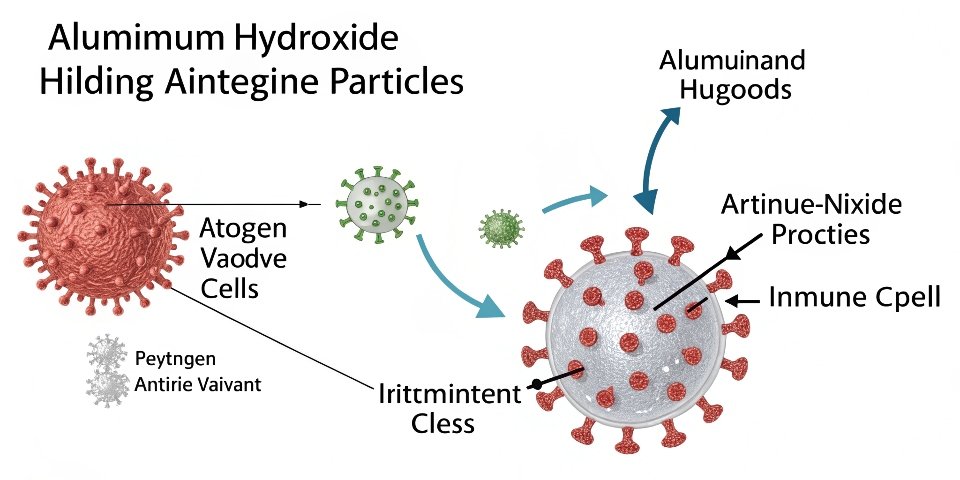
This mechanism is completely different from its industrial uses and showcases the material’s incredible versatility. Here, it is not acting as a chemical reactant or an inert filler, but as a biological stimulant. For a buyer with a pharmaceutical background, like Mr. Park from Korea, sourcing the correct high-purity, sterile grade of aluminum hydroxide is absolutely critical. It’s a testament to the trust a simple mineral has earned in the most advanced medical fields.
How It Boosts Immunity
The primary role of an adjuvant is to wake up the body’s immune system and tell it to pay close attention to the antigen in the vaccine. Aluminum hydroxide4, often called "alum," has been safely used for this purpose for nearly a century.
- The Depot Effect: The aluminum hydroxide gel forms a physical-chemical bond with the antigen molecules. This creates a small deposit at the injection site. Instead of the antigen dispersing and disappearing quickly, it is released slowly over time.
- Immune Cell Recruitment: The body’s immune system recognizes the tiny aluminum hydroxide particles as a foreign signal. This triggers a mild and localized immune response5, drawing key immune cells like macrophages and dendritic cells to the injection site.
- Enhanced Antigen Presentation: These recruited immune cells engulf the antigen along with the adjuvant. This process helps them "present" the antigen more effectively to the "generals" of the immune system (T-cells), which then orchestrate the production of antibodies by B-cells, leading to long-term immunity.
Conclusion
Aluminum hydroxide’s mechanisms define its key roles as a safe flame retardant, a functional filler, and a vital vaccine adjuvant, making it a critical, eco-friendly material for modern industry.
-
Learn about the unique properties of Aluminum hydroxide that make it an effective and safe flame retardant. ↩
-
Understand how particle size affects the performance of Aluminum hydroxide in various applications. ↩ ↩
-
Understand the impact of Aluminum hydroxide on the mechanical properties of materials in manufacturing. ↩
-
Explore the diverse applications of Aluminum hydroxide across industries, from pharmaceuticals to fire safety. ↩
-
Explore how Aluminum hydroxide boosts immune responses in vaccines, ensuring better health outcomes. ↩

You may also be interested in:

What protective measures should be taken when handling aluminum hydroxide powder in a factory?
Are you worried about worker safety when handling fine powders? Aluminum hydroxide is generally safe, but mishandling its dust can lead to serious respiratory issues and even create explosive conditions.

What Key Technical Indicators Should Be Considered When Purchasing Aluminum Hydroxide?
Are you struggling to find the right aluminum hydroxide for your needs? You might be paying for features you don’t even require. Let’s simplify the technical details. When buying aluminum

What are the market trends for aluminum hydroxide in 2026?
Are you planning your 2026 raw material purchases? Volatile markets make it hard. I will share insights from the factory floor to help you make better decisions for your business.
Is aluminum hydroxide toxic and is it harmful to the human body?
Worried about the word "aluminum" in your products? It sounds scary and can make you question its safety. I’m here to clear up the confusion with simple facts. Aluminum hydroxide

What are the side effects of long-term use of stomach medications containing aluminum hydroxide?
Struggling with constant heartburn? Reaching for that stomach medicine might seem like the only option. But what if that relief comes with hidden long-term costs? The most common side effect

Does ingesting aluminum (such as through aluminum hydroxide) cause Alzheimer's disease?
Are you worried that everyday products containing aluminum might be harmful? This fear connects to serious health concerns like Alzheimer’s, making you question what is safe. Let’s look closely. Based

Why do some vaccines contain aluminum hydroxide (aluminum adjuvant)?
Confused about vaccine ingredients? Seeing aluminum hydroxide listed can be unsettling. I’ll explain its crucial role and why it’s there to help your body build strong immunity. Aluminum hydroxide acts

Is the aluminum adjuvant in vaccines safe for infants or adults?
You read about vaccine ingredients and worry. The word "aluminum" sounds scary, especially when talking about babies. But understanding the facts can give you peace of mind. Yes, the aluminum

What environmental problems are generated during the production of aluminum hydroxide?
Worried about environmental compliance in your supply chain? Sourcing from China can be complex. You need a reliable, eco-conscious partner for your aluminum hydroxide needs. The main environmental issue is

Where are China's main aluminum hydroxide production areas?
Are you struggling to find the right aluminum hydroxide supplier in China? This confusion can lead to higher costs and unstable quality, which hurts your business and your reputation. China’s