Choosing the wrong aluminum hydroxide can ruin your product formulation. This leads to costly production failures. Understanding its physical properties is the key to getting it right every time.
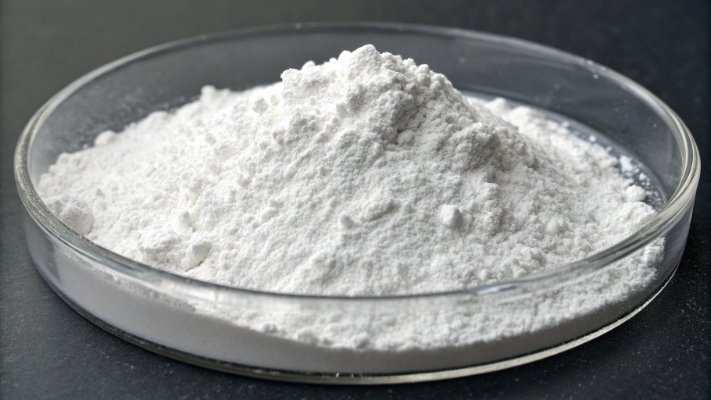
Aluminum hydroxide is a white, odorless powder. Key properties include its high thermal stability, insolubility in water, and amphoteric nature, meaning it reacts with both acids and bases. Its particle size is crucial for industrial applications, affecting reactivity and performance in final products.
These properties might sound simple on a data sheet. But they have huge implications for how you use aluminum hydroxide. From my experience managing production in our factory, I know that even small variations can change everything for a customer. These details are what make this material so versatile. Let’s look closer at what each property means for its performance in your application.
What are the key properties of aluminum hydroxide?
You see aluminum hydroxide listed on a spec sheet, but what does it really mean for your application? Choosing without knowing the specifics can cause unexpected production issues and poor results.
Aluminum hydroxide’s main properties are both physical and chemical. Physically, it’s a stable, white solid. Chemically, it’s amphoteric, acting as a base or an acid. It also decomposes when heated, releasing water vapor, which is key for its use as a flame retardant.
The properties of aluminum hydroxide can be split into two main groups. At our plant, we control both very carefully because our customers depend on this consistency.
Physical Characteristics
This refers to how the material looks and behaves on its own. It is a white powder. This is very important for applications where color matters, like in solid surface materials or white plastics. Its density is around 2.42 g/cm³, and it has a Mohs hardness1 of about 3.0. This hardness is similar to calcite, making it a gentle abrasive in some polishing compounds. These physical traits determine how it will mix, feel, and look in a final product.
Chemical Characteristics
Chemically, its most famous trait is being amphoteric. This means it can dissolve in strong acids and strong bases. This is exactly why it’s used as an antacid, as it neutralizes stomach acid effectively. Another key chemical property is its thermal decomposition2. When heated above 300°C, it breaks down into aluminum oxide and water. This reaction absorbs a lot of heat, which is why it is an excellent halogen-free flame retardant3. We often tailor the particle size4 to optimize these reactions for different customers’ needs.
What are the three most important physical properties of aluminum hydroxide?
You have a new supplier sample but limited time to evaluate it. Focusing on every single detail is impossible and wastes time. Here are the three main physical properties I always check first.
The three most critical physical properties are particle size, thermal stability, and solubility. Particle size affects reactivity and how it mixes. Thermal stability defines its use as a flame retardant. Its insolubility in water but solubility in acids/bases is key for pharmaceutical and chemical uses.

When I evaluate a new batch of aluminum hydroxide from our production line, I focus on three physical properties. These tell me almost everything I need to know about its quality and how it will perform. These are the same properties that my most experienced customers, like Mr. Park in Korea, always ask about first.
1. Particle Size Distribution (PSD)
This is not just about the average particle size. It is about the entire range of sizes in the powder. A fine, uniform powder provides a larger surface area. This makes it react faster and mix more smoothly into liquids or polymers. A coarser powder might be better for other applications where good flow is more important than surface area. At our factory, we use advanced laser diffraction instruments to measure this precisely for every batch.
2. Thermal Stability
This property is absolutely crucial for its main role as a flame retardant. We need to know the exact temperature at which it starts to decompose and release water vapor. This endothermic process absorbs heat and cools the material, while the water vapor displaces oxygen, effectively stopping a fire from spreading.
3. Solubility
It is practically insoluble in water, which is important for many filler applications where it shouldn’t leach out. However, its ability to dissolve in strong acids is exactly why it works so well as an antacid in medicine.
| Property | Why It Matters | Common Application |
|---|---|---|
| Particle Size | Affects reactivity5, surface area, and mixing | Fillers, Coatings |
| Thermal Stability | Ability to absorb heat and release water | Flame Retardants |
| Solubility | Determines how it reacts in different solutions | Antacids, Water Treatment |
What is the physical state of aluminium hydroxide?
The term "aluminum hydroxide" might sound abstract. Is it a liquid or a solid? Getting this basic fact wrong can lead to serious handling and processing mistakes in your facility.
At standard temperature and pressure, aluminum hydroxide is a white, odorless, crystalline solid. It is most commonly produced and supplied as a fine powder. It is not found naturally as a liquid or gas. Its solid form is stable, making it easy to handle and transport.
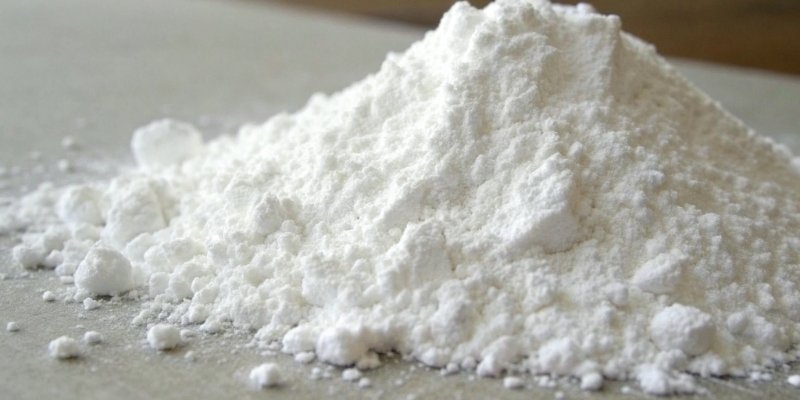
Aluminum hydroxide6 is always a solid under normal conditions. You will never receive it as a liquid or gas in a warehouse. It almost always comes as a fine, white powder. But "solid" can mean many things in chemistry, so let’s be more specific.
Crystalline Structure
It exists in several different crystal forms, which we call polymorphs7. The most common and stable form is Gibbsite8. Other forms you might hear about are Bayerite and Nordstrandite. From my production experience, Gibbsite is what we almost always produce for industrial sales. This is because it is the most stable form. The specific crystal structure affects properties like hardness and how it dissolves in acids or bases.
Appearance and Handling
The powder is fine and has no smell. Depending on the grade, it can feel slightly different to the touch. Some grades are surface-treated to improve how they mix with plastics, which can give them a slightly waxy feel. It also has some hygroscopicity. This means it can absorb a small amount of moisture from the air if left exposed. That is why we always ship it from our factory in sealed, moisture-proof bags to protect its quality.
How do aluminum hydroxide’s properties compare to other hydroxides?
You are considering different hydroxides for your formula. But they are not all the same. Choosing the wrong one can be a costly experiment that fails to deliver the right performance.
Compared to other metal hydroxides, aluminum hydroxide is unique. It’s amphoteric, unlike strongly basic ones like sodium hydroxide. It decomposes at a lower temperature (~300°C) than magnesium hydroxide (~350°C), affecting its use as a flame retardant. Its low solubility is common among many metal hydroxides.
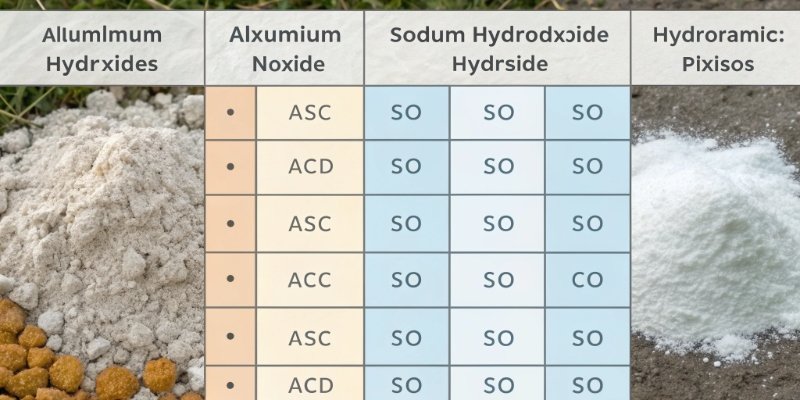
Not all hydroxides are created equal. As a direct manufacturer, I often get questions comparing our aluminum hydroxide to other common chemicals. Let’s look at two frequent comparisons: magnesium hydroxide9 (MDH) and sodium hydroxide.
Aluminum Hydroxide vs. Magnesium Hydroxide
Both are used as flame retardants. The main difference is their decomposition temperature. Aluminum hydroxide (ATH) decomposes around 300°C. Magnesium hydroxide (MDH) decomposes at a higher temperature, around 350°C. This makes MDH a better choice for polymers that are processed at higher temperatures where ATH might break down too early. However, ATH is often more cost-effective and provides excellent flame retardancy for many common plastics like PVC and EVA.
Aluminum Hydroxide vs. Sodium Hydroxide
This is a very different comparison. Sodium hydroxide is a strong base. It is highly soluble in water and very corrosive. It is a bulk commodity chemical used for things like drain cleaning or large-scale pH adjustment. Aluminum hydroxide, on the other hand, is a very weak, insoluble solid. Its special amphoteric nature10 is its key feature, allowing it to act as either an acid or a base.
| Hydroxide | Type | Solubility in Water | Key Use |
|---|---|---|---|
| Aluminum Hydroxide | Amphoteric | Insoluble | Flame Retardant, Antacid |
| Magnesium Hydroxide | Weak Base | Insoluble | Flame Retardant |
| Sodium Hydroxide | Strong Base | Highly Soluble | pH Adjustment, Cleaning |
Conclusion
Understanding aluminum hydroxide’s physical properties is key to success. Particle size, stability, and solubility directly impact your product’s performance. Choose wisely by knowing these details from your supplier.
-
Discover the importance of Mohs hardness in evaluating material abrasiveness. ↩
-
Understand the process of thermal decomposition and its relevance in material science. ↩
-
Explore the role of aluminum hydroxide as an effective flame retardant in materials. ↩
-
Find out how particle size influences reactivity and mixing in various applications. ↩
-
Learn about the factors that affect the reactivity of aluminum hydroxide in formulations. ↩
-
Explore how Aluminum hydroxide is utilized across various industries for its unique properties. ↩
-
Explore the concept of polymorphs and their significance in material properties. ↩
-
Learn about Gibbsite, the most stable form of aluminum hydroxide, and its applications. ↩
-
Understand the differences between magnesium hydroxide and aluminum hydroxide in applications. ↩
-
Understand the concept of amphoteric nature and its importance in chemical reactions. ↩

You may also be interested in:

What protective measures should be taken when handling aluminum hydroxide powder in a factory?
Are you worried about worker safety when handling fine powders? Aluminum hydroxide is generally safe, but mishandling its dust can lead to serious respiratory issues and even create explosive conditions.

What Key Technical Indicators Should Be Considered When Purchasing Aluminum Hydroxide?
Are you struggling to find the right aluminum hydroxide for your needs? You might be paying for features you don’t even require. Let’s simplify the technical details. When buying aluminum

What are the market trends for aluminum hydroxide in 2026?
Are you planning your 2026 raw material purchases? Volatile markets make it hard. I will share insights from the factory floor to help you make better decisions for your business.
Is aluminum hydroxide toxic and is it harmful to the human body?
Worried about the word "aluminum" in your products? It sounds scary and can make you question its safety. I’m here to clear up the confusion with simple facts. Aluminum hydroxide

What are the side effects of long-term use of stomach medications containing aluminum hydroxide?
Struggling with constant heartburn? Reaching for that stomach medicine might seem like the only option. But what if that relief comes with hidden long-term costs? The most common side effect

Does ingesting aluminum (such as through aluminum hydroxide) cause Alzheimer's disease?
Are you worried that everyday products containing aluminum might be harmful? This fear connects to serious health concerns like Alzheimer’s, making you question what is safe. Let’s look closely. Based

Why do some vaccines contain aluminum hydroxide (aluminum adjuvant)?
Confused about vaccine ingredients? Seeing aluminum hydroxide listed can be unsettling. I’ll explain its crucial role and why it’s there to help your body build strong immunity. Aluminum hydroxide acts

Is the aluminum adjuvant in vaccines safe for infants or adults?
You read about vaccine ingredients and worry. The word "aluminum" sounds scary, especially when talking about babies. But understanding the facts can give you peace of mind. Yes, the aluminum

What environmental problems are generated during the production of aluminum hydroxide?
Worried about environmental compliance in your supply chain? Sourcing from China can be complex. You need a reliable, eco-conscious partner for your aluminum hydroxide needs. The main environmental issue is

Where are China's main aluminum hydroxide production areas?
Are you struggling to find the right aluminum hydroxide supplier in China? This confusion can lead to higher costs and unstable quality, which hurts your business and your reputation. China’s