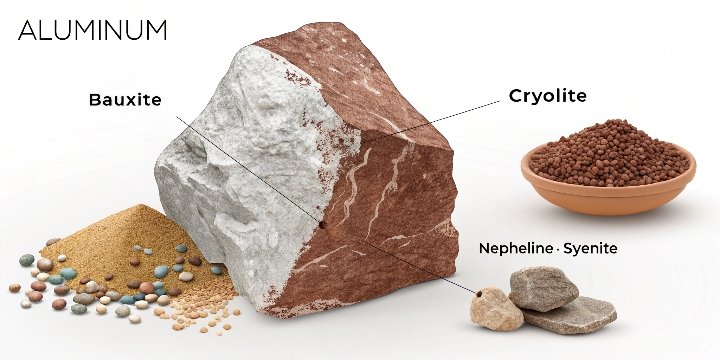
You know your business needs a steady supply of aluminum, but the geology behind it can be confusing. You hear about bauxite and other minerals, and a lack of clarity creates risk in your supply chain.
Bauxite is the only primary ore used for the commercial production of aluminum worldwide. While many other minerals contain aluminum, they are not economically viable to process with current technology. For all industrial purposes, bauxite is the one that matters.
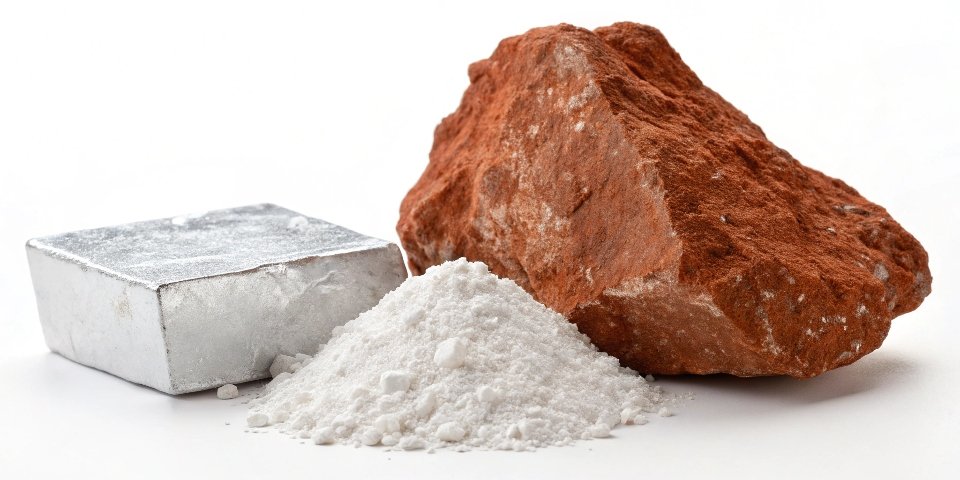
The entire global aluminum industry is built on one rock: bauxite. From my position managing an aluminum hydroxide plant in Henan, I know that our entire production process is designed around this single ore. While geologists might list dozens of aluminum-bearing minerals, for a practical business leader like Mr. Park in South Korea, understanding why bauxite is the only choice—and more importantly, where it can be processed most efficiently—is the key to a secure and cost-effective supply chain.
What are the three ores of aluminium?
You see lists that mention several different aluminum ores. This can make you second-guess your sourcing strategy, wondering if you are missing a cheaper or better alternative to bauxite.
The three most commonly cited aluminum minerals are bauxite, cryolite, and alunite. However, only bauxite is a true primary ore. Cryolite’s natural reserves are depleted, and alunite is not economically competitive.
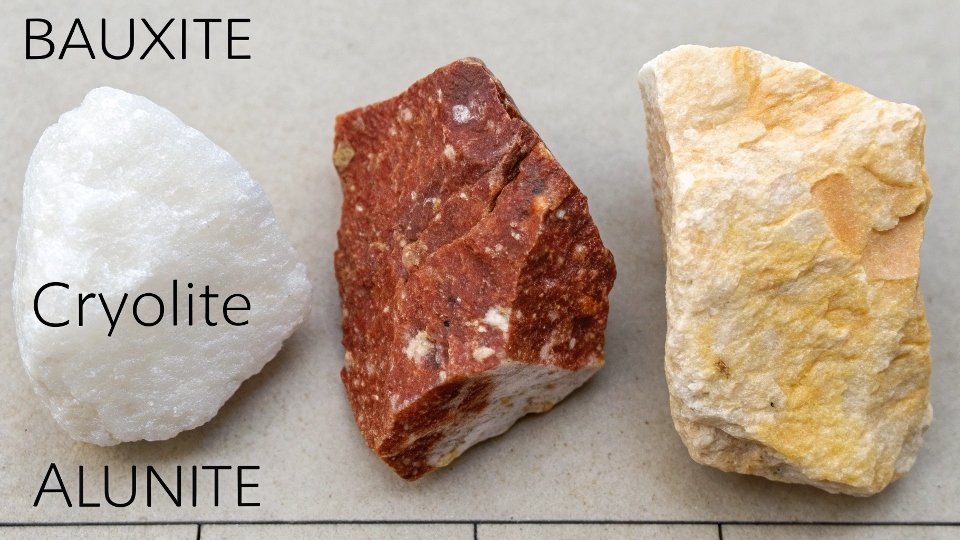
Let’s be very clear about this, because it saves a lot of confusion. The aluminum industry is a bauxite industry. Here is the reality for these three minerals:
- Bauxite1: This isn’t a single mineral, but a rock mixture rich in aluminum hydroxide2 compounds. It’s our starting point for everything.
- Cryolite: This mineral was historically vital. It was used to lower the melting point of alumina3 during smelting. However, the world’s only major commercial mine was depleted decades ago. Today, the cryolite4 used in smelters is synthetically produced.
- Alunite: This is a potassium aluminum sulfate mineral. While it contains aluminum, the process to extract it is far more complex and costly than the Bayer process5 for bauxite.
For any buyer of aluminum hydroxide or aluminum metal, your focus should be 100% on the bauxite supply chain. The other names are mostly of historical or geological interest.
What are the main aluminum ores?
You need to know what really matters for your business. With so many mineral names out there, it’s easy to get lost in details that don’t affect your bottom line.
There is only one main aluminum ore: bauxite. It is the feedstock for over 99% of the world’s alumina and aluminum production. It is the most economical and efficient source by a very large margin.

At my factory, we live and breathe the Bayer process, the chemical method for refining bauxite into aluminum hydroxide. This process is the global standard. The reason is simple economics. The machinery, the chemistry, and the infrastructure are all optimized for bauxite. While you can technically get aluminum from other sources, like kaolin clays, the cost would be massively higher. You would need different chemicals, more energy, and a completely different factory setup. No company can compete using these alternative sources. So, when you are sourcing your material, the key question is not "what ore?" but "who has the most efficient bauxite refining industry6?" This is the question that leads directly to China, where our massive, integrated industrial chain provides an unbeatable economic advantage.
What is the 10 ore of aluminium?
You might see strange phrases online like "the 10 ore of aluminium." This sounds like a specific industrial term, and it can be confusing if you think you are missing something important.
There is no mineral or industrial term known as the "10 ore of aluminium." This phrase most likely comes from a typo or a mistranslation of a list of "10 aluminum-bearing ores." The only ore of commercial importance remains bauxite.
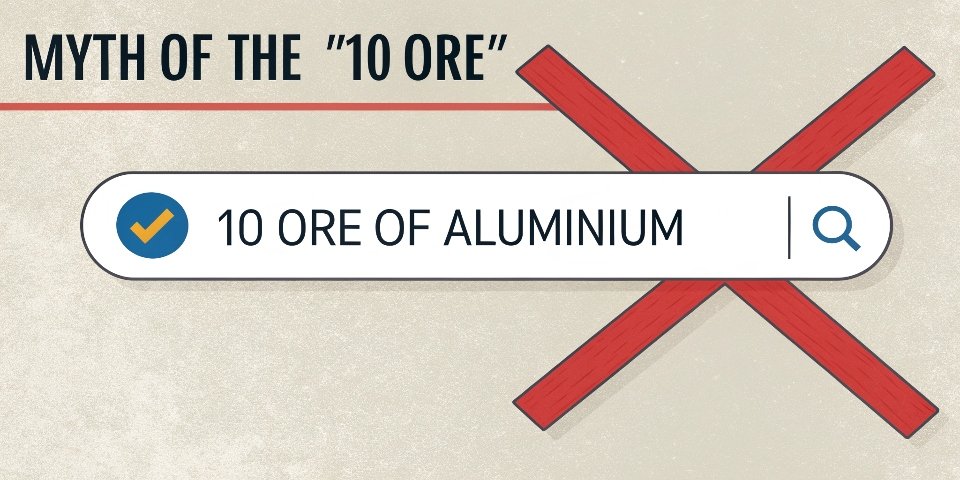
This is a good example of how online information can be misleading. A geologist could easily list ten or more minerals that contain aluminum atoms. This list might include feldspar, corundum, or kaolinite. But from an industrial and business perspective, these are not aluminum ores. They are used for other things, like making ceramics, glass, or abrasives. Extracting aluminum from them is simply too expensive to be practical. As a factory manager, my focus is on industrial reality, not geological theory. I can assure you that no one in our industry talks about a "10 ore." We talk about bauxite quality, supply chain efficiency, and production cost. Don’t let confusing terms distract you from the one thing that matters: securing a reliable supply from the most efficient bauxite-processing region in the world.
Is there bauxite in the Korea or USA?
You need a secure supply, which means understanding where your supplier’s raw materials come from. Relying on a country that lacks resources or the ability to process them is a major risk.
The USA has bauxite deposits but lacks a competitive refining industry due to high costs. South Korea is a resource-poor nation with almost no bauxite, making it completely reliant on imports for its aluminum needs.
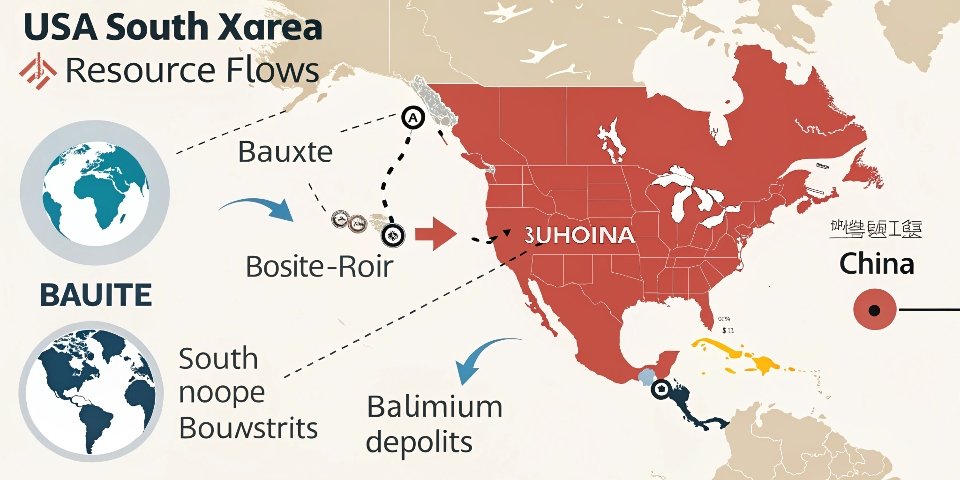
This question gets to the heart of the global supply chain. Let’s look at the reality for these countries compared to China. It’s a story I know well, and it explains why buyers like Mr. Park look to us.
| Country | Bauxite Situation | Industrial Chain Reality |
|---|---|---|
| USA | Resource-rich, has bauxite. | Lacks a competitive refining workforce and industry. It’s cheaper to import refined alumina. |
| South Korea | Resource-poor, no bauxite. | Entirely dependent on imports. Excellent at manufacturing, but must source all raw materials. |
| China | Resource-rich, has bauxite. | Has the world’s most complete and cost-effective chain for mining, refining, and producing. |
The United States has the rock, but not the industry. South Korea has the industry, but not the rock. China is unique because it has both the resources and the world’s most complete and efficient industrial chain to process them. This is why when you source from a Chinese factory like ours, you are tapping into an unmatched ecosystem of efficiency and reliability.
Conclusion
Bauxite is the only significant aluminum ore. China’s combination of rich resources and a complete, cost-effective refining industry makes it the most secure and logical source for your aluminum hydroxide needs.
-
Understanding Bauxite is crucial for anyone in the aluminum industry, as it is the primary ore for production. ↩
-
Explore the production process of aluminum hydroxide to understand its significance in aluminum manufacturing. ↩
-
Alumina is a key product derived from Bauxite; knowing its role is vital for industry professionals. ↩
-
Discover the historical significance of cryolite and its decline in the aluminum industry. ↩
-
The Bayer process is essential for refining Bauxite; understanding it can enhance your production knowledge. ↩
-
The efficiency of the bauxite refining industry is crucial for cost-effective aluminum production. ↩

You may also be interested in:

What protective measures should be taken when handling aluminum hydroxide powder in a factory?
Are you worried about worker safety when handling fine powders? Aluminum hydroxide is generally safe, but mishandling its dust can lead to serious respiratory issues and even create explosive conditions.

What Key Technical Indicators Should Be Considered When Purchasing Aluminum Hydroxide?
Are you struggling to find the right aluminum hydroxide for your needs? You might be paying for features you don’t even require. Let’s simplify the technical details. When buying aluminum
What are the market trends for aluminum hydroxide in 2026?
Are you planning your 2026 raw material purchases? Volatile markets make it hard. I will share insights from the factory floor to help you make better decisions for your business.
Is aluminum hydroxide toxic and is it harmful to the human body?
Worried about the word "aluminum" in your products? It sounds scary and can make you question its safety. I’m here to clear up the confusion with simple facts. Aluminum hydroxide

What are the side effects of long-term use of stomach medications containing aluminum hydroxide?
Struggling with constant heartburn? Reaching for that stomach medicine might seem like the only option. But what if that relief comes with hidden long-term costs? The most common side effect

Does ingesting aluminum (such as through aluminum hydroxide) cause Alzheimer's disease?
Are you worried that everyday products containing aluminum might be harmful? This fear connects to serious health concerns like Alzheimer’s, making you question what is safe. Let’s look closely. Based

Why do some vaccines contain aluminum hydroxide (aluminum adjuvant)?
Confused about vaccine ingredients? Seeing aluminum hydroxide listed can be unsettling. I’ll explain its crucial role and why it’s there to help your body build strong immunity. Aluminum hydroxide acts

Is the aluminum adjuvant in vaccines safe for infants or adults?
You read about vaccine ingredients and worry. The word "aluminum" sounds scary, especially when talking about babies. But understanding the facts can give you peace of mind. Yes, the aluminum

What environmental problems are generated during the production of aluminum hydroxide?
Worried about environmental compliance in your supply chain? Sourcing from China can be complex. You need a reliable, eco-conscious partner for your aluminum hydroxide needs. The main environmental issue is
Where are China's main aluminum hydroxide production areas?
Are you struggling to find the right aluminum hydroxide supplier in China? This confusion can lead to higher costs and unstable quality, which hurts your business and your reputation. China’s