
What are the most important things to know about aluminum hydroxide?
September 9, 2025 by Lee On
Sourcing industrial chemicals can be a minefield of technical specifications. Ordering the wrong grade of a product like aluminum hydroxide can lead to production failures and wasted money.
Aluminum hydroxide is a versatile compound whose main uses are as an active ingredient in antacids and as a major industrial flame retardant. Its specific grade, determined by purity and particle characteristics, is critical for its final application and performance.
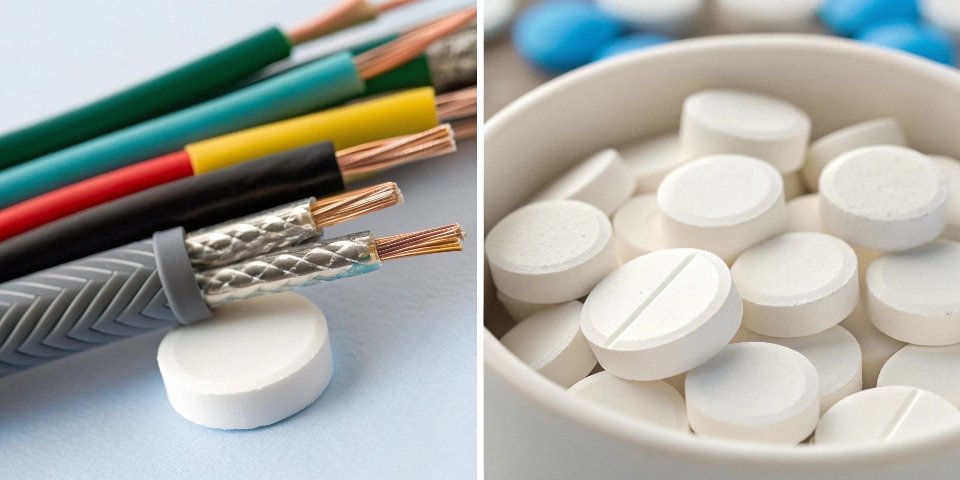
From my perspective managing production at a Chinese factory, the white powder we ship for pharmaceuticals is a completely different product from the one we send to a plastics compounder. While they share the same chemical name, their properties, production methods, and quality controls are worlds apart. For a discerning buyer like Mr. Park, understanding these key facts is not just an advantage; it is essential for sourcing the correct, safe, and effective material for his market. Let’s explore the most important "results" you need when researching this chemical.
What is the primary function of aluminum hydroxide?
Are you unclear on exactly what this common white powder does? It seems to pop up in unrelated industries, causing confusion about its real purpose and value.
Its primary functions are twofold. In pharmaceuticals, it acts as an antacid to safely neutralize stomach acid. In industry, it serves as a non-toxic flame retardant to improve the fire safety of plastics and rubber.
These two functions define the entire market for aluminum hydroxide1. In our factory, we think of them as two separate product families, each with its own set of critical specifications. A customer ordering for one use would find the product for the other use completely unsuitable.
-
Pharmaceutical Function: As an active pharmaceutical ingredient (API), its job is to perform a simple chemical reaction in the stomach:
Al(OH)₃ + 3HCl → AlCl₃ + 3H₂O. It neutralizes hydrochloric acid, providing relief from heartburn. For this, absolute purity2 is the goal. We have to ensure that heavy metal content3, especially lead and arsenic, is below the tiny limits set by pharmacopoeias like the USP or EP. -
Industrial Function: As a flame retardant (often called ATH), its job is to protect a material. It is mixed into a polymer or rubber. Its performance here is physical, not chemical, in the final product. Here, purity is secondary to properties like particle size, whiteness, and how it interacts with the polymer.
How is commercial aluminum hydroxide produced?
Do you picture this powder being simply mined from the earth? The reality is a sophisticated chemical process that is necessary to achieve the purity and forms required by modern industry.
Nearly all commercial aluminum hydroxide is produced from bauxite ore using the Bayer process. This process chemically refines the ore in multiple stages to precipitate pure aluminum hydroxide crystals, which are then washed, dried, and milled.
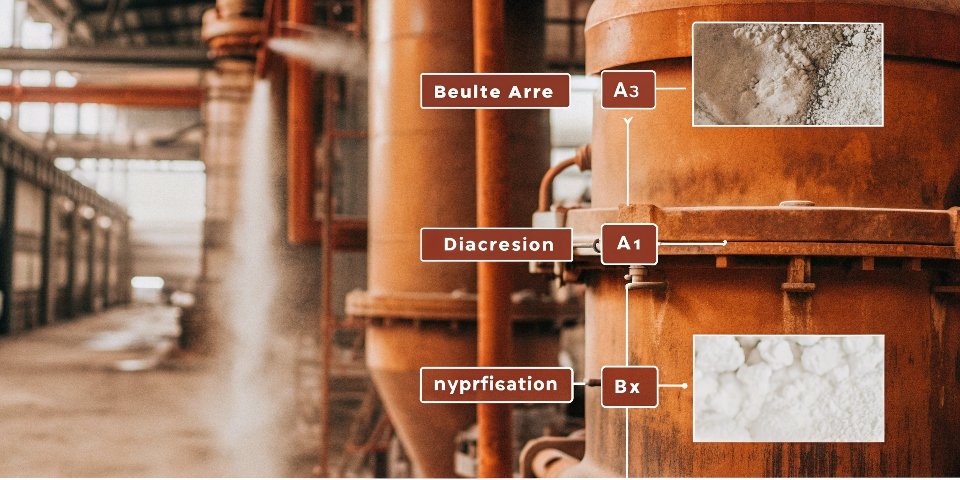
As a factory insider, I can tell you the Bayer process4 is the heart of our operation. It’s how we turn reddish-brown rock into a consistent, high-value white powder. The steps are straightforward but require massive equipment and precise control. First, we crush the bauxite ore and dissolve it in a hot solution of caustic soda (sodium hydroxide) in large pressure vessels. This step, called digestion, dissolves the aluminum-containing compounds. Next comes clarification, where we filter out the insoluble impurities, which form a waste product called "red mud5." The clear solution of sodium aluminate then goes to huge tanks for precipitation. This is the most critical step. We add tiny seed crystals of aluminum hydroxide to start a controlled precipitation. By carefully managing the temperature and time here, we can grow crystals of a specific size and shape, which is essential for creating different grades. Finally, the precipitated powder is washed thoroughly and either dried for sale as ATH or sent to huge kilns to be calcined into alumina (Al₂O₃) for aluminum metal production.
What makes aluminum hydroxide an effective flame retardant?
How can a simple mineral powder stop plastics from burning? It’s not magic; it is a clever use of basic chemistry that provides fire safety without toxic side effects.
It works by releasing its chemically bound water molecules when heated. This endothermic reaction cools the material and the released water vapor dilutes the flammable gases, suppressing smoke and slowing the fire’s spread.

Aluminum hydroxide, or ATH, is the world’s leading halogen-free flame retardant6 for a reason. Its mechanism is a powerful three-in-one action that happens right when it’s needed most. When a fire heats a plastic containing ATH to around 200°C, the compound begins to decompose.
| Action | Description | Benefit |
|---|---|---|
| 1. Cooling | The decomposition reaction is endothermic, meaning it absorbs a lot of heat. | Cools the plastic, slowing its breakdown. |
| 2. Dilution | It releases 35% of its weight as water vapor. | Displaces oxygen and dilutes flammable gases. |
| 3. Insulation | It leaves behind a char layer of inert alumina (Al₂O₃) on the material’s surface. | Forms a protective barrier against heat. |
This approach is highly valued because it is so safe. Unlike older flame retardants that used bromine or chlorine, ATH does not release toxic or corrosive gases when it burns. This is a huge advantage in applications like subway cables or building panels, where smoke toxicity is a major life-safety concern.
What is the most important factor when buying aluminum hydroxide?
Are you focused only on the lowest price when sourcing? While cost is important, one single factor has a much bigger impact on whether your purchase is a success or a failure.
The single most important factor is correctly matching the product grade to your end-use application. You must verify that the material’s purity and physical properties meet your specific requirements, whether for pharmaceutical or industrial use.
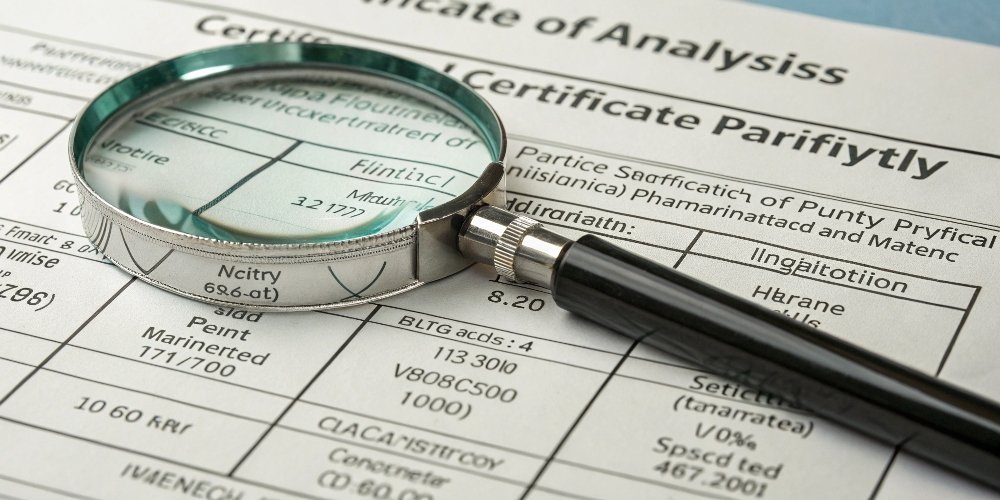
Every week, I talk to buyers, and the most successful ones understand this point deeply. It’s not about finding the "best" aluminum hydroxide; it’s about finding the right aluminum hydroxide. A pharmaceutical distributor like Mr. Park must prioritize purity above all else. His primary concern is the Certificate of Analysis7 (COA) that proves the batch meets USP or EP standards for heavy metals. For him, a low-purity batch is unusable and dangerous. In contrast, a buyer for a cable manufacturing company cares more about the Technical Data Sheet (TDS). They need to know the particle size distribution8 (PSD) to ensure the plastic maintains its flexibility. They need the right surface treatment to ensure the ATH bonds properly with their polymer. For them, paying extra for pharmaceutical purity would be a complete waste of money. The most important factor is the conversation between a knowledgeable buyer and a capable producer to ensure a perfect match between the product and its intended application.
Conclusion
Ultimately, aluminum hydroxide is a key chemical with two distinct worlds of use. Understanding its grades, production, and functions is the key to sourcing the right material safely and cost-effectively from a factory.
-
Explore the diverse applications of aluminum hydroxide in industries like pharmaceuticals and fire safety. ↩
-
Understand the significance of purity in chemical applications and its impact on product performance. ↩
-
Explore the regulations surrounding heavy metal content in pharmaceutical products. ↩
-
Explore the Bayer process and its role in producing high-quality aluminum hydroxide. ↩
-
Discover the byproducts of the Bayer process and their environmental implications. ↩
-
Discover the science behind flame retardants and their importance in enhancing fire safety. ↩
-
Understand the importance of a Certificate of Analysis in ensuring product quality and safety. ↩
-
Explore the significance of particle size distribution in determining material properties. ↩

You may also be interested in:

What protective measures should be taken when handling aluminum hydroxide powder in a factory?
Are you worried about worker safety when handling fine powders? Aluminum hydroxide is generally safe, but mishandling its dust can lead to serious respiratory issues and even create explosive conditions.

What Key Technical Indicators Should Be Considered When Purchasing Aluminum Hydroxide?
Are you struggling to find the right aluminum hydroxide for your needs? You might be paying for features you don’t even require. Let’s simplify the technical details. When buying aluminum

What are the market trends for aluminum hydroxide in 2026?
Are you planning your 2026 raw material purchases? Volatile markets make it hard. I will share insights from the factory floor to help you make better decisions for your business.
Is aluminum hydroxide toxic and is it harmful to the human body?
Worried about the word "aluminum" in your products? It sounds scary and can make you question its safety. I’m here to clear up the confusion with simple facts. Aluminum hydroxide

What are the side effects of long-term use of stomach medications containing aluminum hydroxide?
Struggling with constant heartburn? Reaching for that stomach medicine might seem like the only option. But what if that relief comes with hidden long-term costs? The most common side effect

Does ingesting aluminum (such as through aluminum hydroxide) cause Alzheimer's disease?
Are you worried that everyday products containing aluminum might be harmful? This fear connects to serious health concerns like Alzheimer’s, making you question what is safe. Let’s look closely. Based

Why do some vaccines contain aluminum hydroxide (aluminum adjuvant)?
Confused about vaccine ingredients? Seeing aluminum hydroxide listed can be unsettling. I’ll explain its crucial role and why it’s there to help your body build strong immunity. Aluminum hydroxide acts

Is the aluminum adjuvant in vaccines safe for infants or adults?
You read about vaccine ingredients and worry. The word "aluminum" sounds scary, especially when talking about babies. But understanding the facts can give you peace of mind. Yes, the aluminum

What environmental problems are generated during the production of aluminum hydroxide?
Worried about environmental compliance in your supply chain? Sourcing from China can be complex. You need a reliable, eco-conscious partner for your aluminum hydroxide needs. The main environmental issue is

Where are China's main aluminum hydroxide production areas?
Are you struggling to find the right aluminum hydroxide supplier in China? This confusion can lead to higher costs and unstable quality, which hurts your business and your reputation. China’s