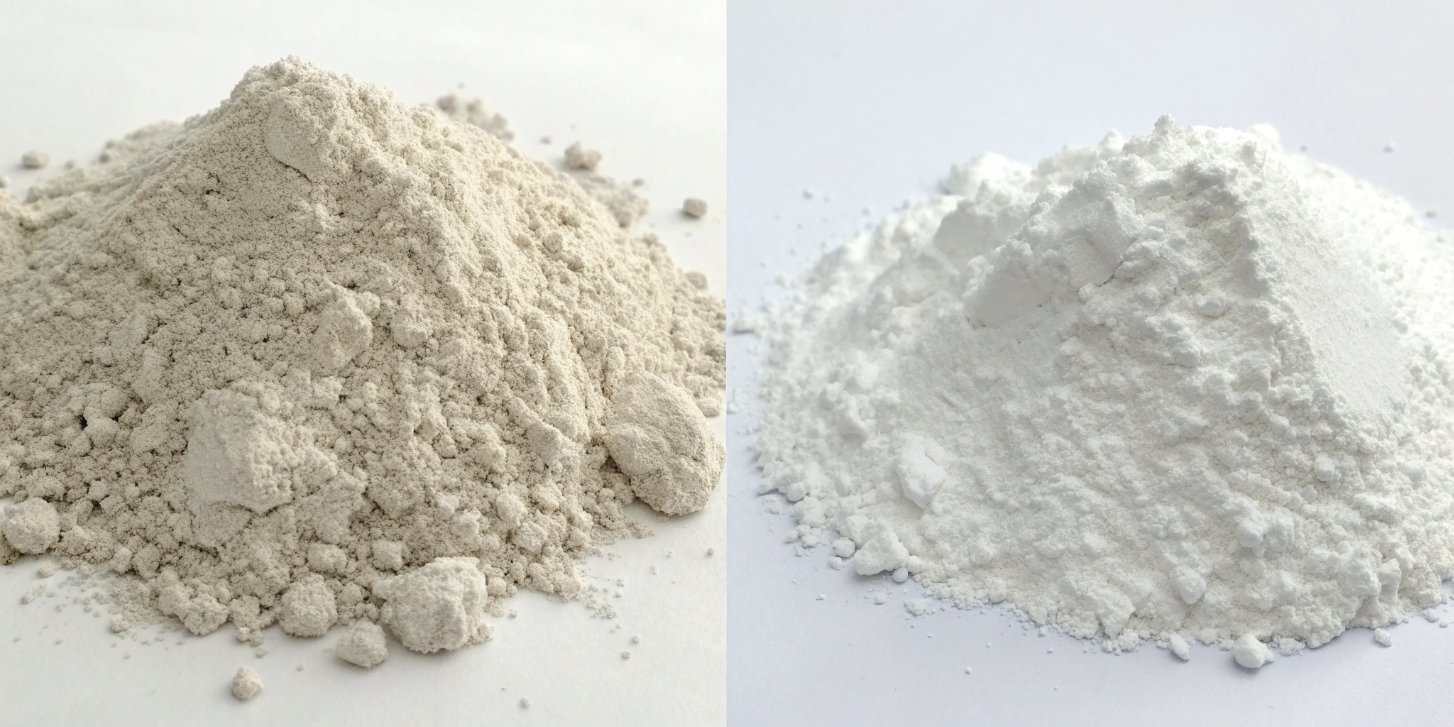
What are the differences between "high-whiteness aluminum hydroxide" and ordinary aluminum hydroxide in terms of application and price?
December 1, 2025 by Lee On
Struggling to choose the right aluminum hydroxide? The wrong choice can ruin your product’s appearance and cost you more. Understanding the key differences is simple and will save you money.
High-whiteness aluminum hydroxide is purer, brighter, and used in high-end applications like solid surfaces, so it costs more. Ordinary aluminum hydroxide is for industrial fillers where color isn’t critical, making it cheaper. Whiteness is the main price driver, followed by particle size.
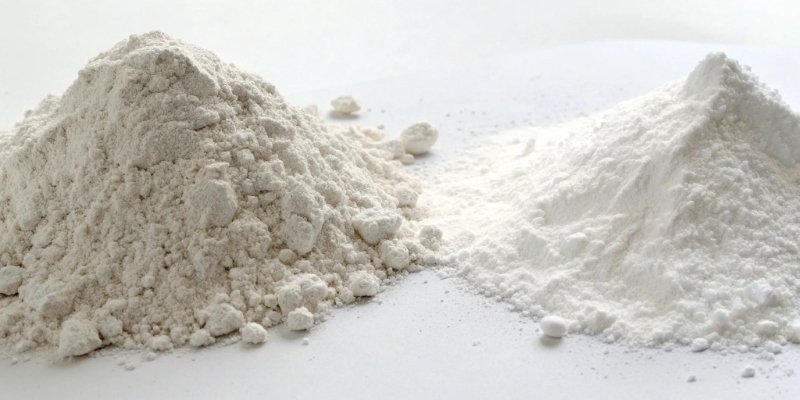
This high-level view is helpful, but the details are where you can really optimize your costs and product quality. As someone who has managed production for years, I know that small details make a big difference. Let’s break down the different types to see where the value truly lies and help you make the best choice for your business.
What are the different types of aluminium hydroxide?
Feeling lost in the jargon of aluminum hydroxide grades? Using the wrong type can lead to production issues and wasted money. Let’s clarify the main types available to you.
Aluminum hydroxide is mainly categorized by its production method: the Bayer process (wet) and the sintering process (dry). It’s also graded by properties like whiteness, purity, and particle size, leading to industrial, standard, and high-whiteness grades for different applications.
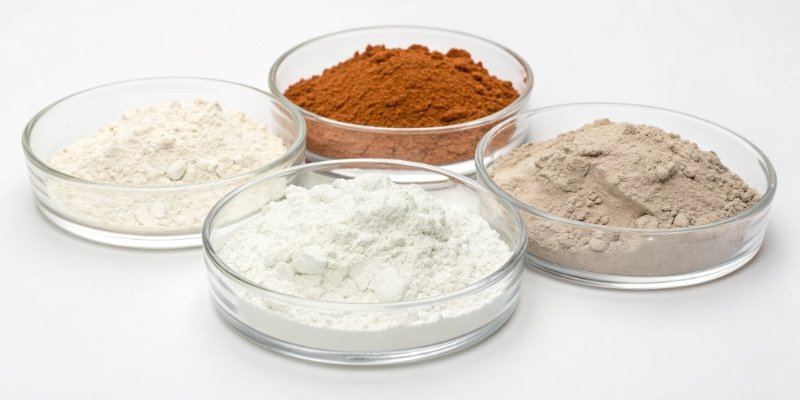
In my factory, we primarily use the Bayer process1 because it gives us better control over purity2 and particle size3, which is critical for higher-grade products. The choice of production method is the first step that defines the material’s potential. From there, we refine it to meet specific customer needs.
Grades Based on Purity and Whiteness
The most common way buyers like you will see aluminum hydroxide4 categorized is by its grade. This is a simple way to understand its quality and intended use. A small difference in whiteness5 or purity can completely change the final product’s look and performance. I’ve seen customers save a little on a lower grade only to have problems with discoloration in their final products later.
Here is a simple breakdown I use to help my clients:
| Grade Type | Whiteness (L* value) | Purity (Al(OH)₃ %) | Common Applications |
|---|---|---|---|
| Industrial Grade | < 92 | 99.0 – 99.5% | Water treatment, basic fillers, other chemical production |
| Standard Grade | 92 – 95 | 99.5 – 99.7% | Flame retardants in plastics, rubber, basic coatings |
| High-Whiteness | > 95 | > 99.7% | Solid surfaces, artificial marble, high-end plastics |
What makes aluminum hydroxide different?
Do you think all white powders are the same? Assuming so can degrade your final product’s quality and performance. Key properties set different grades of aluminum hydroxide apart.
The key differences are whiteness, particle size, purity, and oil absorption. Whiteness affects appearance, particle size impacts processing and strength, purity influences chemical resistance, and oil absorption is crucial for use in polymers and resins. These factors determine its suitability and price.
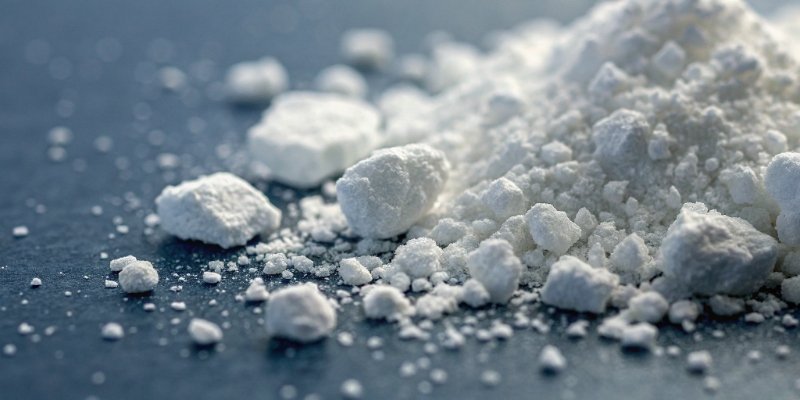
These properties are not just numbers on a data sheet; they directly affect how the material behaves in your production line and in your final product. Over the years, I’ve learned that understanding these four pillars is the secret to selecting the most cost-effective material without sacrificing quality. It’s the difference between a good product and a great one.
Whiteness: The Price Driver
As I mentioned in my insight, whiteness is the single biggest factor affecting price. High-whiteness grades require purer raw materials and more refined processing to remove trace impurities6 like iron oxide, which cause a yellow or gray tint. For applications like white artificial stone countertops, whiteness is non-negotiable.
Particle Size: From Filler to Functional Additive
Particle size, or D50, is the second most important factor. Standard grades might have a particle size of 10-20 microns. But for some applications, you need an ultrafine powder, maybe around 1-3 microns. Finer particles offer a smoother surface finish and better mechanical properties in composites. But grinding the material to be that fine requires a lot of energy and special equipment, so the price goes up.
| Property | Impact on Application | Impact on Price |
|---|---|---|
| Whiteness | Determines the color and brightness of the final product. | High |
| Particle Size | Affects surface smoothness, strength, and viscosity. | Moderate to High |
| Purity | Influences chemical and heat resistance. | Moderate |
| Oil Absorption | Determines how much resin it can absorb in composites. | Low |
What levels does aluminum hydroxide lower?
Are you looking for a reliable flame retardant? Choosing the wrong one can cause you to fail safety tests and damage your reputation. Aluminum hydroxide is an effective solution for reducing flammability.
Aluminum hydroxide is a non-toxic flame retardant. When heated, it decomposes and releases water vapor, which absorbs heat and dilutes flammable gases. This process effectively lowers the temperature and slows the spread of fire. It also reduces smoke production.
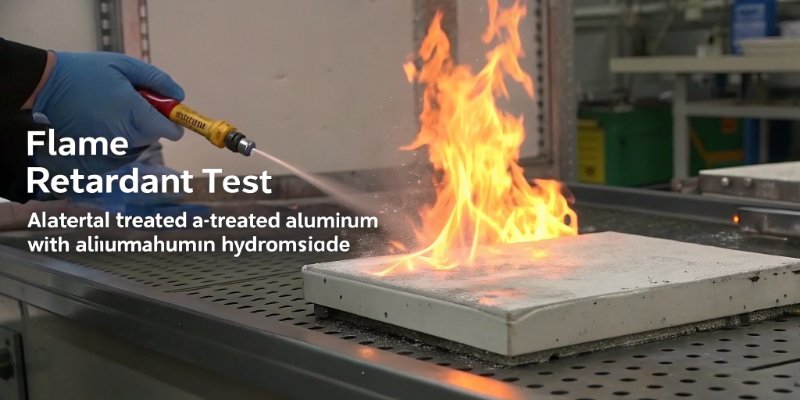
This is one of the most valuable properties of aluminum hydroxide, especially in industries like wire and cable, construction materials, and transportation. It’s an environmentally friendly choice because it contains no halogens. Instead of releasing toxic gases when it burns, it releases harmless water vapor. It’s a simple, elegant solution to a serious safety problem.
How It Works: A Simple Chemical Reaction
The science is straightforward. The chemical formula is Al(OH)₃. The " (OH)₃" part represents three water molecules bonded to the aluminum. When the material is heated to around 220°C, a process called endothermic decomposition begins. This means the material absorbs a large amount of heat from its surroundings. At the same time, it releases the three water molecules as steam. This steam cools the material and also displaces the oxygen needed for the fire to burn.
The Benefit: Smoke Suppression
Beyond just stopping flames, aluminum hydroxide is also an excellent smoke suppressant. The water vapor it releases dilutes the combustible gases, which means less smoke is formed. In a real fire, smoke is often more dangerous than the fire itself, so this is a critical safety feature. This is why you see it used so often in confined spaces like airplane interiors and subway cables, where clear escape routes are essential.
Is aluminum hydroxide white?
Are you assuming all aluminum hydroxide is perfectly white? This misconception can lead to off-color products and customer complaints. Let’s look at what "white" really means in our industry.
Yes, aluminum hydroxide is a white powder. But its degree of whiteness varies a lot based on its purity and the manufacturing process. "High-whiteness" grades are exceptionally bright, while standard grades can have a slightly off-white or grayish tint due to trace impurities.
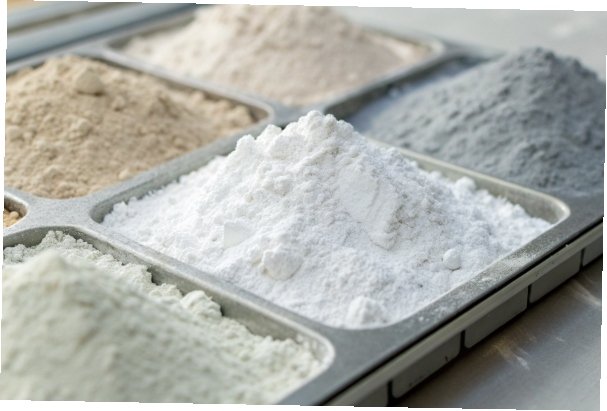
In my experience running our production lines, controlling whiteness is a constant focus. Even a tiny amount of contamination can affect the final color. For a buyer like Park Chung-hee, who deals with pharmaceutical applications, purity and color consistency are probably very important. This is why a direct relationship with the source factory is valuable; we can ensure you get the exact specification you need for every single batch.
Measuring "Whiteness"
We don’t just rely on our eyes to judge color. In the industry, we use a device called a colorimeter to measure whiteness objectively. The most common scale is the CIE Lab color space, where the [L value](https://en.wikipedia.org/wiki/Whiteness_(colorimetry))[^7] represents lightness from black (0) to white (100). When we talk about "high-whiteness," we are talking about a product with a very high L* value.
The Role of Impurities
What makes one batch less white than another? The answer is almost always impurities. Tiny amounts of iron oxide (rust) are the most common culprit, giving the powder a yellowish or reddish tint. Sodium salts, if not washed out properly during the Bayer process, can also affect the final appearance. At our plant, we use multi-stage washing and magnetic separation to remove these impurities and achieve the high whiteness our customers demand.
| Whiteness Grade | Typical L* Value | Common Impurities Controlled |
|---|---|---|
| Industrial Grade | < 92 | Iron, organic matter |
| Standard Grade | 92 – 95 | Reduced iron, sodium salts |
| High-Whiteness | > 95 | Very low iron, sodium, silica |
Conclusion
High-whiteness ATH costs more for its purity and appearance, ideal for premium products. Standard grades offer a cost-effective solution for industrial applications where color is less critical.
-
Gain insights into the Bayer process and how it affects the quality of aluminum hydroxide. ↩
-
Learn about the significance of purity in aluminum hydroxide and its effect on product performance. ↩
-
Explore the impact of particle size on the performance and suitability of aluminum hydroxide in various applications. ↩
-
Explore the various applications of aluminum hydroxide to understand its significance in different industries. ↩
-
Explore the factors that influence the whiteness of aluminum hydroxide and its implications for product quality. ↩
-
Discover the common impurities in aluminum hydroxide and how they impact its quality and appearance. ↩

You may also be interested in:

What protective measures should be taken when handling aluminum hydroxide powder in a factory?
Are you worried about worker safety when handling fine powders? Aluminum hydroxide is generally safe, but mishandling its dust can lead to serious respiratory issues and even create explosive conditions.

What Key Technical Indicators Should Be Considered When Purchasing Aluminum Hydroxide?
Are you struggling to find the right aluminum hydroxide for your needs? You might be paying for features you don’t even require. Let’s simplify the technical details. When buying aluminum

What are the market trends for aluminum hydroxide in 2026?
Are you planning your 2026 raw material purchases? Volatile markets make it hard. I will share insights from the factory floor to help you make better decisions for your business.
Is aluminum hydroxide toxic and is it harmful to the human body?
Worried about the word "aluminum" in your products? It sounds scary and can make you question its safety. I’m here to clear up the confusion with simple facts. Aluminum hydroxide

What are the side effects of long-term use of stomach medications containing aluminum hydroxide?
Struggling with constant heartburn? Reaching for that stomach medicine might seem like the only option. But what if that relief comes with hidden long-term costs? The most common side effect

Does ingesting aluminum (such as through aluminum hydroxide) cause Alzheimer's disease?
Are you worried that everyday products containing aluminum might be harmful? This fear connects to serious health concerns like Alzheimer’s, making you question what is safe. Let’s look closely. Based

Why do some vaccines contain aluminum hydroxide (aluminum adjuvant)?
Confused about vaccine ingredients? Seeing aluminum hydroxide listed can be unsettling. I’ll explain its crucial role and why it’s there to help your body build strong immunity. Aluminum hydroxide acts

Is the aluminum adjuvant in vaccines safe for infants or adults?
You read about vaccine ingredients and worry. The word "aluminum" sounds scary, especially when talking about babies. But understanding the facts can give you peace of mind. Yes, the aluminum

What environmental problems are generated during the production of aluminum hydroxide?
Worried about environmental compliance in your supply chain? Sourcing from China can be complex. You need a reliable, eco-conscious partner for your aluminum hydroxide needs. The main environmental issue is

Where are China's main aluminum hydroxide production areas?
Are you struggling to find the right aluminum hydroxide supplier in China? This confusion can lead to higher costs and unstable quality, which hurts your business and your reputation. China’s