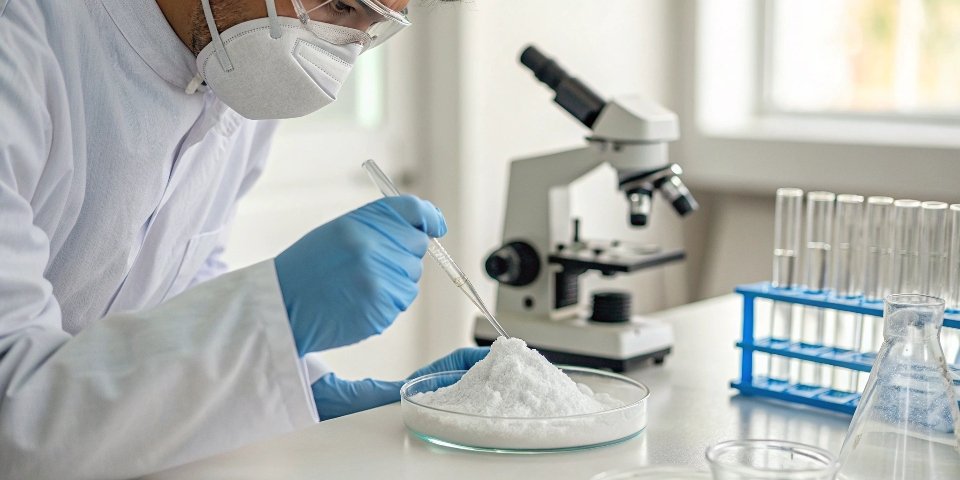
Are you struggling to find a consistent, high-quality supply of aluminum hydroxide? Price fluctuations and unreliable quality from middlemen can harm your business and disrupt your production schedule.
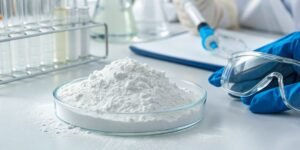
Aluminum hydroxide is a white powder known for being an excellent flame retardant and amphoteric, meaning it reacts with both acids and bases. It is produced almost exclusively by the Bayer process, which refines bauxite ore into pure, consistent aluminum hydroxide crystals for various industrial uses.
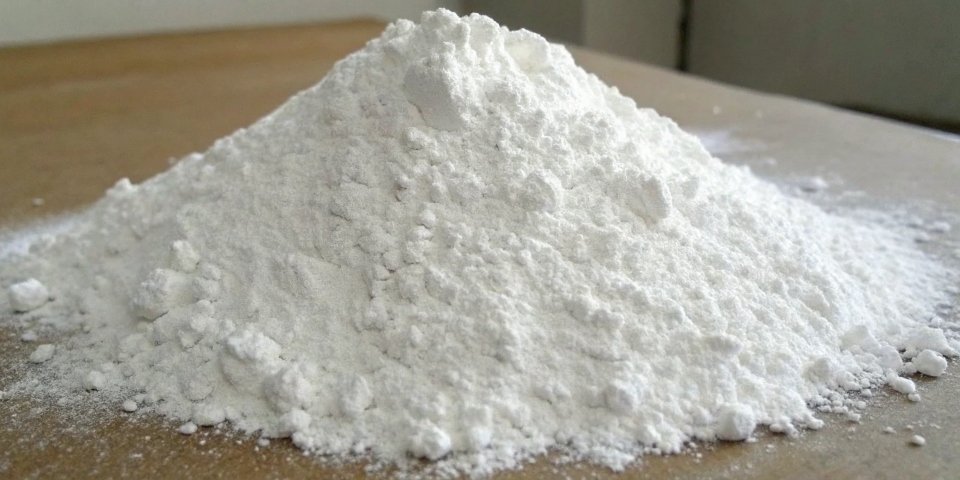
Understanding the basics is a good start. But as someone who has managed production for years, I know the details are what truly matter for your business. Knowing how it’s made and what its core properties are empowers you to choose the right supplier who can deliver the exact specifications you need. This knowledge protects you from quality issues and ensures you get the best value. Let’s explore what really makes this material so essential and how we ensure its quality from the ground up.
How do the key properties of aluminum hydroxide make it so versatile?
Choosing the right grade of aluminum hydroxide for your specific application can be confusing. Using the wrong type can lead to poor product performance and wasted money and materials.
Its versatility comes from a unique combination of properties. It acts as an effective flame retardant by releasing water when heated, it serves as a non-toxic white filler, and its amphoteric nature allows it to be used in both acidic and alkaline environments, like in pharmaceuticals.
At our factory, we produce different grades of aluminum hydroxide1 tailored for specific uses. To understand which is right for you, it helps to break down its core properties. Its most valued characteristic is flame retardancy. When heated to over 200°C, it begins to decompose in an endothermic reaction. This means it absorbs a significant amount of heat from its surroundings. At the same time, it releases water vapor, which dilutes flammable gases and suppresses smoke. This makes it a critical, non-toxic additive for wire and cable insulation and plastic composites. Its chemical stability2 and high whiteness3 also make it an ideal filler. It provides bulk and can improve the physical properties of materials like artificial marble and solid surfaces4 without affecting the color. Finally, its amphoteric5 nature is key for chemical and pharmaceutical applications. For a customer like you in the pharmaceutical industry, this property is what allows it to function effectively as an antacid, neutralizing excess stomach acid.
Breaking Down the Core Properties
| Property | Description | Common Application |
|---|---|---|
| Flame Retardancy | Releases water upon heating, absorbing heat and diluting flammable gases. | Wire & Cable Insulation, Plastics |
| Chemical Inertness | High whiteness3, non-toxic, and does not react under normal conditions. | Solid Surface Materials, Paper Filler |
| Amphoteric Nature | Reacts with both strong acids and strong bases. | Pharmaceuticals (Antacids), Water Treatment |
What is the Bayer process for producing aluminum hydroxide?
Do you worry about the purity and consistency of your aluminum hydroxide? Impurities from a poorly managed production process can ruin your final product and damage your reputation with your customers.
The Bayer process is the main industrial method. It involves digesting crushed bauxite ore in a hot sodium hydroxide solution. This dissolves the aluminum minerals. After filtering out impurities (red mud), the solution is cooled and seeded to precipitate pure aluminum hydroxide crystals, which are then washed and dried.
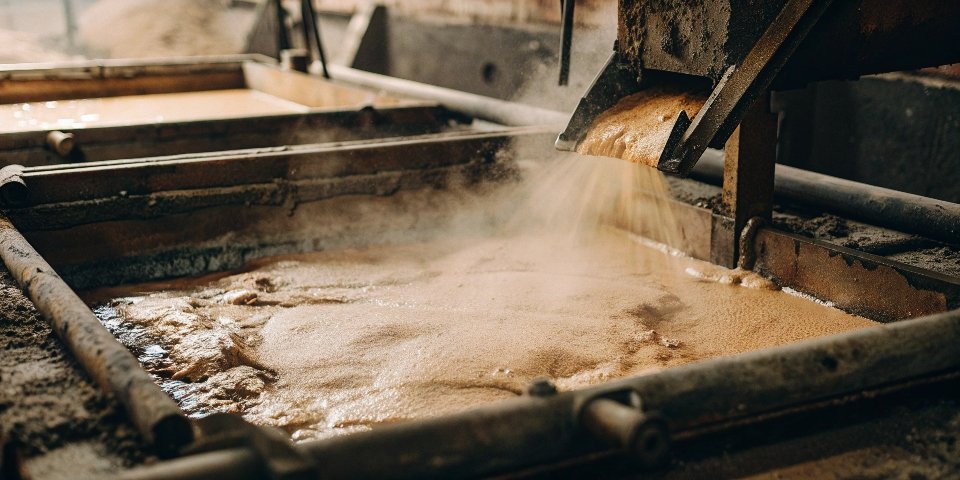
I’ve spent years overseeing every step of the Bayer process6 in our Henan plant. It’s a robust method, but only if you control it carefully. The quality of the final product depends entirely on how well each stage is managed. It begins with digestion, where we mix crushed bauxite with a hot caustic soda solution under high pressure. This dissolves the aluminum oxide into a sodium aluminate solution. The next critical stage is clarification. Here, the solution is cooled, allowing insoluble impurities, which we call "red mud7," to settle. We then filter the mixture to get a pure sodium aluminate liquor. How effectively we remove this red mud directly impacts the final product’s purity. Finally, we have precipitation. We cool the pure liquor and add tiny "seed" crystals of aluminum hydroxide. This starts a controlled crystallization process. By managing the temperature, time, and amount of seed, we can precisely control the particle size of the final product, which is one of the most important specifications for our customers.
How do we control quality during aluminum hydroxide production?
Are you getting inconsistent batches of material from your current supplier? This forces you to constantly adjust your own processes, costing you valuable time, money, and resources.
We control quality by monitoring key parameters at every single stage. This includes testing the raw bauxite, managing temperature and pressure during digestion, ensuring the complete removal of impurities, and precisely controlling particle size during precipitation. Final product testing verifies every batch meets your exact specifications.
As a source factory, we have complete control over the entire production line. This is a major advantage compared to trading companies who can’t oversee the process. In my previous role managing production, I implemented strict quality control checkpoints. It starts with the raw material. We use XRF analysis8 to test every shipment of bauxite to ensure its alumina content is high and silica content is low. During the Bayer process, our automated systems monitor temperature, pressure, and chemical concentrations in real-time. Any small deviation triggers an alert for my team to correct. The most crucial part for many of my customers is particle size control9. During precipitation, we carefully manage conditions to produce the exact particle size distribution (PSD) a customer needs, whether it’s a coarse grade for solid surfaces or a fine powder for flame retardant10s. Before any product is packaged, our lab conducts a final round of tests. We check for purity (especially sodium content), whiteness, oil absorption, and PSD to ensure the Certificate of Analysis (COA) you receive is a perfect match for the product in the bag.
Our Factory’s Quality Control Checkpoints
| Production Stage | Quality Control Action | Why It Matters for You |
|---|---|---|
| Raw Material | XRF analysis of incoming bauxite for Al2O3 and SiO2 content. | Ensures high purity and better yield from the very start. |
| Digestion | Real-time monitoring of temperature, pressure, and caustic concentration. | Guarantees efficient extraction and prevents process issues. |
| Precipitation | Precise control of temperature, seed charge, and residence time. | Determines the exact particle size and shape you need for your application. |
| Final Product | Testing for whiteness, particle size, purity, and oil absorption. | Confirms the batch meets your specifications before shipping. |
Conclusion
Understanding aluminum hydroxide’s properties and production is key. Working directly with a source factory like ours ensures you get the quality, consistency, and value your business relies on.
-
Explore the diverse uses of aluminum hydroxide in various industries to understand its significance. ↩
-
Explore the significance of chemical stability in industrial materials and its impact on product performance. ↩
-
Learn about the significance of whiteness in fillers and its impact on product aesthetics and quality. ↩ ↩
-
Discover how aluminum hydroxide enhances the properties of solid surface materials. ↩
-
Understanding amphoteric substances can enhance your knowledge of chemical reactions and applications. ↩
-
Learn about the Bayer process to appreciate the complexity and efficiency of aluminum hydroxide production. ↩
-
Understanding red mud management can provide insights into environmental practices in aluminum production. ↩
-
Explore the role of XRF analysis in ensuring material quality and purity in industrial applications. ↩
-
Learn about the importance of particle size control in manufacturing and its effects on product quality. ↩
-
Discover the science behind aluminum hydroxide’s flame retardant properties and its applications. ↩

You may also be interested in:

What protective measures should be taken when handling aluminum hydroxide powder in a factory?
Are you worried about worker safety when handling fine powders? Aluminum hydroxide is generally safe, but mishandling its dust can lead to serious respiratory issues and even create explosive conditions.

What Key Technical Indicators Should Be Considered When Purchasing Aluminum Hydroxide?
Are you struggling to find the right aluminum hydroxide for your needs? You might be paying for features you don’t even require. Let’s simplify the technical details. When buying aluminum

What are the market trends for aluminum hydroxide in 2026?
Are you planning your 2026 raw material purchases? Volatile markets make it hard. I will share insights from the factory floor to help you make better decisions for your business.
Is aluminum hydroxide toxic and is it harmful to the human body?
Worried about the word "aluminum" in your products? It sounds scary and can make you question its safety. I’m here to clear up the confusion with simple facts. Aluminum hydroxide

What are the side effects of long-term use of stomach medications containing aluminum hydroxide?
Struggling with constant heartburn? Reaching for that stomach medicine might seem like the only option. But what if that relief comes with hidden long-term costs? The most common side effect

Does ingesting aluminum (such as through aluminum hydroxide) cause Alzheimer's disease?
Are you worried that everyday products containing aluminum might be harmful? This fear connects to serious health concerns like Alzheimer’s, making you question what is safe. Let’s look closely. Based

Why do some vaccines contain aluminum hydroxide (aluminum adjuvant)?
Confused about vaccine ingredients? Seeing aluminum hydroxide listed can be unsettling. I’ll explain its crucial role and why it’s there to help your body build strong immunity. Aluminum hydroxide acts

Is the aluminum adjuvant in vaccines safe for infants or adults?
You read about vaccine ingredients and worry. The word "aluminum" sounds scary, especially when talking about babies. But understanding the facts can give you peace of mind. Yes, the aluminum

What environmental problems are generated during the production of aluminum hydroxide?
Worried about environmental compliance in your supply chain? Sourcing from China can be complex. You need a reliable, eco-conscious partner for your aluminum hydroxide needs. The main environmental issue is

Where are China's main aluminum hydroxide production areas?
Are you struggling to find the right aluminum hydroxide supplier in China? This confusion can lead to higher costs and unstable quality, which hurts your business and your reputation. China’s