Struggling with chemical properties? Aluminum hydroxide’s behavior in water can be confusing, but understanding it is key. Let’s clarify this important detail for you.
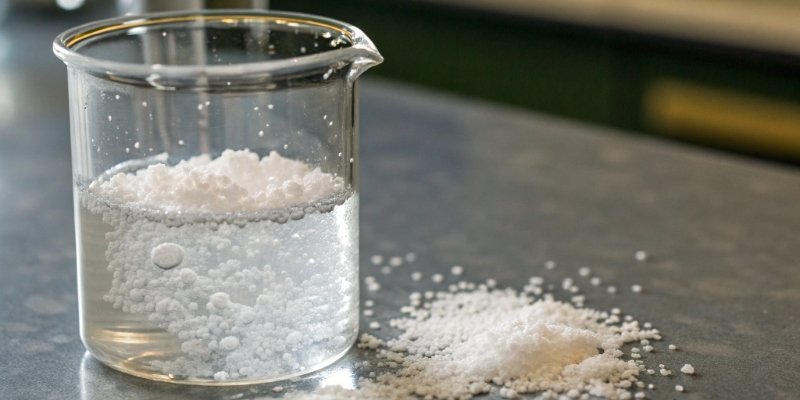
Aluminum hydroxide (Al(OH)₃) is considered insoluble in water. Its solubility is extremely low, at about 0.0001 grams per 100 mL of water. This property is crucial for many of its industrial and pharmaceutical applications, making it act as a suspension rather than a solution.
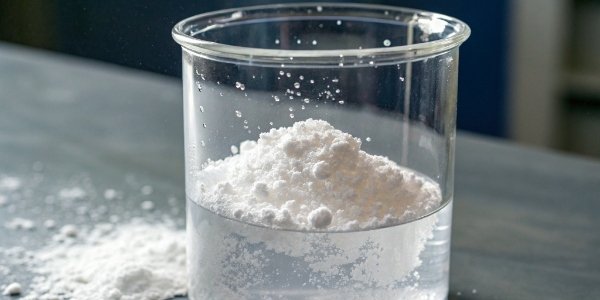
We’ve established that it’s insoluble in water, but that is not the complete picture. The way aluminum hydroxide behaves can change a lot in different chemical environments. Knowing these details is vital for using it correctly in any application, from pharmaceuticals to industrial processes. Let’s dive deeper into why this is the case and what it means for you.
Is Aluminium Hydroxide Soluble in Water or Not?
Are you seeing conflicting information about aluminum hydroxide’s solubility? This can be frustrating when you need a clear answer for your application. Here’s the definitive breakdown.
For all practical purposes, aluminum hydroxide is insoluble in neutral water. While a tiny amount technically dissolves, it’s so minimal that it’s insignificant. It forms a suspension, where solid particles are dispersed in the water but do not dissolve into the liquid.
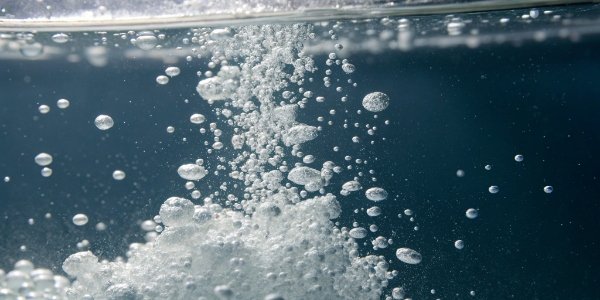
In our factory, I see this every day. When we prepare slurries, we mix aluminum hydroxide powder with water. The result is a milky white liquid. If you let it sit, the white particles will eventually settle at the bottom. This is clear proof that it doesn’t dissolve. The term for this is "practically insoluble." This property is central to its function. While it doesn’t react with or dissolve in neutral water, it is amphoteric1. This means it will dissolve in both strong acids2 and strong bases.
Here is a simple table to show its solubility3:
| Solvent | Solubility | Result |
|---|---|---|
| Water (H₂O) | Insoluble | Forms a suspension |
| Strong Acid (e.g., HCl) | Soluble | Forms aluminum chloride (AlCl₃) |
| Strong Base (e.g., NaOH) | Soluble | Forms sodium aluminate (Na[Al(OH)₄]) |
This dual-reactivity is what makes aluminum hydroxide so useful in so many different industries.
Does Al(OH)₃ Dissociate in Water?
Wondering if aluminum hydroxide breaks apart into ions in water? The term ‘dissociation’ can be confusing for insoluble compounds. Let’s clarify what actually happens.
No, aluminum hydroxide (Al(OH)₃) does not significantly dissociate in water. Because it is an insoluble weak base, only an extremely tiny amount of it will break apart into Al³⁺ and OH⁻ ions. The vast majority of the compound remains as a solid.
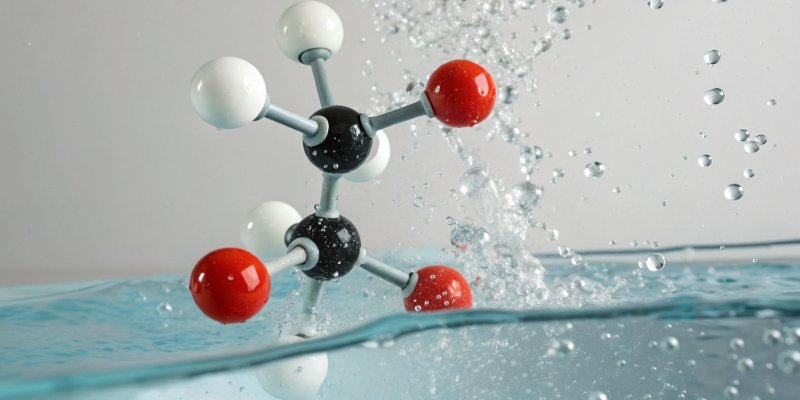
Dissociation is the process where a compound splits into ions. Strong acids and bases do this completely in water. Aluminum hydroxide, however, is a weak base and is also insoluble. This means it holds together very tightly in water. But, this changes when you add an acid or a base.
Reaction with Acid
In an acidic environment, like the stomach, it readily reacts. The H⁺ ions from the acid attack the Al(OH)₃, causing it to break apart and neutralize the acid4.
Al(OH)₃ + 3H⁺ → Al³⁺ + 3H₂O
This is why it’s a great antacid. As a buyer in the pharmaceutical field, Mr. Park, you’ll know this is critical. It neutralizes stomach acid slowly without causing a pH rebound effect, which would happen if it dissociated too easily.
Reaction with Base
In a strong basic solution, it also reacts to form a soluble complex ion5.
Al(OH)₃ + OH⁻ → [Al(OH)₄]⁻
Its stability in water but reactivity in other conditions is its most important feature.
Is Elemental Aluminum (Al) Soluble or Insoluble in Water?
Confusing the properties of aluminum metal with its compounds? It’s a common mix-up, but their behaviors in water are completely different. Let’s distinguish between them clearly.
Elemental aluminum (Al) metal is not soluble in water. However, it does react with water, especially if the water is hot. This reaction is usually prevented by a thin, protective layer of aluminum oxide (Al₂O₃) that forms on the metal’s surface.
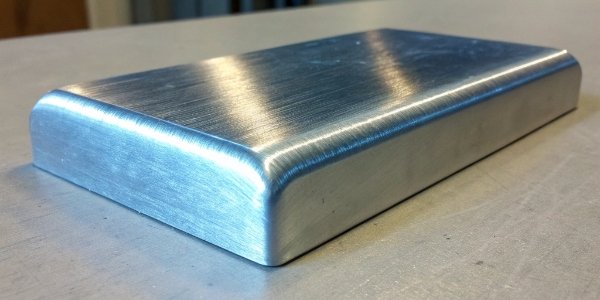
It’s important not to confuse aluminum metal (Al) with aluminum hydroxide (Al(OH)₃). They are two different things. Aluminum metal has a special property called passivation. When aluminum is exposed to air, it instantly forms a very thin but very tough layer of aluminum oxide (Al₂O₃) on its surface. This layer is like a protective skin. It stops the aluminum metal underneath from reacting with water or other things in the environment. If you were to scratch this layer off, the aluminum metal would react with water to produce aluminum hydroxide and hydrogen gas.
Here’s how they compare:
| Substance | Chemical Formula | Behavior in Water |
|---|---|---|
| Elemental Aluminum | Al | Non-reactive due to oxide layer |
| Aluminum Hydroxide | Al(OH)₃ | Insoluble, forms a suspension |
So, while aluminum is technically reactive, it appears unreactive in daily life. Aluminum hydroxide is simply an insoluble compound.
How Do You Balance the Equation Al(OH)₃ + H₂CO₃ → Al₂(CO₃)₃ + H₂O?
Stuck balancing a tricky chemical equation? Balancing aluminum reactions can be difficult with multiple polyatomic ions involved. I’ll walk you through the simple steps.
To balance this equation, you need 2 Al(OH)₃ + 3 H₂CO₃ → Al₂(CO₃)₃ + 6 H₂O. You should balance the aluminum and carbonate groups first. Then, finish by balancing the hydrogen and oxygen atoms.
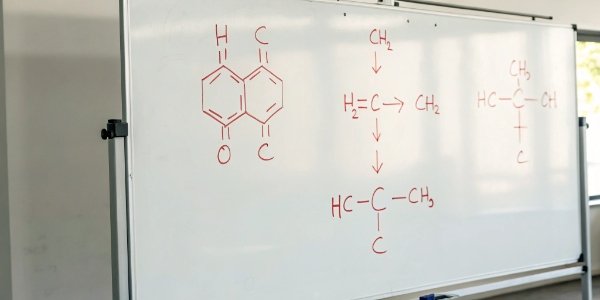
Balancing equations is a matter of following a process. This specific reaction is a neutralization between a base, Al(OH)₃, and an acid, H₂CO₃ (carbonic acid). Let’s go step-by-step.
Step-by-Step Balancing
-
Balance the Metals (Al): The left side has 1 Al atom. The right side has 2 Al atoms in Al₂(CO₃)₃. Place a
2in front of Al(OH)₃.
2 Al(OH)₃ + H₂CO₃ → Al₂(CO₃)₃ + H₂O -
Balance Polyatomic Ions (CO₃): The right side has 3 CO₃ groups. The left side only has 1. Place a
3in front of H₂CO₃.
2 Al(OH)₃ + 3 H₂CO₃ → Al₂(CO₃)₃ + H₂O -
Balance Hydrogen (H): Now, count the H atoms. On the left:
2 * 3 = 6from 2Al(OH)₃, plus3 * 2 = 6from 3H₂CO₃. That’s 12 H atoms. On the right, H₂O has 2 H. To get 12, you need 6 H₂O molecules. Place a6in front of H₂O.
2 Al(OH)₃ + 3 H₂CO₃ → Al₂(CO₃)₃ + 6 H₂O -
Final Check (O): Always verify with oxygen. Left:
(2*3) + (3*3) = 15. Right:(3*3) + 6 = 15. It’s balanced!
Conclusion
In short, aluminum hydroxide is insoluble in water. Its true value lies in its unique reactivity with both acids and bases, a key property for many important applications.
-
Explore the concept of amphoteric substances to grasp how aluminum hydroxide reacts in different chemical environments. ↩
-
Understanding strong acids will help you see how aluminum hydroxide reacts in acidic environments. ↩
-
Discover the solubility of aluminum hydroxide in various solvents to understand its behavior in different environments. ↩
-
Discover the mechanism of how aluminum hydroxide acts as an antacid, crucial for its pharmaceutical use. ↩
-
Learn about soluble complex ions to understand the reactions of aluminum hydroxide in strong bases. ↩

You may also be interested in:

What protective measures should be taken when handling aluminum hydroxide powder in a factory?
Are you worried about worker safety when handling fine powders? Aluminum hydroxide is generally safe, but mishandling its dust can lead to serious respiratory issues and even create explosive conditions.

What Key Technical Indicators Should Be Considered When Purchasing Aluminum Hydroxide?
Are you struggling to find the right aluminum hydroxide for your needs? You might be paying for features you don’t even require. Let’s simplify the technical details. When buying aluminum

What are the market trends for aluminum hydroxide in 2026?
Are you planning your 2026 raw material purchases? Volatile markets make it hard. I will share insights from the factory floor to help you make better decisions for your business.
Is aluminum hydroxide toxic and is it harmful to the human body?
Worried about the word "aluminum" in your products? It sounds scary and can make you question its safety. I’m here to clear up the confusion with simple facts. Aluminum hydroxide

What are the side effects of long-term use of stomach medications containing aluminum hydroxide?
Struggling with constant heartburn? Reaching for that stomach medicine might seem like the only option. But what if that relief comes with hidden long-term costs? The most common side effect

Does ingesting aluminum (such as through aluminum hydroxide) cause Alzheimer's disease?
Are you worried that everyday products containing aluminum might be harmful? This fear connects to serious health concerns like Alzheimer’s, making you question what is safe. Let’s look closely. Based

Why do some vaccines contain aluminum hydroxide (aluminum adjuvant)?
Confused about vaccine ingredients? Seeing aluminum hydroxide listed can be unsettling. I’ll explain its crucial role and why it’s there to help your body build strong immunity. Aluminum hydroxide acts

Is the aluminum adjuvant in vaccines safe for infants or adults?
You read about vaccine ingredients and worry. The word "aluminum" sounds scary, especially when talking about babies. But understanding the facts can give you peace of mind. Yes, the aluminum

What environmental problems are generated during the production of aluminum hydroxide?
Worried about environmental compliance in your supply chain? Sourcing from China can be complex. You need a reliable, eco-conscious partner for your aluminum hydroxide needs. The main environmental issue is

Where are China's main aluminum hydroxide production areas?
Are you struggling to find the right aluminum hydroxide supplier in China? This confusion can lead to higher costs and unstable quality, which hurts your business and your reputation. China’s