Are you trying to figure out aluminum hydroxide’s properties? It can be confusing. You need clear facts for your formulas, but the information you find often seems to contradict itself.
Aluminum hydroxide (Al(OH)₃) is considered insoluble in water. However, it is an amphoteric substance. This means it readily dissolves in strong acidic solutions, like hydrochloric acid, and in strong basic solutions, like sodium hydroxide, by reacting with them to form soluble salts.
That is the short answer. But as you know, in our industry, the details are what truly matter. A simple label like "insoluble1" does not tell the whole story. To use this material effectively, whether in pharmaceuticals or industrial applications2, you need to understand how it behaves in different chemical environments. Let’s explore these details so you can make the best decisions for your process.
Is Al(OH)3 soluble or insoluble?
You read "insoluble" on a technical data sheet, but your process requires the material to mix. This kind of mismatch can stop production or lead to failed batches.
In water, aluminum hydroxide is classified as insoluble. Its solubility is extremely low, measuring only about 0.00013 grams per 100 mL of water. This property is critical for applications where the material must remain a stable, non-reactive solid.
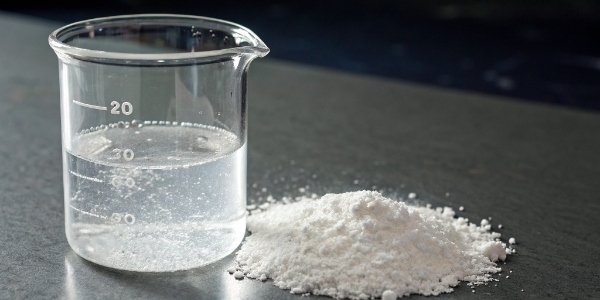
In chemistry, "insoluble" rarely means zero solubility. It just means the amount that dissolves is extremely small. For aluminum hydroxide3, this is governed by its solubility product constant4, or Ksp. The Ksp value is about 1.3 x 10⁻³³. This is a tiny number, which confirms that only a minuscule fraction of the solid will break apart into ions in water. At my factory in Henan, we see this property firsthand every day. After we produce the aluminum hydroxide, we wash it with purified water to remove any impurities. The white powder settles very quickly, and the water on top becomes almost perfectly clear. This low solubility is a key quality parameter we check. It’s important for many of our customers, like those who use it as a flame retardant5 in cables. They need the filler to stay put and not leach out over time.
| Substance | Solubility in Water (g/100 mL) | Classification |
|---|---|---|
| Salt (NaCl) | 36 | Very Soluble |
| Sugar (Sucrose) | 200 | Very Soluble |
| Aluminum Hydroxide | 0.00013 | Insoluble |
| Chalk (CaCO₃) | 0.0013 | Insoluble |
This table helps put its solubility into perspective. It is far less soluble than common salt or sugar, and even less soluble than chalk.
Is aluminum hydroxide soluble in HCl?
You need to get aluminum hydroxide into a solution, but you know water alone will not work. Using the wrong solvent can waste time and expensive materials.
Yes, aluminum hydroxide is very soluble in hydrochloric acid (HCl). It acts as a base when it meets a strong acid. The chemical reaction creates aluminum chloride (AlCl₃) and water. Aluminum chloride is a salt that dissolves easily in water.
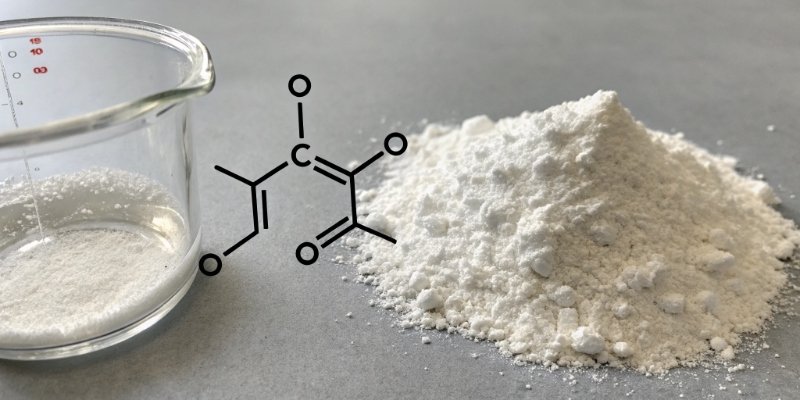
This ability to dissolve in acid is one of its most useful features. The chemical reaction is Al(OH)₃ + 3HCl → AlCl₃ + 3H₂O. In this process, the solid aluminum hydroxide breaks down. The hydrogen ions (H⁺) from the acid react with the hydroxide ions (OH⁻) from our product to form water. This allows the aluminum ion (Al³⁺) to dissolve, forming a clear solution of aluminum chloride. This principle is exactly why it works as a common antacid. It neutralizes excess stomach acid, which is primarily HCl. I work with buyers like Park Chung-hee from Korea, who sources our pharmaceutical-grade material6 for this very purpose. For him, the speed and completeness of this reaction are critical quality points. The rate of this reaction depends on a few things. A smaller particle size means more surface area, so finer powders will dissolve much faster than coarser grades. The concentration of the acid also matters; a more concentrated acid will speed up the dissolution.
Does Al(OH)3 dissociate in water?
You know it is insoluble, but you might wonder if any part of it breaks apart in water. This detail can affect the pH or conductivity of your solution.
Yes, aluminum hydroxide dissociates in water, but only to a very small degree. The process releases a few aluminum ions (Al³⁺) and hydroxide ions (OH⁻). Because of its tiny solubility product constant (Ksp), the concentration of these ions is extremely low.
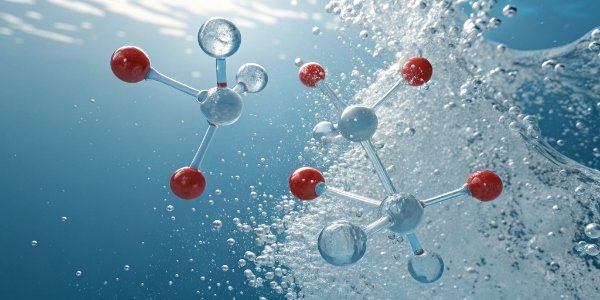
The process is best described as an equilibrium: Al(OH)₃(s) ⇌ Al³⁺(aq) + 3OH⁻(aq). The double arrows show that the reaction goes both ways. A very small amount of solid dissolves, but at the same time, the dissolved ions are re-forming into the solid. The Ksp value of 1.3 x 10⁻³³ tells us that the balance is far to the left, favoring the solid state. To put this in perspective, a fully soluble salt like sodium chloride (NaCl) dissociates completely in water, releasing all its sodium and chloride ions. Aluminum hydroxide does not. In our quality control7 lab, when we test the pH8 of the slurry after washing our product, we see the water is slightly basic. This is direct proof of the hydroxide ions (OH⁻) being released, but the effect is small. For customers in sensitive fields like electronics or catalysis, even this minor dissociation9 can be important. They need to control any free ions in their system, so we manage our washing and drying processes very carefully to deliver the highest purity product.
Is NaAl(OH)4 soluble?
You have heard that aluminum hydroxide dissolves in strong bases. But what chemical does it become, and is that new substance soluble? This is important for downstream processing.
Yes, sodium tetrahydroxoaluminate (NaAl(OH)₄) is soluble in water. This compound is formed when aluminum hydroxide reacts with a strong base like sodium hydroxide (NaOH). This reaction is the perfect example of aluminum hydroxide’s amphoteric character.
This is the other half of the amphoteric story. While it acts as a base with acids, aluminum hydroxide acts as an acid with strong bases. The reaction is: Al(OH)₃(s) + NaOH(aq) → Na[Al(OH)₄](aq). The product, sodium tetrahydroxoaluminate, is a soluble complex ion. This reaction is not just a lab curiosity; it is the foundation of the global aluminum industry. The Bayer process10, used to refine bauxite ore into alumina (aluminum oxide), uses this exact chemistry. In the process, bauxite is digested in hot, concentrated sodium hydroxide. The aluminum hydroxide in the ore dissolves to form sodium tetrahydroxoaluminate, leaving behind insoluble impurities like iron oxides, which are known as red mud. This allows for the separation and purification of aluminum. As a producer of aluminum hydroxide, I am deeply familiar with this process because it is how our primary raw material is made. Understanding this chemistry is core to our business and ensures we control the starting point of our entire production chain.
Conclusion
In short, aluminum hydroxide is insoluble in water. But it is amphoteric, meaning it dissolves in strong acids and strong bases, making it a uniquely versatile industrial chemical.
-
Learn about the concept of insolubility in chemistry and its implications for materials. ↩
-
Explore the various industrial applications of aluminum hydroxide and its benefits. ↩
-
Explore the properties of aluminum hydroxide to understand its applications in various industries. ↩
-
Learn about Ksp and its importance in determining the solubility of compounds. ↩
-
Explore the function and importance of flame retardants in various materials. ↩
-
Learn about the standards and importance of pharmaceutical-grade materials in healthcare. ↩
-
Understand the principles of quality control and its significance in production processes. ↩
-
Learn about pH, its measurement, and its importance in chemical solutions. ↩
-
Understand the process of dissociation and its relevance in chemical reactions. ↩
-
Learn about the Bayer process and its role in refining aluminum from bauxite. ↩

You may also be interested in:

What protective measures should be taken when handling aluminum hydroxide powder in a factory?
Are you worried about worker safety when handling fine powders? Aluminum hydroxide is generally safe, but mishandling its dust can lead to serious respiratory issues and even create explosive conditions.

What Key Technical Indicators Should Be Considered When Purchasing Aluminum Hydroxide?
Are you struggling to find the right aluminum hydroxide for your needs? You might be paying for features you don’t even require. Let’s simplify the technical details. When buying aluminum

What are the market trends for aluminum hydroxide in 2026?
Are you planning your 2026 raw material purchases? Volatile markets make it hard. I will share insights from the factory floor to help you make better decisions for your business.
Is aluminum hydroxide toxic and is it harmful to the human body?
Worried about the word "aluminum" in your products? It sounds scary and can make you question its safety. I’m here to clear up the confusion with simple facts. Aluminum hydroxide

What are the side effects of long-term use of stomach medications containing aluminum hydroxide?
Struggling with constant heartburn? Reaching for that stomach medicine might seem like the only option. But what if that relief comes with hidden long-term costs? The most common side effect

Does ingesting aluminum (such as through aluminum hydroxide) cause Alzheimer's disease?
Are you worried that everyday products containing aluminum might be harmful? This fear connects to serious health concerns like Alzheimer’s, making you question what is safe. Let’s look closely. Based

Why do some vaccines contain aluminum hydroxide (aluminum adjuvant)?
Confused about vaccine ingredients? Seeing aluminum hydroxide listed can be unsettling. I’ll explain its crucial role and why it’s there to help your body build strong immunity. Aluminum hydroxide acts

Is the aluminum adjuvant in vaccines safe for infants or adults?
You read about vaccine ingredients and worry. The word "aluminum" sounds scary, especially when talking about babies. But understanding the facts can give you peace of mind. Yes, the aluminum

What environmental problems are generated during the production of aluminum hydroxide?
Worried about environmental compliance in your supply chain? Sourcing from China can be complex. You need a reliable, eco-conscious partner for your aluminum hydroxide needs. The main environmental issue is

Where are China's main aluminum hydroxide production areas?
Are you struggling to find the right aluminum hydroxide supplier in China? This confusion can lead to higher costs and unstable quality, which hurts your business and your reputation. China’s