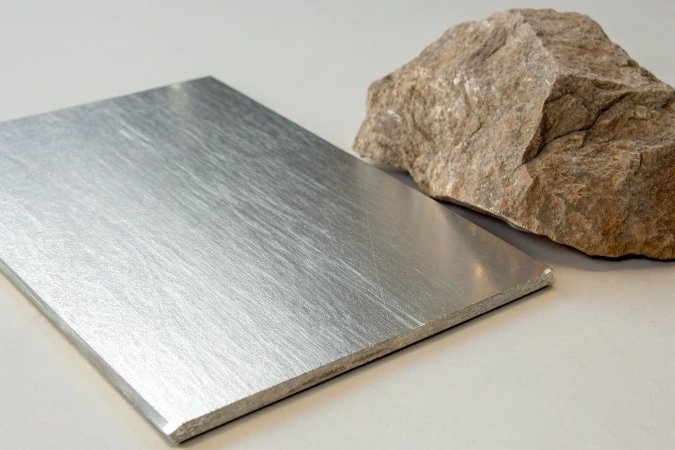
You might think aluminum is a simple metal dug from the ground. This common mistake can lead to a fundamental misunderstanding of its entire supply chain, from the mine to the final product.
Aluminum is neither a rock nor a mineral. It is a chemical element, a metal that is refined from a rock called bauxite. Bauxite rock contains several aluminum-bearing minerals, with the most important being gibbsite.
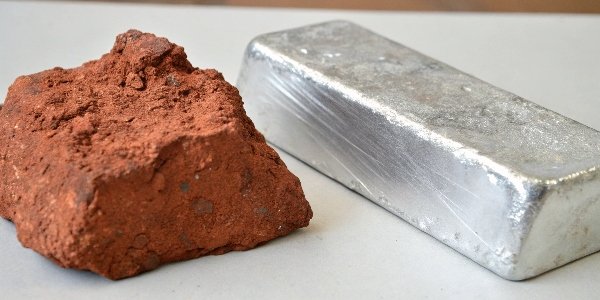
In my work at our aluminum hydroxide1 plant in Henan, this distinction is everything. We don’t receive pure aluminum minerals; we receive bauxite rock2. Our entire process, the Bayer process3, is designed to break down this rock and extract the valuable aluminum hydroxide from a mix of other materials. For a sophisticated buyer like Mr. Park in Korea, knowing this journey is key to understanding product purity, cost, and the global supply chain he relies on.
Is aluminum a rock or mineral?
This question feels like a choice between two options. Getting it wrong shows a basic misunderstanding of geology and metallurgy that can affect how you source and specify materials.
Aluminum is not a rock or a mineral. The source of aluminum is a rock called bauxite. Bauxite is a rock because it is a mixture of different minerals, not a single, chemically pure substance.
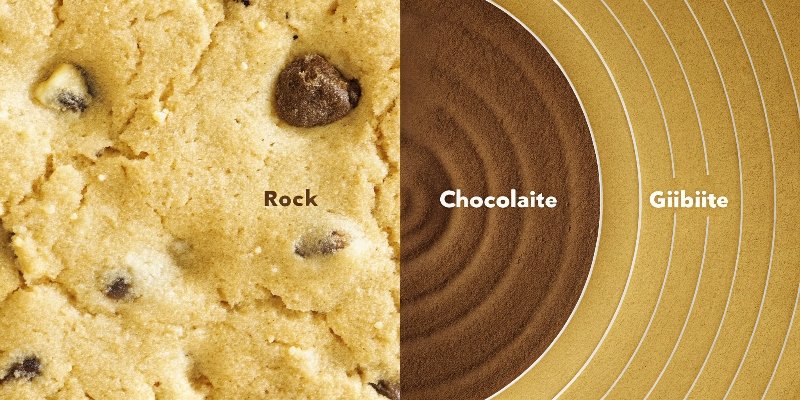
Let’s break down the core definitions, as this is where the clarity lies. Think of it like baking. A mineral is a single, pure ingredient like a sugar crystal, with a fixed chemical formula. A rock is the finished cookie, a mix of different ingredients (sugar, flour, chocolate chips).
- Mineral: A naturally occurring, solid substance with a specific chemical formula and a defined crystal structure. For example, gibbsite is a true mineral with the formula
Al(OH)₃. This is the very aluminum hydroxide we produce. - Rock: A solid aggregate or mixture of one or more minerals. Bauxite is the primary rock ore of aluminum. It doesn’t have a single chemical formula because it’s a mix. It’s rich in aluminum-bearing minerals like gibbsite, boehmite, and diaspore, but it also contains impurities like iron oxides (which give it a reddish color) and silica.
So, when you see a picture of rusty red earth being mined for aluminum, you are looking at bauxite rock. The shiny aluminum metal is the final, highly-processed product.
Where is the aluminium mineral found?
You need to source aluminum, so you want to know where it comes from. Thinking it’s found everywhere can lead to overlooking the complex geopolitical and logistical realities of its supply chain.
The minerals that contain aluminum are found within bauxite rock, which is mined primarily in a tropical belt around the equator. Countries like Australia, Guinea, China, and Brazil are the world’s largest producers.

While aluminum is the most abundant metal in the Earth’s crust, it is not economically viable to extract it from just any clay. We need the high concentrations found in bauxite. Bauxite is a residual soil, formed over millions of years as heavy rainfall leached other elements out of surface rocks in tropical and subtropical climates, leaving the less soluble aluminum compounds behind.
The location of these reserves has major implications for the global market.
- Geopolitical Factors: A large portion of the world’s high-grade bauxite comes from a few key regions. Political instability or changes in export policy in a country like Guinea can instantly affect global prices.
- Logistics: The journey from a mine in Australia to our processing plant in Henan, China, and then as a finished product to Mr. Park’s company in Korea is a complex logistical chain. The cost of shipping plays a huge role in the final price.
- China’s Position: China is unique. It is both a top producer of bauxite and the world’s largest importer of it. We use domestic bauxite but also rely heavily on imported ore from places like Guinea and Australia to feed the massive scale of our aluminum industry.
What is aluminum classified as?
You’re filling out a technical data sheet or a customs form. You see a field for "Material Classification" and pause, unsure if you should write "metal," "mineral," or something else.
Aluminum is classified as a chemical element. On the periodic table, its symbol is Al and its atomic number is 13. More specifically, it is categorized as a post-transition metal.
This is the most precise, scientific answer. While we call it a "metal" in everyday language, its classification as an element is its fundamental identity. This is distinct from compounds like the aluminum hydroxide Al(OH)₃ we manufacture or the rocks like bauxite from which we extract it.
| Let’s organize these related terms into a clear hierarchy: | Term | Classification | Example | Description |
|---|---|---|---|---|
| Aluminum | Element (Post-Transition Metal) | Al (the ingot or foil) |
The pure substance. Very reactive, so never found pure in nature. | |
| Gibbsite | Mineral (a specific hydroxide) | Al(OH)₃ (the white powder we make) |
The natural mineral form of aluminum hydroxide. | |
| Bauxite | Rock (an ore) | Not applicable (it’s a mix) | The raw material mined from the earth, a mix of minerals. | |
| Aluminum Hydroxide | Chemical Compound | Al(OH)₃ (the product we sell) |
The specific molecule, whether man-made in my factory or natural. |
For a buyer like Mr. Park, this precision is important. He is not buying a "rock" or an "element." He is buying a specific chemical compound, aluminum hydroxide, that must meet very high purity standards for his pharmaceutical customers.
Is aluminium a natural mineral?
You hear the word "natural" and associate it with purity and being found "as-is." This leads you to wonder if you can just find a nugget of aluminum metal in a stream like you might find gold.
No, aluminum metal is not a natural mineral because it is too reactive. It is never found in its pure metallic state in nature. It is always locked in chemical compounds within minerals like gibbsite.
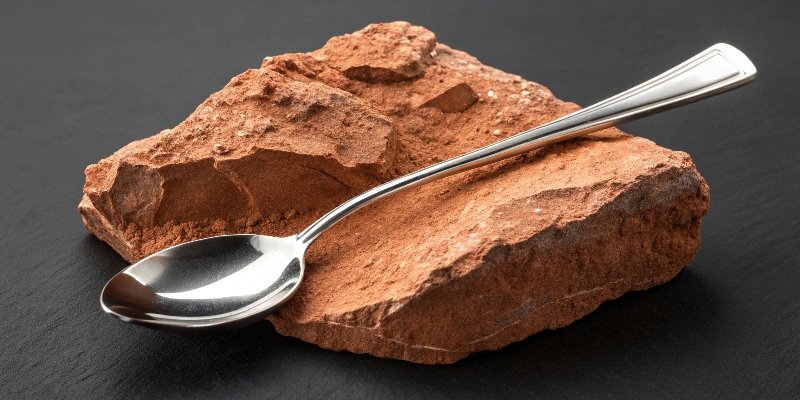
This is a critical point that separates aluminum from metals like gold, silver, and copper, which can be found in their native, metallic forms. Aluminum has a very strong affinity for oxygen. As soon as it is exposed to air or water, it immediately reacts to form a tough, invisible layer of aluminum oxide. This same reactivity means that in nature, over geological time, it has always bonded with other elements. It is tightly locked up in the minerals that make up bauxite rock.
To get the pure aluminum metal4 we use every day, we must use a huge amount of energy to break these strong chemical bonds.
- Bayer Process: First, in my factory, we use a high-pressure, high-temperature process with caustic soda to separate aluminum hydroxide (
Al(OH)₃) from the bauxite rock2. - Hall-Héroult Process: Second, the resulting alumina5 (
Al₂O₃) is sent to a smelter. There, it is dissolved in molten cryolite and a massive electrical current is passed through it, which finally separates the aluminum from the oxygen.
The aluminum in your can or phone is anything but natural; it’s a product of intense industrial and chemical refinement.
Conclusion
Aluminum is a man-made metal, a chemical element refined from bauxite rock. This rock contains aluminum-bearing minerals. This distinction is the foundation of the entire global aluminum industry.
-
Explore the various applications of aluminum hydroxide in industries like pharmaceuticals and water treatment. ↩
-
Learn about the major bauxite mining regions and their significance in the global aluminum supply chain. ↩ ↩
-
Understand the Bayer process, a crucial method for extracting aluminum hydroxide from bauxite. ↩
-
Find out why aluminum metal is not found in its pure form in nature and its reactivity. ↩
-
Learn about alumina and its role as an intermediate product in aluminum extraction. ↩

You may also be interested in:

What protective measures should be taken when handling aluminum hydroxide powder in a factory?
Are you worried about worker safety when handling fine powders? Aluminum hydroxide is generally safe, but mishandling its dust can lead to serious respiratory issues and even create explosive conditions.

What Key Technical Indicators Should Be Considered When Purchasing Aluminum Hydroxide?
Are you struggling to find the right aluminum hydroxide for your needs? You might be paying for features you don’t even require. Let’s simplify the technical details. When buying aluminum
What are the market trends for aluminum hydroxide in 2026?
Are you planning your 2026 raw material purchases? Volatile markets make it hard. I will share insights from the factory floor to help you make better decisions for your business.
Is aluminum hydroxide toxic and is it harmful to the human body?
Worried about the word "aluminum" in your products? It sounds scary and can make you question its safety. I’m here to clear up the confusion with simple facts. Aluminum hydroxide

What are the side effects of long-term use of stomach medications containing aluminum hydroxide?
Struggling with constant heartburn? Reaching for that stomach medicine might seem like the only option. But what if that relief comes with hidden long-term costs? The most common side effect

Does ingesting aluminum (such as through aluminum hydroxide) cause Alzheimer's disease?
Are you worried that everyday products containing aluminum might be harmful? This fear connects to serious health concerns like Alzheimer’s, making you question what is safe. Let’s look closely. Based

Why do some vaccines contain aluminum hydroxide (aluminum adjuvant)?
Confused about vaccine ingredients? Seeing aluminum hydroxide listed can be unsettling. I’ll explain its crucial role and why it’s there to help your body build strong immunity. Aluminum hydroxide acts

Is the aluminum adjuvant in vaccines safe for infants or adults?
You read about vaccine ingredients and worry. The word "aluminum" sounds scary, especially when talking about babies. But understanding the facts can give you peace of mind. Yes, the aluminum

What environmental problems are generated during the production of aluminum hydroxide?
Worried about environmental compliance in your supply chain? Sourcing from China can be complex. You need a reliable, eco-conscious partner for your aluminum hydroxide needs. The main environmental issue is
Where are China's main aluminum hydroxide production areas?
Are you struggling to find the right aluminum hydroxide supplier in China? This confusion can lead to higher costs and unstable quality, which hurts your business and your reputation. China’s