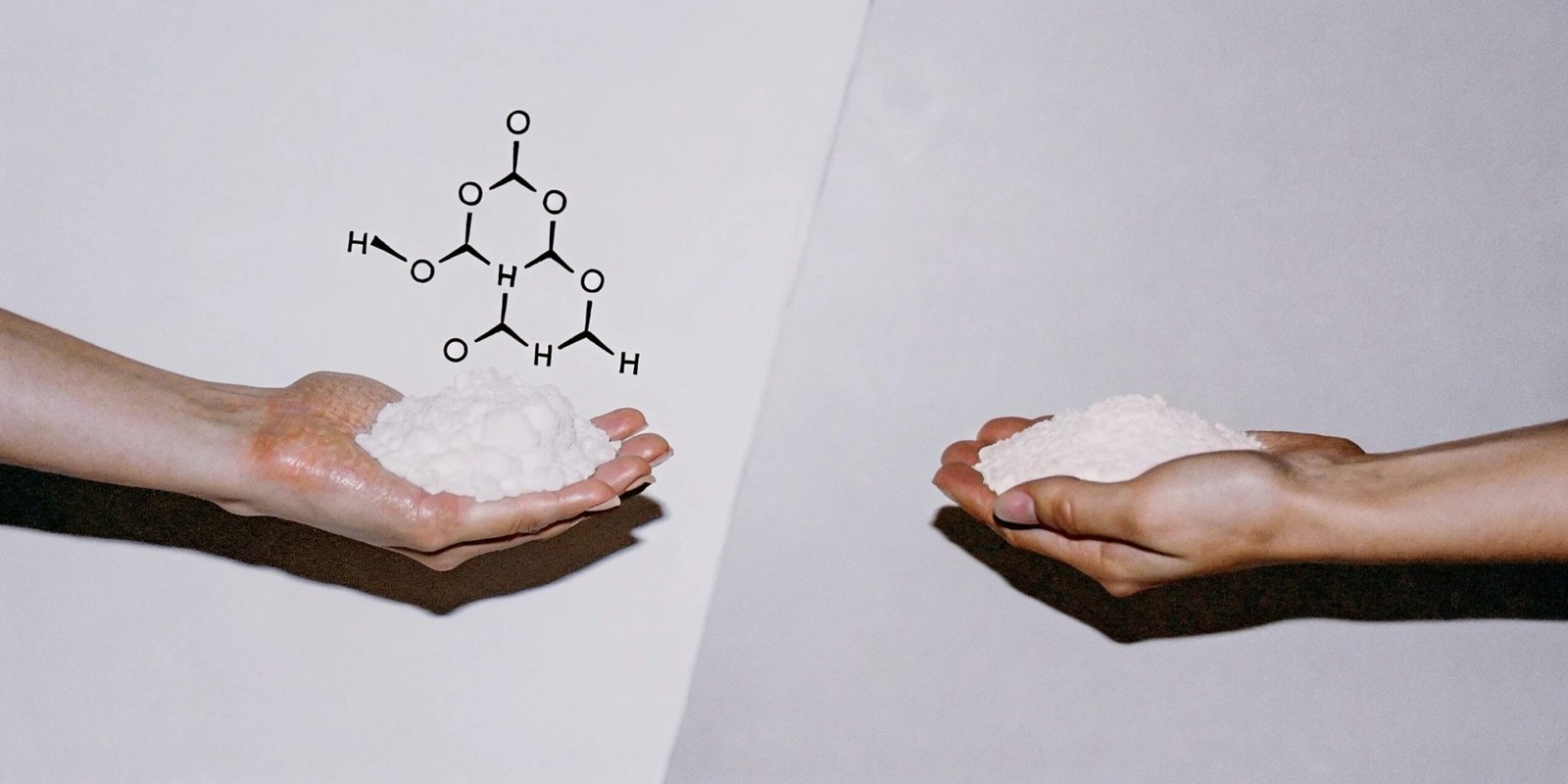
Confused by all the names for one chemical? This jungle of terms like ATH and Al(OH)₃ can lead to costly mistakes in your orders and waste your valuable time.
Yes, aluminum trihydrate (ATH) is the same chemical compound as aluminum hydroxide, Al(OH)₃. The name ‘trihydrate’ is an older term commonly used in the flame retardant industry, referring to its structure as alumina with three water molecules.

This naming confusion is a constant headache for buyers. In my factory, we use both terms, but they refer to the same white powder. The name ‘aluminum trihydrate1‘ or ATH is very common with our customers in the plastics and rubber industries. For someone like Mr. Park, who comes from a pharmaceutical background, this term might be new as he is more familiar with ‘aluminum hydroxide2‘. Let’s dig into why these different names exist and what they really mean for you and your business.
Why is it sometimes called trihydrate?
Does the name "trihydrate" make you question the chemical’s identity? This old term might seem confusing or even incorrect, but it actually gives a clue about its main industrial job.
It is called ‘trihydrate’ based on its chemical formula being written as alumina combined with water: Al₂O₃·3H₂O. This highlights the three water molecules that are key to its flame retardant properties, even though Al(OH)₃ is more accurate.

Both formulas represent the same thing, but they tell a different story. "Aluminum hydroxide" or Al(OH)₃ is the chemically correct way to describe the molecule. However, in the flame retardant3 industry, a different perspective is more useful. The decomposition of aluminum hydroxide under heat is 2Al(OH)₃ → Al₂O₃ + 3H₂O. This shows that for every two molecules of aluminum hydroxide, you get one molecule of alumina and three molecules of water. So, industry professionals started thinking of it as a hydrated form of alumina, or aluminum oxide. This Al₂O₃·3H₂O representation directly points to the water content, which is the "active ingredient" for stopping fire. It is a bit of industry shorthand that has stuck around.
| Name | Chemical Formula | Common Industry |
|---|---|---|
| Aluminum Hydroxide | Al(OH)₃ |
Pharmaceutical |
| Aluminum Trihydrate (ATH) | Al₂O₃·3H₂O |
Flame Retardants |
In my daily work, I switch between these terms. When I talk to a pharmaceutical buyer like Mr. Park, I use "aluminum hydroxide." When I talk to a wire and cable engineer, I use "ATH." It is just about speaking the right language for the customer.
What is aluminium trihydrate mainly used for?
Now that you know the name, what does it actually do? You might see it listed in very different products, making its primary function unclear and causing you to second-guess its application.
Its main use by far is as a halogen-free flame retardant in plastics, rubber, and composites. It is mixed into materials to improve fire safety in products like cables, building panels, and seating.

While the pharmaceutical use in antacids is well-known, it represents a very small fraction of the total volume produced globally. The industrial flame retardant market4 is huge. ATH is a key additive because it is effective, affordable, and safe. When a fire starts, the ATH inside the plastic breaks down. This decomposition absorbs heat from the fire, releases water vapor to cool the material and dilute the oxygen, and leaves behind a protective layer of alumina. This makes it much harder for the product to burn. This is a critical safety feature in public spaces. The seats in a stadium, the insulation around a subway’s electrical cables5, and the wall panels in a new building all likely contain ATH to meet fire safety6 codes. As a producer, the scale is completely different. We might produce a few tons of high-purity7 pharmaceutical grade a month, but we produce thousands of tons of ATH for the flame retardant industry.
What specifications should you check for aluminium trihydrate?
Are you overwhelmed by all the numbers on a technical data sheet? Focusing on the wrong parameters can lead you to buy a product that fails to perform in your specific manufacturing process.
You must check the particle size distribution (PSD), whiteness, purity, and surface treatment. These physical and chemical properties directly impact how the ATH will perform in your final product, from viscosity to mechanical strength.
A good price is meaningless if the product doesn’t work. As a factory manager, these are the four specifications I discuss most often with my industrial customers. Each one is critical for a different reason.
| Specification | Why It Matters |
|---|---|
| Particle Size (PSD) | Affects the viscosity of liquid resins and the mechanical properties (like flexibility) of solid plastics. A fine powder is not always better. |
| Whiteness / Brightness | Crucial for appearance in white or brightly colored products. A low whiteness8 indicates impurities from the production process. |
| Purity (Assay) | A higher Al(OH)₃ content means more "active" flame retardant per kilogram. However, 99.5% is often sufficient for most industrial needs. |
| Surface Treatment | Untreated ATH does not bond well with plastics. A silane or other coating is often applied to help it mix in and maintain the plastic’s strength. |
I once worked with a customer whose new batch of solid surface countertops was cracking easily. We investigated and found they had accidentally ordered an ATH with a much coarser particle size than usual. The larger particles were creating weak points in the material. This is a perfect example of why you must confirm these details with your supplier.
How does aluminium trihydrate compare to magnesium hydroxide?
You see another flame retardant called magnesium hydroxide (MDH). Is it a better option? Choosing the wrong one for your polymer system can lead to processing problems and ruined batches.
Magnesium hydroxide (MDH) works just like ATH but decomposes at a much higher temperature (around 330°C vs. 200°C for ATH). This makes MDH necessary for plastics that are processed at high temperatures, like polypropylene.

The choice between ATH and MDH is almost always decided by the processing temperature of your plastic. They are not really direct competitors; they serve different parts of the market. ATH is perfect for polymers that are processed at lower temperatures. However, if you tried to put ATH in polypropylene, which is processed around 220-250°C, the ATH would decompose right inside your equipment. This would release water vapor and ruin your product. For these high-temperature plastics, you must use MDH.
| Feature | Aluminum Trihydrate (ATH) | Magnesium Hydroxide (MDH) |
|---|---|---|
| Decomposition Temp | ~200 °C | ~330 °C |
| Suitable Polymers | PVC, EVA, Rubber | Polypropylene, Nylon |
| Cost | Lower | Higher |
| Mechanism | Endothermic decomposition | Endothermic decomposition |
The main takeaway is simple. If your process runs below 200°C, ATH is the most cost-effective flame retardant you can use. If you must go hotter, you need to budget for the more expensive MDH. It is a technical necessity, not a choice based on performance alone.
Conclusion
Aluminum trihydrate is just the industrial name for aluminum hydroxide. Knowing this, and matching the right grade and specifications to your specific application, is the key to successful and cost-effective sourcing.
-
Explore the various applications of aluminum trihydrate, especially in flame retardants, to understand its significance in industry. ↩
-
Learn about aluminum hydroxide, its properties, and its applications in pharmaceuticals and other industries. ↩
-
Discover the most effective flame retardants for plastics and how they enhance fire safety in various products. ↩
-
Get insights into the industrial flame retardant market, its growth, and key players. ↩
-
Discover the materials used in electrical cables to enhance fire safety and compliance with regulations. ↩
-
Explore best practices for ensuring fire safety in construction and the role of materials like ATH. ↩
-
Learn why purity is crucial in chemical compounds and how it affects product efficacy and safety. ↩
-
Explore how whiteness impacts the appearance and quality of products, especially in consumer goods. ↩

You may also be interested in:

What protective measures should be taken when handling aluminum hydroxide powder in a factory?
Are you worried about worker safety when handling fine powders? Aluminum hydroxide is generally safe, but mishandling its dust can lead to serious respiratory issues and even create explosive conditions.

What Key Technical Indicators Should Be Considered When Purchasing Aluminum Hydroxide?
Are you struggling to find the right aluminum hydroxide for your needs? You might be paying for features you don’t even require. Let’s simplify the technical details. When buying aluminum

What are the market trends for aluminum hydroxide in 2026?
Are you planning your 2026 raw material purchases? Volatile markets make it hard. I will share insights from the factory floor to help you make better decisions for your business.
Is aluminum hydroxide toxic and is it harmful to the human body?
Worried about the word "aluminum" in your products? It sounds scary and can make you question its safety. I’m here to clear up the confusion with simple facts. Aluminum hydroxide

What are the side effects of long-term use of stomach medications containing aluminum hydroxide?
Struggling with constant heartburn? Reaching for that stomach medicine might seem like the only option. But what if that relief comes with hidden long-term costs? The most common side effect

Does ingesting aluminum (such as through aluminum hydroxide) cause Alzheimer's disease?
Are you worried that everyday products containing aluminum might be harmful? This fear connects to serious health concerns like Alzheimer’s, making you question what is safe. Let’s look closely. Based

Why do some vaccines contain aluminum hydroxide (aluminum adjuvant)?
Confused about vaccine ingredients? Seeing aluminum hydroxide listed can be unsettling. I’ll explain its crucial role and why it’s there to help your body build strong immunity. Aluminum hydroxide acts

Is the aluminum adjuvant in vaccines safe for infants or adults?
You read about vaccine ingredients and worry. The word "aluminum" sounds scary, especially when talking about babies. But understanding the facts can give you peace of mind. Yes, the aluminum

What environmental problems are generated during the production of aluminum hydroxide?
Worried about environmental compliance in your supply chain? Sourcing from China can be complex. You need a reliable, eco-conscious partner for your aluminum hydroxide needs. The main environmental issue is

Where are China's main aluminum hydroxide production areas?
Are you struggling to find the right aluminum hydroxide supplier in China? This confusion can lead to higher costs and unstable quality, which hurts your business and your reputation. China’s