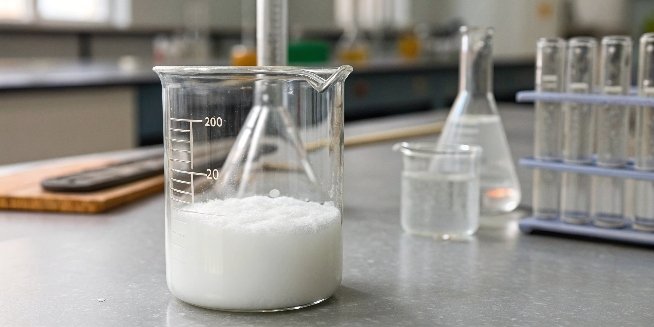
Are you confused about the basic physical state of aluminum hydroxide? This uncertainty can cause problems in handling and application. Let’s clear up this fundamental question right away.
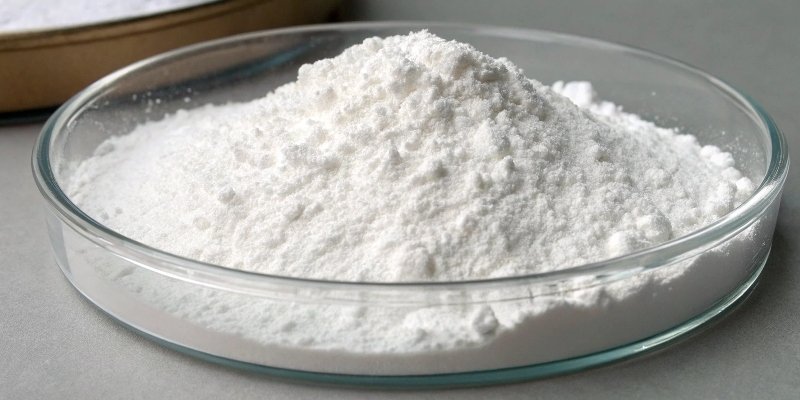
Aluminum hydroxide, with the chemical formula Al(OH)₃, is a solid at room temperature. It typically exists as a white, odorless powder. It is not found as a liquid or a gas under any normal earth-bound conditions due to its strong chemical bonds.
You now know the simple answer. But there is more to understand. Why is it a solid? Does it ever come in other forms? Understanding these details is important for anyone sourcing or using this material in their products. This knowledge helps you make better decisions for your business. Let’s dive deeper into its properties to see how they affect your applications.
What is the physical state of Aluminum Hydroxide at room temperature?
Do you need to know the exact state of Al(OH)₃ for your processes? Reading specification sheets can sometimes be confusing. Getting this basic fact wrong can ruin an entire product batch.
At standard room temperature and pressure (around 25°C or 77°F), aluminum hydroxide is a stable, white solid. It is found as either an amorphous or crystalline powder. It does not exist naturally as a liquid or gas under these typical conditions.
The solid state of aluminum hydroxide comes from its molecular structure. The aluminum and hydroxide ions are held together by very strong ionic and covalent bonds. These bonds form a rigid crystal lattice. A large amount of energy is needed to break this structure apart. This is why aluminum hydroxide has a high decomposition temperature1 (around 200°C), rather than a melting point. It breaks down into aluminum oxide and water before it can ever turn into a liquid. This is very different from a substance like water, which has weaker bonds and exists as a liquid at the same temperature. As a manufacturer, we rely on this stability every day. It ensures the product we make is consistent and easy to handle from our factory to your facility.
| Substance | Chemical Formula | State at Room Temp (25°C) | Bonding Reason |
|---|---|---|---|
| Aluminum Hydroxide | Al(OH)₃ | Solid (Powder) | Strong ionic/covalent bonds in a lattice |
| Water | H₂O | Liquid | Weaker hydrogen bonds between molecules |
Is Aluminum Hydroxide typically found as a solid, liquid, or gas?
Are you wondering how you will receive aluminum hydroxide from a supplier? Its form directly impacts shipping and handling. Imagining barrels of liquid or pressurized tanks is misleading and complicates logistics planning.
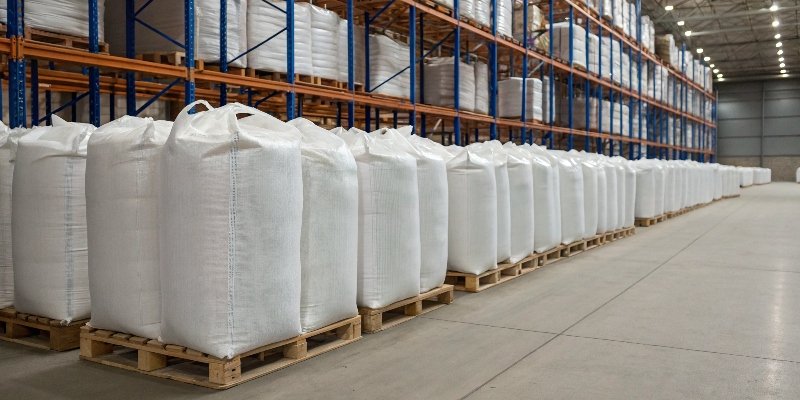
From a supplier like me, aluminum hydroxide is almost always produced, packaged, and shipped as a solid powder. Its stable solid form makes it safe and cost-effective to transport and store in bags or bulk containers.
The journey of aluminum hydroxide ends in a solid form. In our factory in Henan, we use the Bayer process2 to refine bauxite ore. The final step of this process is precipitation, where the pure aluminum hydroxide separates from a solution as a solid. After this, we wash, dry, and mill the solid material. This creates the fine, white powder that our customers receive. The entire process is designed around producing a high-quality solid.
What about Slurries?
Sometimes, customers ask about liquid forms. While Al(OH)₃ is a solid, it can be mixed with a liquid, usually water, to create a slurry or suspension3. This is common in some applications, like in paper manufacturing or certain chemical reactions where a liquid form is easier to meter and mix. However, it’s important to remember that the aluminum hydroxide itself is not a liquid. It is still a solid, just suspended as fine particles within the water. The properties still depend on the solid particles, not a true liquid state.
In what form does Aluminum Hydroxide exist?
Are there different forms of solid aluminum hydroxide? The details are very important for specific applications. Choosing the wrong crystalline form could affect the performance of your final product.
Yes, aluminum hydroxide exists in several different solid crystalline forms. These are known as polymorphs. The most common and stable form is Gibbsite (γ-Al(OH)₃). Other forms include Bayerite (α-Al(OH)₃), Nordstrandite, and Doyleite, each with a unique crystal structure.
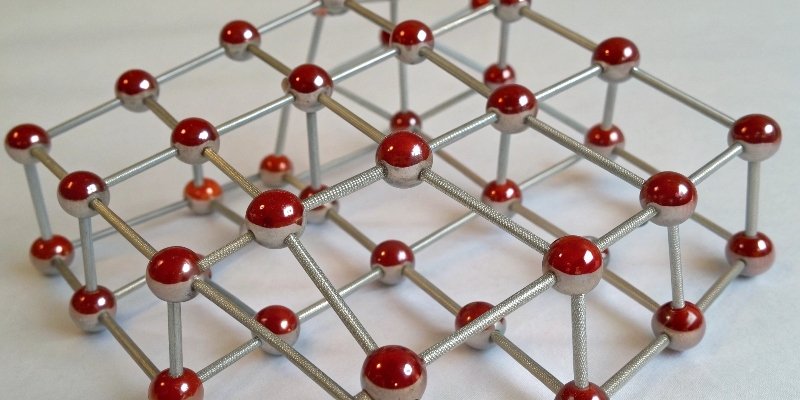
These different forms, or polymorphs, have the same chemical formula but different arrangements of atoms. This difference in structure affects their properties and uses.
Gibbsite: The Industrial Workhorse
Gibbsite is the main product of the Bayer process. For almost all industrial and pharmaceutical uses, when someone says "aluminum hydroxide," they mean Gibbsite. It is the most thermodynamically stable form. In my factory, we control the production process very carefully. We manage temperature and precipitation time to ensure we produce high-purity Gibbsite. This consistency is crucial for our customers, especially those in the pharmaceutical industry like Mr. Park, who rely on predictable raw material quality.
Bayerite and Other Special Cases
Bayerite is another well-known form. It is less stable than Gibbsite and tends to convert to Gibbsite over time. It can be synthesized in a laboratory and has some niche uses, for example as a catalyst or catalyst precursor. The other forms, Nordstrandite and Doyleite, are very rare and are mostly of academic interest. For a buyer sourcing commercial volumes, Gibbsite is the form you will always encounter.
How does Aluminum Hydroxide appear under normal conditions?
You know it’s a solid powder, but what does it actually look like? The color and texture of the powder are key indicators of its quality. An off-color powder could mean impurities or poor handling.
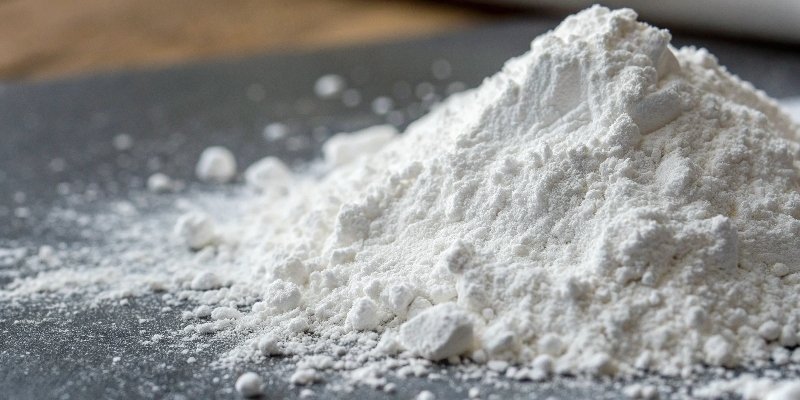
Under normal conditions, high-quality aluminum hydroxide is a fine, bright white, and odorless powder. It should be free-flowing and have a consistent appearance. Any gray or yellow color can indicate impurities, which is a major quality control red flag.
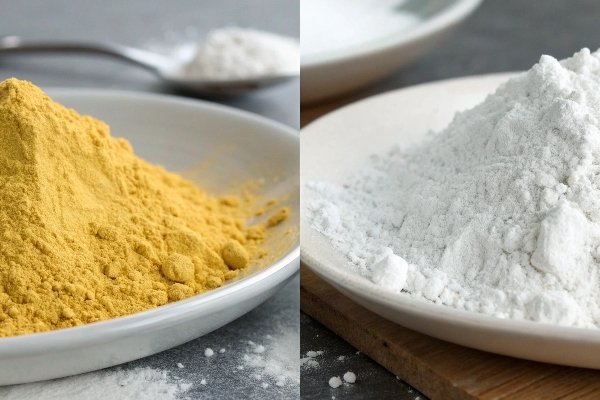
When I inspect a batch of our product, I look for two main things: whiteness and particle size.
The Importance of Whiteness
Whiteness is a direct measure of purity. High whiteness is critical for applications like solid surface countertops or as a pigment in plastics. For pharmaceutical uses, a brilliant white color indicates low levels of iron oxide and other metallic impurities. When I first started in quality control4 years ago, I spent a week just learning to see the difference between a 99.5% and a 99.8% pure batch. That slight variation in brightness matters a great deal.
Particle Size Matters
The powder is also engineered to a specific particle size distribution (PSD). We can mill the powder to be very fine, like flour, or slightly coarser. This isn’t random. The particle size affects how well it functions as a flame retardant in cables, how quickly it neutralizes acid for antacid tablets, and how it mixes into polymer resins. We work with customers to provide the exact particle size they need for their specific application.
Conclusion
In short, aluminum hydroxide is a white solid powder at room temperature. It exists mainly as the Gibbsite crystal form, and its quality is judged by its whiteness and particle size.
-
Learn about the high decomposition temperature of Aluminum hydroxide and its implications for handling. ↩
-
Discover the Bayer process and how it is used to produce Aluminum hydroxide efficiently. ↩
-
Learn about the concept of slurries and how Aluminum hydroxide can be used in this form. ↩
-
Explore the quality control measures for Aluminum hydroxide to ensure high standards in production. ↩

You may also be interested in:

What protective measures should be taken when handling aluminum hydroxide powder in a factory?
Are you worried about worker safety when handling fine powders? Aluminum hydroxide is generally safe, but mishandling its dust can lead to serious respiratory issues and even create explosive conditions.

What Key Technical Indicators Should Be Considered When Purchasing Aluminum Hydroxide?
Are you struggling to find the right aluminum hydroxide for your needs? You might be paying for features you don’t even require. Let’s simplify the technical details. When buying aluminum

What are the market trends for aluminum hydroxide in 2026?
Are you planning your 2026 raw material purchases? Volatile markets make it hard. I will share insights from the factory floor to help you make better decisions for your business.
Is aluminum hydroxide toxic and is it harmful to the human body?
Worried about the word "aluminum" in your products? It sounds scary and can make you question its safety. I’m here to clear up the confusion with simple facts. Aluminum hydroxide

What are the side effects of long-term use of stomach medications containing aluminum hydroxide?
Struggling with constant heartburn? Reaching for that stomach medicine might seem like the only option. But what if that relief comes with hidden long-term costs? The most common side effect

Does ingesting aluminum (such as through aluminum hydroxide) cause Alzheimer's disease?
Are you worried that everyday products containing aluminum might be harmful? This fear connects to serious health concerns like Alzheimer’s, making you question what is safe. Let’s look closely. Based

Why do some vaccines contain aluminum hydroxide (aluminum adjuvant)?
Confused about vaccine ingredients? Seeing aluminum hydroxide listed can be unsettling. I’ll explain its crucial role and why it’s there to help your body build strong immunity. Aluminum hydroxide acts

Is the aluminum adjuvant in vaccines safe for infants or adults?
You read about vaccine ingredients and worry. The word "aluminum" sounds scary, especially when talking about babies. But understanding the facts can give you peace of mind. Yes, the aluminum

What environmental problems are generated during the production of aluminum hydroxide?
Worried about environmental compliance in your supply chain? Sourcing from China can be complex. You need a reliable, eco-conscious partner for your aluminum hydroxide needs. The main environmental issue is

Where are China's main aluminum hydroxide production areas?
Are you struggling to find the right aluminum hydroxide supplier in China? This confusion can lead to higher costs and unstable quality, which hurts your business and your reputation. China’s