How to manufacture aluminum fluoride or cryolite using aluminum hydroxide?
December 10, 2025 by Lee On
Struggling to connect aluminum hydroxide to key smelting agents? The conversion process can seem complex. I will make it simple for you.
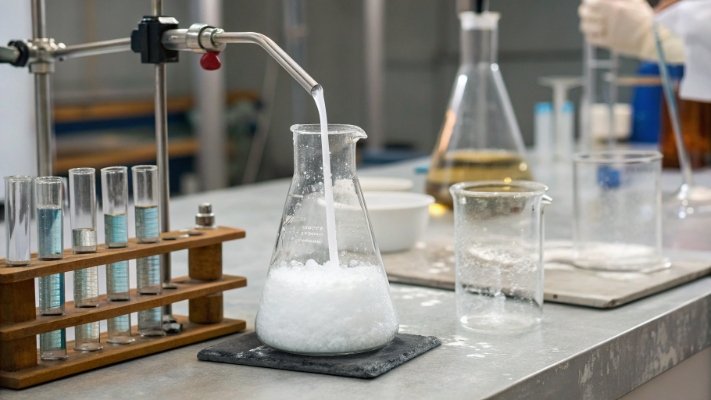
Aluminum hydroxide is the essential starting material for both aluminum fluoride and cryolite. It reacts with hydrofluoric acid to create aluminum fluoride. For cryolite, it reacts with hydrofluoric acid and a sodium source. These products are critical for aluminum smelting.
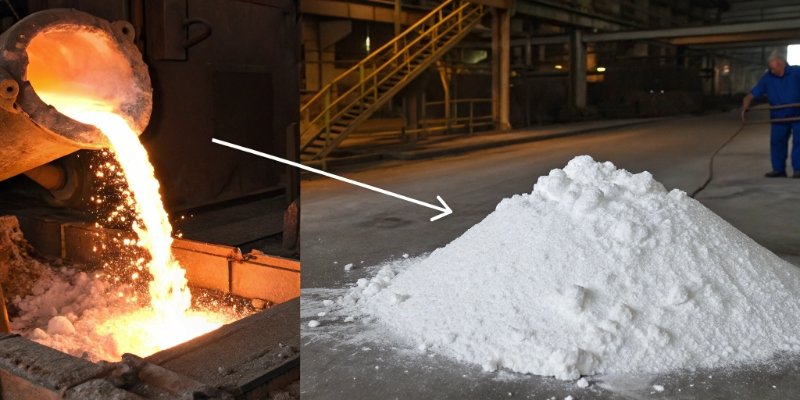
This is the basic concept. The real value comes from understanding the specific processes and why these materials are so vital for producing aluminum. Let’s look at each step more closely. You will see the complete picture of how it all works.
How to make aluminum fluoride?
Are you trying to find a reliable method for aluminum fluoride production? Sourcing the right process can be confusing. Here is the straightforward industrial method using aluminum hydroxide.
To make aluminum fluoride, high-purity aluminum hydroxide powder reacts with anhydrous hydrofluoric acid in a special reactor. The process creates heat. The final product is aluminum fluoride (AlF₃), a white solid that is essential for aluminum electrolysis.
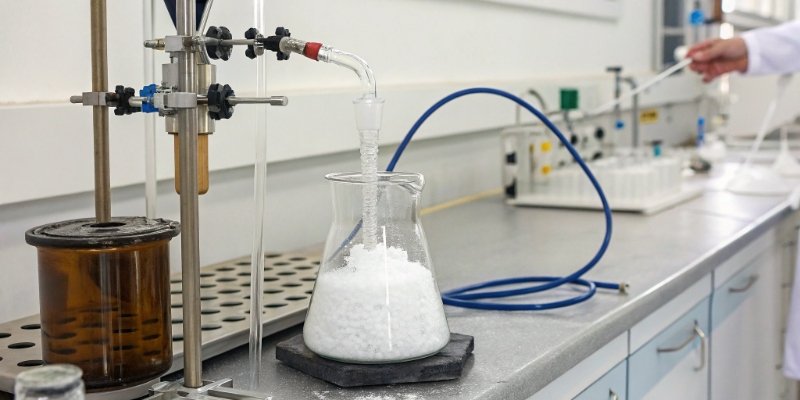
The process sounds simple, but the details are very important for quality. In my factory, we focus on controlling every variable to get the best product. The most common method uses what is called a "fluidized bed reactor1." This just means we blow the hydrofluoric acid2 gas through our fine aluminum hydroxide3 powder, making it act like a fluid. This ensures every particle of our powder reacts completely.
The Core Reaction
The chemical heart of the process is straightforward: we combine aluminum hydroxide with hydrofluoric acid. The result is aluminum fluoride4 and water vapor.
Al(OH)₃ + 3HF → AlF₃ + 3H₂O
The quality of the raw aluminum hydroxide is critical here. Any impurities5, like silica, can cause big problems in the final aluminum smelting process. That’s why we control our production so carefully.
Key Production Methods
There are two main ways to do this, the dry process and the wet process.
| Process Type | Description | Advantages | Disadvantages |
|---|---|---|---|
| Dry Process | Reacting Al(OH)₃ powder with HF gas at high temperatures. | High purity, good for continuous production. | High energy cost, very corrosive. |
| Wet Process | Reacting Al(OH)₃ with HF acid solution at lower temperatures. | Simpler equipment, lower energy needs. | Lower purity, needs an extra drying step. |
We prefer the dry process for its high-purity output, which is what our customers in the aluminum industry need.
How is aluminium hydroxide gel manufactured?
Are you confused about the difference between aluminum hydroxide gel and the powder we use? The gel form is for different industries. Let’s clarify how it’s made.
Aluminum hydroxide gel is usually made by precipitation. An aluminum salt, like aluminum sulfate, is mixed with a base, like sodium hydroxide. This creates a gelatinous solid that is then washed to remove impurities, resulting in a high-purity gel.
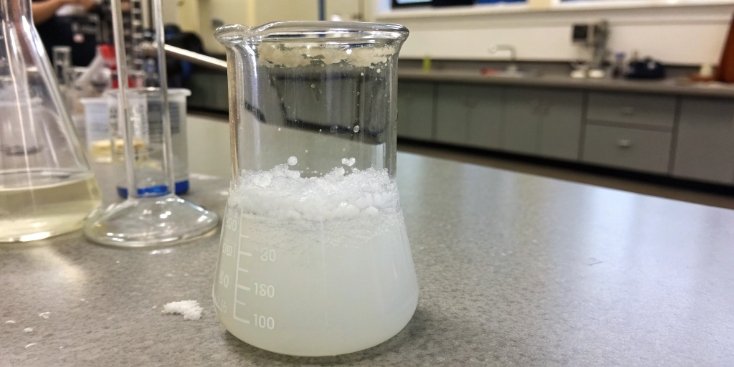
This process is very different from how we make the industrial-grade aluminum hydroxide powder for producing aluminum fluoride. The gel is specialized, often for uses where purity and physical form are more important than sheer volume. Your background in pharmacology might make this process familiar, as it’s common in making medicines.
The Precipitation Reaction
The chemistry is based on a simple reaction. We take a soluble aluminum salt and add a base to it. This forces the aluminum hydroxide to form as a solid that doesn’t dissolve in water. The down arrow (↓) in the formula means it precipitates, or "falls out," of the solution.
Al₂(SO₄)₃ + 6NaOH → 2Al(OH)₃↓ + 3Na₂SO₄
Washing and Purification
After the gel forms, it contains other salts, like sodium sulfate, from the reaction. These are impurities. For pharmaceutical uses, like in antacids6, these impurities must be removed. The gel is washed repeatedly with pure water until it meets strict quality standards. This purification step is the most critical part of manufacturing the gel.
Different Uses for the Gel
The final gel has many applications outside of metal production. It is used as:
- An active ingredient in antacids to neutralize stomach acid.
- An adjuvant in vaccines to help improve the body’s immune response.
- A flocculant7 in water treatment to help remove suspended particles.
Why is cryolite used in aluminium production?
Do you ever wonder why cryolite is so important for making aluminum? It seems like a minor additive. But without it, modern aluminum production would not be possible.
Cryolite (Na₃AlF₆) is used in aluminum production as a powerful flux. It dissolves alumina (Al₂O₃) at a much lower temperature, around 950°C. Alumina’s own melting point is over 2000°C. This makes electrolysis much more energy-efficient and affordable.
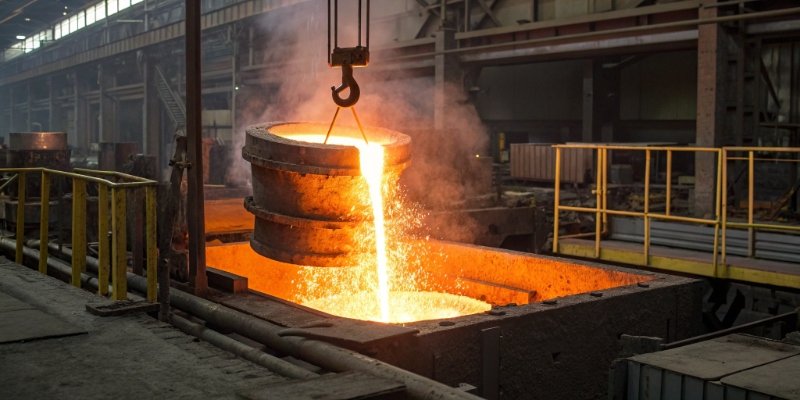
From my experience in production, efficiency is everything. Cryolite is a hero in the aluminum industry because it saves an incredible amount of energy. Think about trying to heat a furnace to over 2000°C versus heating it to 950°C. The cost difference is huge. But cryolite8 does more than just lower the temperature. It is a true multi-tasker in the electrolytic cell9.
Lowering the Melting Point
This is cryolite’s most famous job. It creates a molten salt bath that alumina can easily dissolve in. This mixture, called the electrolyte, is what allows the whole process to work at a manageable temperature.
Improving Electrical Conductivity
For electrolysis to happen, a strong electric current must pass through the molten bath. The cryolite-alumina mixture is an excellent conductor of electricity. Pure alumina, even if molten, is not. So, cryolite makes the electricity flow smoothly, which is necessary to separate the aluminum from the oxygen.
Protecting the Equipment
The electrolytic process is very harsh. The carbon anodes used to conduct electricity would be consumed very quickly. The molten cryolite bath creates a protective layer that helps slow down their oxidation. This reduces electrode consumption, extends their life, and lowers overall production costs.
| Property | Without Cryolite (Pure Alumina) | With Cryolite |
|---|---|---|
| Operating Temperature | > 2000 °C | ~ 950 °C |
| Energy Required | Extremely High | Much Lower |
| Process Feasibility | Not Economically Viable | The Global Standard |
How is aluminium produced step by step?
The path from raw ore in the ground to a finished aluminum product is a mystery to many. It is a complex industrial process. I will outline the main steps for you.
Aluminum production has two main stages. First, the Bayer process refines bauxite ore into pure aluminum oxide, also called alumina. Second, the Hall-Héroult process uses electrolysis in a molten cryolite bath to separate pure aluminum metal from the alumina.
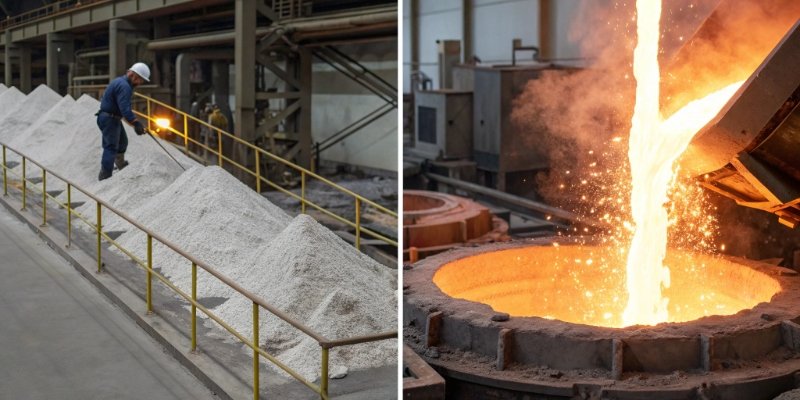
This entire global industry connects back to the raw materials we produce. Understanding the full journey helps you see why the quality of our aluminum hydroxide is so important. Each step depends on the success of the one before it.
Step 1: Mining Bauxite Ore
Everything starts with bauxite. This reddish-brown rock is mined from the earth’s surface. It is the world’s primary source of aluminum. Large deposits are found in tropical and subtropical regions.
Step 2: The Bayer Process (Making Alumina)
This is where our product, aluminum hydroxide, plays a central role.
- Bauxite is crushed and mixed with a hot caustic soda solution. This dissolves the aluminum compounds.
- The mixture is filtered to remove impurities, which are left behind as a red mud.
- The remaining aluminum-rich liquid is cooled, and aluminum hydroxide is precipitated out as a pure white solid. This is the product we make and sell.
- Finally, this aluminum hydroxide is heated to a high temperature in a kiln. This process, called calcination, removes the water molecules and leaves behind a fine white powder: pure alumina (Al₂O₃).
Step 3: The Hall-Héroult Process (Making Aluminum)
This is the final and most energy-intensive step. It is where aluminum fluoride and cryolite are used.
- Alumina from the Bayer process10 is dissolved in a molten bath of cryolite and aluminum fluoride inside a large electrolytic cell.
- A powerful direct electric current is passed through the bath.
- This current breaks the bond between aluminum and oxygen in the alumina. The oxygen is attracted to carbon anodes, and the pure, liquid aluminum sinks to the bottom of the cell.
- The molten aluminum is then siphoned off and cast into ingots.
Conclusion
From aluminum hydroxide, we create vital aluminum fluoride and cryolite. These compounds are not just chemicals; they are the keys to efficient and modern aluminum production worldwide.
-
Understand the mechanics of fluidized bed reactors and their advantages in chemical reactions. ↩
-
Gain insights into the applications and handling of hydrofluoric acid in industrial settings. ↩
-
Explore the diverse applications of aluminum hydroxide in various industries, enhancing your understanding of its significance. ↩
-
Learn about the production process of aluminum fluoride and its critical role in aluminum electrolysis. ↩
-
Understand the impact of impurities on product quality and the importance of purification. ↩
-
Discover the formulation and applications of antacids, including the role of aluminum hydroxide gel. ↩
-
Understand the function of flocculants in water treatment processes and their importance. ↩
-
Discover the essential functions of cryolite in aluminum smelting and its impact on energy efficiency. ↩
-
Learn about the design and operation of electrolytic cells in metal production. ↩
-
Understand the steps involved in the Bayer process and its significance in refining bauxite ore. ↩

You may also be interested in:

What protective measures should be taken when handling aluminum hydroxide powder in a factory?
Are you worried about worker safety when handling fine powders? Aluminum hydroxide is generally safe, but mishandling its dust can lead to serious respiratory issues and even create explosive conditions.

What Key Technical Indicators Should Be Considered When Purchasing Aluminum Hydroxide?
Are you struggling to find the right aluminum hydroxide for your needs? You might be paying for features you don’t even require. Let’s simplify the technical details. When buying aluminum

What are the market trends for aluminum hydroxide in 2026?
Are you planning your 2026 raw material purchases? Volatile markets make it hard. I will share insights from the factory floor to help you make better decisions for your business.
Is aluminum hydroxide toxic and is it harmful to the human body?
Worried about the word "aluminum" in your products? It sounds scary and can make you question its safety. I’m here to clear up the confusion with simple facts. Aluminum hydroxide

What are the side effects of long-term use of stomach medications containing aluminum hydroxide?
Struggling with constant heartburn? Reaching for that stomach medicine might seem like the only option. But what if that relief comes with hidden long-term costs? The most common side effect

Does ingesting aluminum (such as through aluminum hydroxide) cause Alzheimer's disease?
Are you worried that everyday products containing aluminum might be harmful? This fear connects to serious health concerns like Alzheimer’s, making you question what is safe. Let’s look closely. Based

Why do some vaccines contain aluminum hydroxide (aluminum adjuvant)?
Confused about vaccine ingredients? Seeing aluminum hydroxide listed can be unsettling. I’ll explain its crucial role and why it’s there to help your body build strong immunity. Aluminum hydroxide acts
Is the aluminum adjuvant in vaccines safe for infants or adults?
You read about vaccine ingredients and worry. The word "aluminum" sounds scary, especially when talking about babies. But understanding the facts can give you peace of mind. Yes, the aluminum

What environmental problems are generated during the production of aluminum hydroxide?
Worried about environmental compliance in your supply chain? Sourcing from China can be complex. You need a reliable, eco-conscious partner for your aluminum hydroxide needs. The main environmental issue is

Where are China's main aluminum hydroxide production areas?
Are you struggling to find the right aluminum hydroxide supplier in China? This confusion can lead to higher costs and unstable quality, which hurts your business and your reputation. China’s