
Worried about inconsistent aluminum hydroxide quality ruining your production? This uncertainty costs you money and reputation. Let’s find you a partner you can truly trust.
To choose a reliable aluminum hydroxide supplier, verify their certifications like ISO9001. Check key product specs, production capacity, and supply stability. Also, consider their technical strength, market reputation, and how responsive their customer service is. This ensures quality and avoids supply disruptions.

Choosing the right supplier is about more than just price. It’s about building a partnership that supports your business’s growth and stability. In my years managing production, I’ve seen how a good supplier can make all the difference. But many buyers get stuck on details that seem small but are actually very important. So, let’s break down the most common questions I hear from partners like you.
What is the brand name for aluminum hydroxide?
Trying to find a "brand name" for aluminum hydroxide can be confusing. You see many company names, making it hard to compare. Let’s clarify how branding works here.
Aluminum hydroxide is a chemical compound, so it doesn’t have a universal brand name like a consumer product. Instead, brands are the trade names given by specific manufacturers, such as Almatis’ "Hydral" or our own factory’s series. You buy from a producer, not a generic brand.
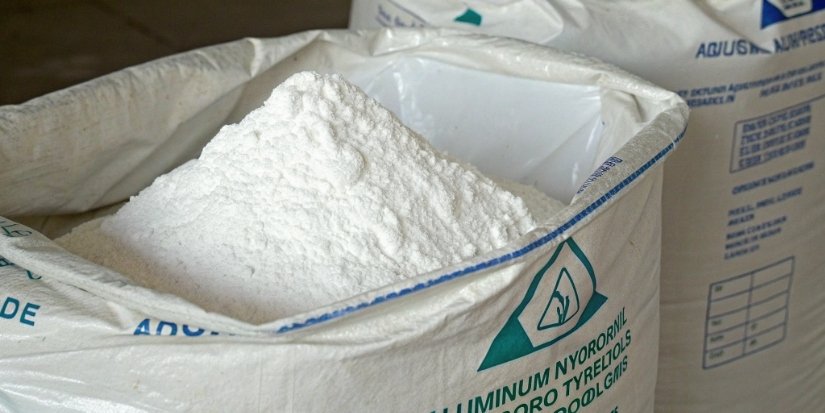
When you buy aluminum hydroxide1, the manufacturer’s name is the brand. You are trusting their production process and quality control. For example, in my factory, our reputation is built on years of refining our processes. It’s not about a flashy logo, but about consistent, reliable quality. Big international players have established names, but many excellent source factories, like ours in China, are building their brand directly with customers now. This gives you a direct link to the production line. To evaluate a manufacturer’s brand, you should look deeper.
Key Factors That Build a Supplier’s "Brand"
| Factor | What to Look For | Why It Matters |
|---|---|---|
| Certifications | ISO90012, SGS reports | Proves a commitment to international quality standards. |
| Key Customers | Do they supply well-known companies? | Shows they are trusted by major players in the industry. |
| Transparency | Are they willing to share test reports? | A confident supplier has nothing to hide about their product quality. |
A strong brand means you can trust the product inside the bag every single time. It means the supplier stands behind their product’s purity3, particle size4, and performance.
What are the different types of aluminium hydroxide?
You need aluminum hydroxide, but see terms like "industrial grade" or "high whiteness." Choosing the wrong one can cause production issues. Let’s simplify the main types available.
Aluminum hydroxide is mainly categorized by its purity, particle size, and specific properties like whiteness or surface treatment. Common types include industrial grade for general use, and specialized grades like low-viscosity, high-whiteness, or finely ground powders for advanced applications like flame retardants or pharmaceuticals.
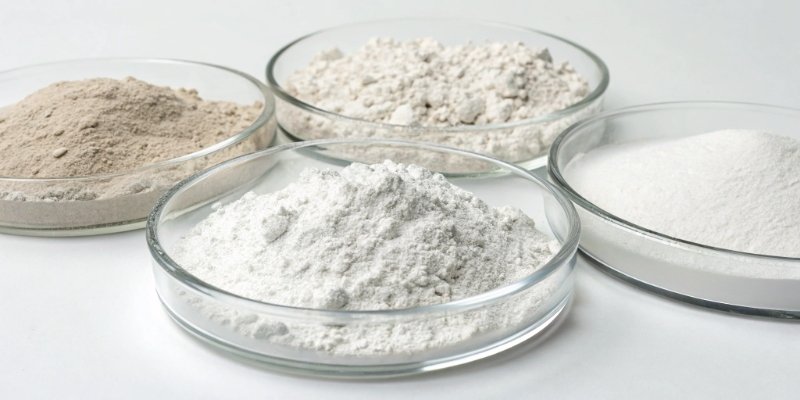
The "type" of aluminum hydroxide you choose depends entirely on your final product. From my experience on the factory floor, the differences come down to our processing methods. We start with the same raw material, but we can refine it in many ways. For example, some customers need a very fine powder for flame retardants5 in plastics. To achieve this, we use advanced equipment like air-jet mills. Other customers, perhaps in the pharmaceutical field, need exceptional purity. For them, we use a multi-stage pure water washing process to remove any trace impurities and control conductivity.
Common Aluminum Hydroxide Grades
| Grade Type | Key Characteristic | Common Application |
|---|---|---|
| Standard Grade | Balanced properties | Artificial marble, general fillers |
| Fine / Ultrafine | Small particle size (D50) | Flame retardants in cables/plastics |
| High Whiteness | High whiteness index (>95) | Solid surfaces, high-end fillers |
| Low Viscosity | Optimized for resin mixing | Epoxy resins, electronic potting |
| Surface Treated | Coated with silane/stearic acid | Improved compatibility with polymers |
Always share your application with your supplier. A good partner will help you select the perfect grade, not just sell you a product.
What is an alternative to aluminum hydroxide?
Thinking about alternatives to aluminum hydroxide for your formula? Sticking to one material might mean you’re missing out. Let’s explore the main alternative and its key differences.
The most common alternative to aluminum hydroxide (ATH), especially as a flame retardant, is magnesium hydroxide (MDH). MDH has a higher decomposition temperature, making it suitable for polymers processed at higher temperatures. However, it’s often more expensive and may require different loading levels.
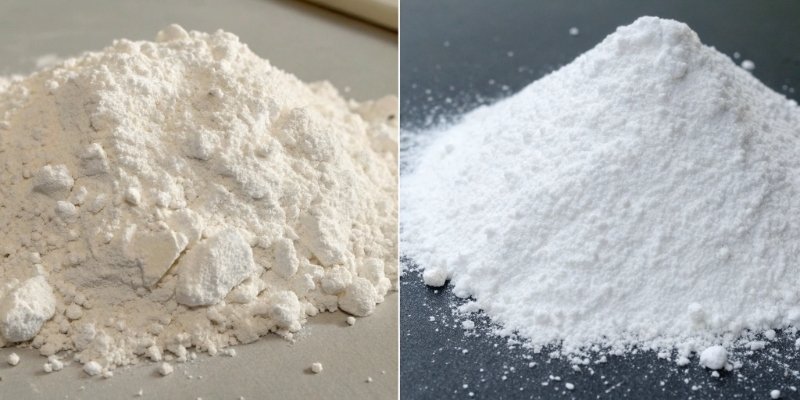
While we specialize in aluminum hydroxide, it’s important for my partners to know all their options. The main reason customers look for an alternative is processing temperature. Aluminum hydroxide (ATH) starts to decompose and release water around 200°C. This is perfect for many polymers like PVC or EVA. However, for plastics like polypropylene (PP) or nylon that are processed at higher temperatures, you need something more stable. That’s where magnesium hydroxide6 (MDH) comes in. It’s stable up to about 330°C. Choosing between them is a technical decision based on your specific needs and budget.
ATH vs. MDH: A Quick Comparison
| Feature | Aluminum Hydroxide (ATH) | Magnesium Hydroxide (MDH) |
|---|---|---|
| Decomposition Temp. | ~200°C | ~330°C |
| Flame Retardancy | Good | Excellent, less smoke |
| Cost | Generally lower | Generally higher |
| Polymer Suitability | Polymers processed < 200°C | Polymers processed > 200°C |
Sometimes, a blend of both is used to balance performance and cost. An honest supplier will discuss these trade-offs with you openly, even if they only sell one of the products.
Is aluminum trihydrate the same as aluminum hydroxide?
Seeing terms like aluminum trihydrate and aluminum hydroxide can be confusing. Are they different products? This uncertainty can make ordering stressful. Let’s clear this up for you right now.
Yes, aluminum trihydrate (ATH) is the same chemical compound as aluminum hydroxide. The chemical formula is Al(OH)₃. "Trihydrate" refers to the three water molecules associated with the aluminum oxide molecule (Al₂O₃ · 3H₂O), which is just another way to write its structure.
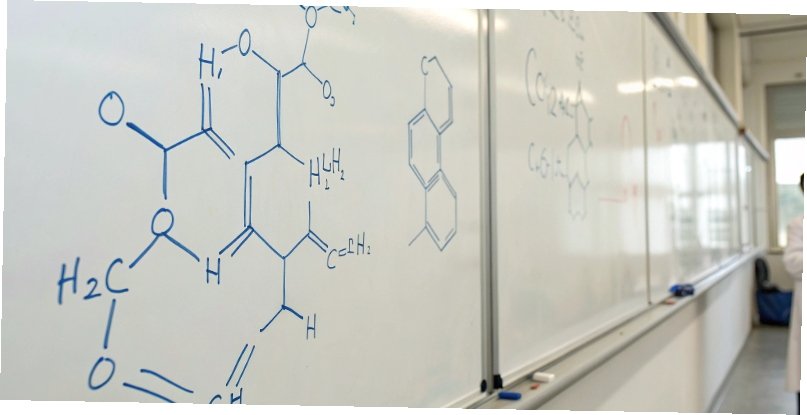
This is a question I get a lot, especially from new buyers. The simple answer is yes, they are exactly the same. The name "aluminum hydroxide" describes its chemical structure, Al(OH)₃. The name "aluminum trihydrate7," often abbreviated as ATH, describes it as a hydrated form of alumina (Al₂O₃). It’s the same molecule, just described from two different chemical perspectives. In the industry, the terms are used interchangeably. I have seen purchase orders with both names for the exact same grade of product. A reliable supplier will understand this and won’t be confused by the terminology you use.
Why the Two Names?
| Name | Chemical Formula | Perspective | Common Usage |
|---|---|---|---|
| Aluminum Hydroxide | Al(OH)₃ | Focuses on the hydroxide (-OH) groups | More common in general chemistry |
| Aluminum Trihydrate | Al₂O₃ · 3H₂O | Focuses on water (hydrate) molecules | Very common in the flame retardant industry (ATH) |
Don’t worry about the name. Focus on the product specifications: purity, particle size, and other key data points. That’s what truly matters for your application.
Conclusion
In short, choosing the right supplier means checking their quality, capacity, and service. A good partner ensures your success. Find one you can trust for the long term.
-
Explore this link to understand the various applications and benefits of aluminum hydroxide in different industries. ↩
-
Learn about ISO9001 certification and its importance in ensuring product quality and reliability. ↩
-
Understand why purity is a critical factor in the quality of aluminum hydroxide. ↩
-
Discover how particle size influences the effectiveness of aluminum hydroxide in applications. ↩
-
Learn about the science behind flame retardants and their importance in safety. ↩
-
Explore the advantages of magnesium hydroxide as an alternative to aluminum hydroxide. ↩
-
Clarify the relationship between aluminum trihydrate and aluminum hydroxide. ↩

You may also be interested in:

What protective measures should be taken when handling aluminum hydroxide powder in a factory?
Are you worried about worker safety when handling fine powders? Aluminum hydroxide is generally safe, but mishandling its dust can lead to serious respiratory issues and even create explosive conditions.

What Key Technical Indicators Should Be Considered When Purchasing Aluminum Hydroxide?
Are you struggling to find the right aluminum hydroxide for your needs? You might be paying for features you don’t even require. Let’s simplify the technical details. When buying aluminum

What are the market trends for aluminum hydroxide in 2026?
Are you planning your 2026 raw material purchases? Volatile markets make it hard. I will share insights from the factory floor to help you make better decisions for your business.

Is aluminum hydroxide toxic and is it harmful to the human body?
Worried about the word "aluminum" in your products? It sounds scary and can make you question its safety. I’m here to clear up the confusion with simple facts. Aluminum hydroxide

What are the side effects of long-term use of stomach medications containing aluminum hydroxide?
Struggling with constant heartburn? Reaching for that stomach medicine might seem like the only option. But what if that relief comes with hidden long-term costs? The most common side effect

Does ingesting aluminum (such as through aluminum hydroxide) cause Alzheimer's disease?
Are you worried that everyday products containing aluminum might be harmful? This fear connects to serious health concerns like Alzheimer’s, making you question what is safe. Let’s look closely. Based

Why do some vaccines contain aluminum hydroxide (aluminum adjuvant)?
Confused about vaccine ingredients? Seeing aluminum hydroxide listed can be unsettling. I’ll explain its crucial role and why it’s there to help your body build strong immunity. Aluminum hydroxide acts

Is the aluminum adjuvant in vaccines safe for infants or adults?
You read about vaccine ingredients and worry. The word "aluminum" sounds scary, especially when talking about babies. But understanding the facts can give you peace of mind. Yes, the aluminum

What environmental problems are generated during the production of aluminum hydroxide?
Worried about environmental compliance in your supply chain? Sourcing from China can be complex. You need a reliable, eco-conscious partner for your aluminum hydroxide needs. The main environmental issue is

Where are China's main aluminum hydroxide production areas?
Are you struggling to find the right aluminum hydroxide supplier in China? This confusion can lead to higher costs and unstable quality, which hurts your business and your reputation. China’s