
Sourcing quality aluminum hydroxide can be confusing. You see many grades but don’t know their origin. This can lead to buying the wrong product, hurting your quality and costs.
The vast majority of industrial aluminum hydroxide is produced using the Bayer process. This chemical process extracts alumina from bauxite ore using a hot sodium hydroxide solution. The resulting aluminum hydroxide is then precipitated, washed, and dried into a fine white powder.
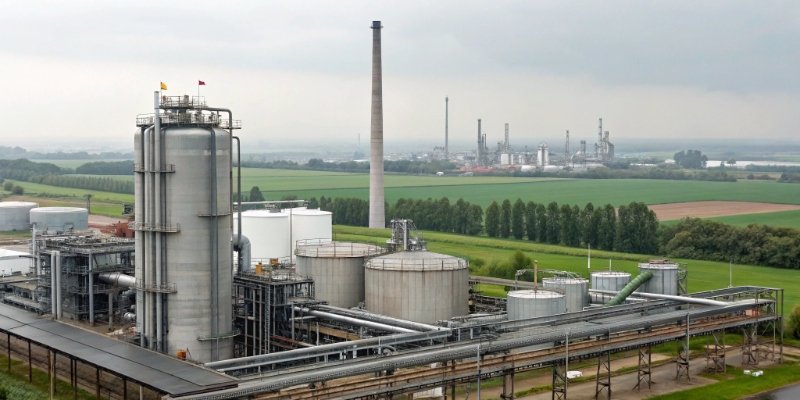
I’ve spent years managing production here in our Henan factory. I know the Bayer process1 inside and out. But I also know that the process itself is just the beginning. The real value for a buyer like you comes from understanding the details. It’s about how we get from a red rock to a pure white powder with the exact properties you need. Let’s look deeper into how it’s made, where it comes from, and why that matters for your business.
How is aluminium hydroxide manufactured?
You have heard of the Bayer process, but the steps can seem very technical. Without knowing these steps, you cannot really judge a supplier’s quality control. Let’s simplify the process.
Aluminum hydroxide is manufactured through the Bayer process in four main stages. First, bauxite ore is crushed and digested in caustic soda. Second, the mixture is clarified to remove impurities. Third, pure aluminum hydroxide crystals are precipitated. Finally, the crystals are washed and dried.
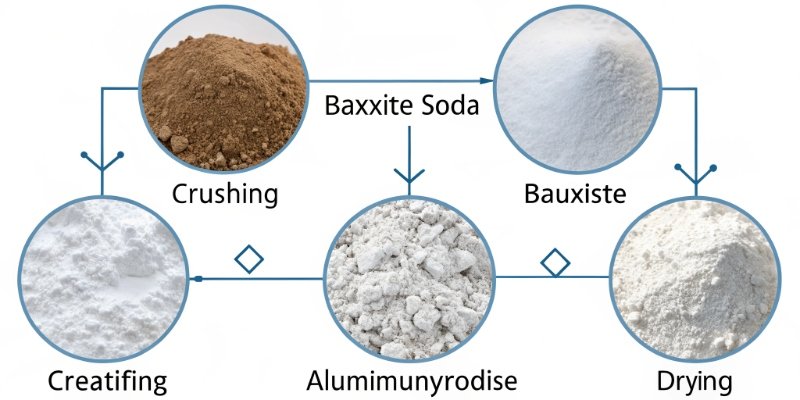
In my factory, I see every stage of this process daily. It’s a large-scale operation, but the core principles are straightforward. Breaking it down helps you see where quality is built into the product. It’s not just about the final powder; it’s about the control we maintain at every single step.
Stage 1: Digestion
The first step is to crush the bauxite ore2 into a fine slurry. We then mix this slurry with a hot solution of caustic soda (sodium hydroxide) under high pressure. This dissolves the aluminum-bearing minerals into a sodium aluminate solution, leaving most impurities behind as a solid residue. We call this residue "red mud3."
Stage 2: Clarification
Next, the hot mixture is cooled, and the red mud is separated from the sodium aluminate solution. This is a critical step for achieving high whiteness and purity. We use large settling tanks and filtration systems to ensure all the solid impurities, like iron oxides, are completely removed. If this step is not done perfectly, the final product will have poor color.
Stage 3: Precipitation and Processing
Once we have a pure sodium aluminate solution, we cool it and add fine seed crystals of aluminum hydroxide4. This encourages the dissolved aluminum hydroxide to precipitate out of the solution as solid, white crystals. The time and temperature of this step determine the crystal size. After precipitation, we wash the crystals thoroughly to remove any remaining caustic soda. The final step is where my insight comes in. The wet cake of aluminum hydroxide is dried, and then it undergoes physical processing. This means we use special mills to grind the powder to a specific particle size and distribution, which is what creates the different grades you see on the market.
| Process Step | Control Parameter | Impact on Final Product |
|---|---|---|
| Digestion | Temperature & Pressure | Efficiency of aluminum extraction |
| Clarification | Filtration Method | Purity and whiteness |
| Precipitation | Seeding & Cooling Rate | Crystal size and shape |
| Post-Processing | Grinding & Sieving | Final particle size distribution5 |
What is the source of aluminum hydroxide?
You know the final product is a white powder, but what does it start as? The quality of your raw material directly impacts your business, affecting purity, consistency, and cost.
The primary natural source for aluminum hydroxide is bauxite ore. Bauxite is a sedimentary rock that contains high concentrations of aluminum minerals. Major global reserves are located in countries like Australia, Guinea, China, and Brazil. The specific geology of the mine affects the ore’s quality.
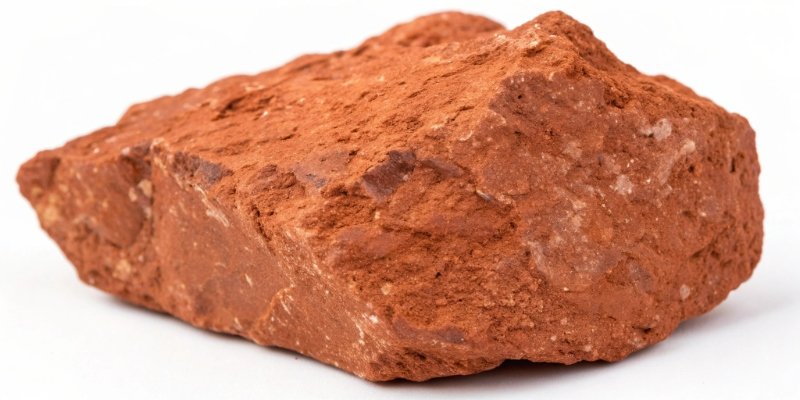
The journey from a rock in the ground to a highly specified industrial powder is fascinating. As a factory manager, I am very careful about where we get our raw materials. The quality of our bauxite is the foundation for the quality of our finished aluminum hydroxide. A good source makes the entire production process smoother and results in a better, more consistent product for customers like Mr. Park.
Bauxite Composition
Bauxite is not a uniform material. Its main component is hydrated aluminum oxides, but it also contains impurities. The two most common impurities are iron oxides, which give bauxite its typical reddish-brown color, and silica. The levels of these impurities are very important. High iron content means we have to work harder during the clarification stage6 to produce a high-whiteness powder. High silica content can cause problems during the digestion stage, leading to losses of both aluminum and the expensive caustic soda.
Global Sourcing and Its Impact
Different regions produce bauxite with different characteristics. For example, Australian bauxite is known for its high purity7 and low silica content. Guinean bauxite has very high aluminum content. Here in China, we have significant reserves, but the composition can vary. For our plant in Henan, we have established stable supply chains with mines that provide bauxite with the ideal profile for our production. This ensures we can consistently produce high-purity aluminum hydroxide that meets the strict requirements for applications like pharmaceuticals and high-end flame retardant8s. This sourcing strategy is key to providing a competitive product.
What are the industrial uses of aluminum hydroxide?
You probably see aluminum hydroxide listed as an ingredient in many different products. But you might not know how versatile it is or how different grades are used for specific jobs.
Aluminum hydroxide is a multi-functional material used across many industries. Its main use is as a halogen-free flame retardant in plastics and rubber. It is also the primary raw material for producing alumina, aluminum metal, and other aluminum chemicals. It also acts as a filler.
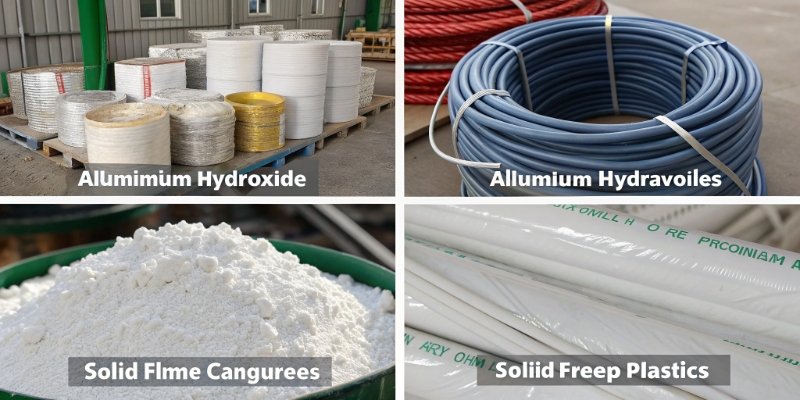
I often speak with buyers who are surprised by how many different things our product is used for. One day I am supplying a coarse grade for making aluminum sulfate for water treatment. The next day, I am discussing a superfine, high-whiteness grade with a customer making solid surface countertops. This versatility is what makes it such an important industrial chemical. Understanding the specific use helps me recommend the exact right grade.
Flame Retardant
This is the largest application outside of aluminum production. When aluminum hydroxide (ATH) is heated to around 200°C, it breaks down and releases water vapor. This process is endothermic, meaning it absorbs a lot of heat. This cools the material and the water vapor dilutes flammable gases. Because it contains no halogens (like chlorine or bromine), it is considered an environmentally friendly flame retardant that produces less smoke and toxic fumes in a fire.
Chemical Feedstock
Globally, the biggest use of aluminum hydroxide is as the starting material for making smelter-grade alumina (Al₂O₃). The alumina is then used to produce aluminum metal through the Hall-Héroult process. It is also used to produce other aluminum compounds, like aluminum sulfate (for water purification), polyaluminum chloride, and sodium aluminate.
Filler and Additive
As a fine white powder, ATH is an excellent functional filler. In the plastics and rubber industry, it not only provides flame retardancy but also improves properties like arc and track resistance in electrical insulators. In solid surface materials, like kitchen countertops, it makes up a large portion of the formula, providing a smooth, white, and durable finish.
| Grade Specification | Whiteness | Common Industrial Use |
|---|---|---|
| Coarse Particle Size | Standard (85-90%) | Alumina production, Water treatment chemicals |
| Fine Particle Size | High (90-95%) | Flame retardant for wires and cables, Rubber |
| Superfine Particle Size | Very High (>95%) | Solid surface countertops, Pharmaceutical antacids |
What is an alternative to aluminum hydroxide?
Sometimes, aluminum hydroxide is not the perfect fit for a specific application. Using the wrong material can reduce performance or add unnecessary cost, so it’s good to know the options.
The most common alternative to aluminum hydroxide, especially as a flame retardant, is magnesium hydroxide (MDH). MDH works in a similar way but has a higher decomposition temperature, making it better for plastics that are processed at high heat. Other alternatives exist for specific uses.
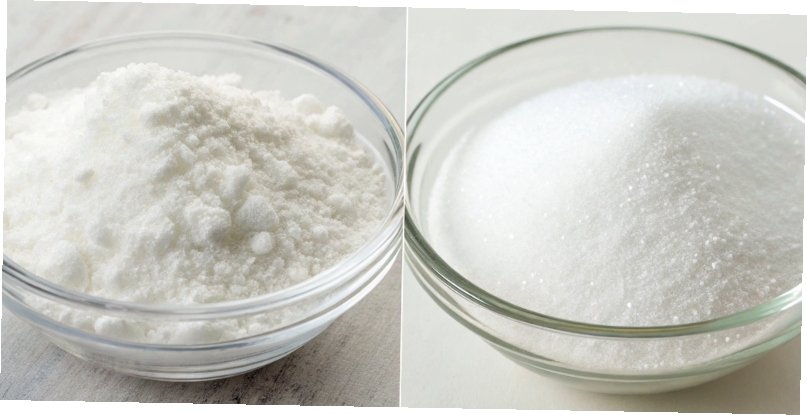
As a producer, it is important for me to be honest about the limits of my product. While aluminum hydroxide is incredibly versatile, it is not always the best choice. For a knowledgeable buyer, understanding the alternatives is just as important as understanding my product. This helps you make the best decision for your specific formulation and processing conditions. I believe in providing the right product, not just any product.
Magnesium Hydroxide (MDH)
Magnesium hydroxide is the main competitor to ATH in the flame retardant market. Its key advantage is its higher thermal stability9. ATH starts to decompose around 200°C, while MDH is stable up to about 330°C. This makes MDH the preferred choice for polymers that require high processing temperatures, such as polypropylene (PP) and polyamides (Nylon). However, MDH is generally more expensive than ATH and may require higher loading levels to achieve the same level of flame retardancy. This creates a trade-off between performance and cost.
Other Niche Alternatives
Beyond MDH, there are other flame retardants, but they are often used for different reasons or in combination with ATH or MDH. For example, phosphate-based flame retardants work in the gas phase and can be very efficient, but they might not be suitable for all applications. Zinc borate is often used as a synergist; this means it is added in small amounts to ATH or MDH to improve their overall performance, especially in reducing smoke. The choice really depends on the specific polymer, the performance requirements, and the cost targets of the final product.
| Feature | Aluminum Hydroxide (ATH) | Magnesium Hydroxide (MDH) |
|---|---|---|
| Decomposition Temp. | ~200°C | ~330°C |
| Primary Advantage | Lower cost, high efficiency | Higher thermal stability |
| Ideal For Polymers | PVC, EVA, PE, Rubber | PP, PA (Nylon), TPE |
| Relative Cost | Lower | Higher |
Conclusion
The Bayer process is the core of aluminum hydroxide production. Understanding this process, its raw material, its many uses, and its alternatives helps you choose the right product every time.
-
Explore the Bayer process to understand how aluminum hydroxide is produced and its significance in industrial applications. ↩
-
Discover the significance of bauxite ore as the primary source of aluminum and its impact on production quality. ↩
-
Find out about red mud, a byproduct of aluminum production, and its environmental implications. ↩
-
Learn about the versatile applications of aluminum hydroxide across various industries and its importance in manufacturing. ↩
-
Learn about the importance of particle size distribution in determining the performance of aluminum hydroxide. ↩
-
Learn about the critical clarification stage and its impact on the purity of aluminum hydroxide. ↩
-
Discover why high purity levels in aluminum hydroxide are crucial for its industrial applications. ↩
-
Learn about the flame retardant properties of aluminum hydroxide and its applications in safety materials. ↩
-
Discover the significance of thermal stability in flame retardants and how it affects material performance. ↩

You may also be interested in:

What protective measures should be taken when handling aluminum hydroxide powder in a factory?
Are you worried about worker safety when handling fine powders? Aluminum hydroxide is generally safe, but mishandling its dust can lead to serious respiratory issues and even create explosive conditions.

What Key Technical Indicators Should Be Considered When Purchasing Aluminum Hydroxide?
Are you struggling to find the right aluminum hydroxide for your needs? You might be paying for features you don’t even require. Let’s simplify the technical details. When buying aluminum

What are the market trends for aluminum hydroxide in 2026?
Are you planning your 2026 raw material purchases? Volatile markets make it hard. I will share insights from the factory floor to help you make better decisions for your business.
Is aluminum hydroxide toxic and is it harmful to the human body?
Worried about the word "aluminum" in your products? It sounds scary and can make you question its safety. I’m here to clear up the confusion with simple facts. Aluminum hydroxide

What are the side effects of long-term use of stomach medications containing aluminum hydroxide?
Struggling with constant heartburn? Reaching for that stomach medicine might seem like the only option. But what if that relief comes with hidden long-term costs? The most common side effect

Does ingesting aluminum (such as through aluminum hydroxide) cause Alzheimer's disease?
Are you worried that everyday products containing aluminum might be harmful? This fear connects to serious health concerns like Alzheimer’s, making you question what is safe. Let’s look closely. Based

Why do some vaccines contain aluminum hydroxide (aluminum adjuvant)?
Confused about vaccine ingredients? Seeing aluminum hydroxide listed can be unsettling. I’ll explain its crucial role and why it’s there to help your body build strong immunity. Aluminum hydroxide acts

Is the aluminum adjuvant in vaccines safe for infants or adults?
You read about vaccine ingredients and worry. The word "aluminum" sounds scary, especially when talking about babies. But understanding the facts can give you peace of mind. Yes, the aluminum

What environmental problems are generated during the production of aluminum hydroxide?
Worried about environmental compliance in your supply chain? Sourcing from China can be complex. You need a reliable, eco-conscious partner for your aluminum hydroxide needs. The main environmental issue is

Where are China's main aluminum hydroxide production areas?
Are you struggling to find the right aluminum hydroxide supplier in China? This confusion can lead to higher costs and unstable quality, which hurts your business and your reputation. China’s