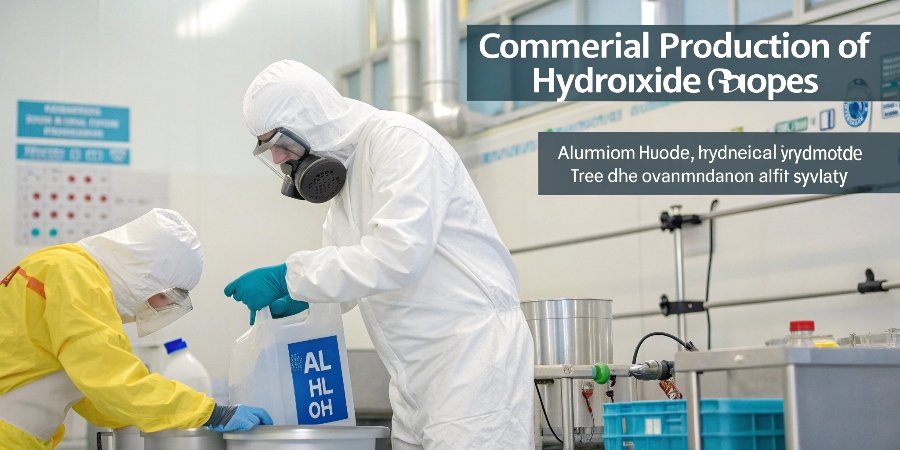
You need a consistent supply of aluminum hydroxide for your products, but you are worried about quality. Industrial chemicals often carry a reputation for contamination, which could ruin your entire batch.
Commercially, aluminum hydroxide (Al(OH)₃) is produced through the Bayer Process. This method refines bauxite ore into a product that is typically over 99.5% pure. While not completely free of impurities, trace elements like sodium are controlled to very low levels.
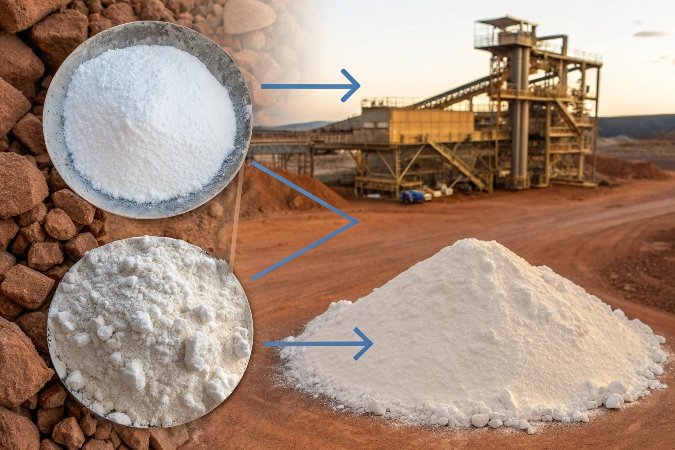
As someone who used to manage the production floor of our plant, I have a deep respect for the Bayer Process1. It’s a large-scale chemical engineering marvel. When a knowledgeable buyer like Mr. Park from a Korean trading company asks me about impurities, he’s testing our knowledge. He wants to know if we just shovel material into bags or if we truly master our process to guarantee quality. My job is to walk him through how we turn raw, red bauxite rock into the fine, white powder he needs for his pharmaceutical customers, assuring him of its purity every step of the way.
How is aluminum hydroxide made using the Bayer Process?
You hear about this industrial method called the Bayer Process, and it sounds complex. Not understanding how your raw material is made can make it difficult to trust its quality and consistency.
The Bayer Process is a four-step method. First, bauxite ore is crushed and dissolved in hot sodium hydroxide. Second, the impurities are filtered out as red mud. Third, pure aluminum hydroxide is precipitated by cooling the solution. Fourth, it is washed and dried.

Let’s break it down into simple steps. This is the exact process we use at our facility in Henan. We start with bauxite, a clay-like rock that is rich in aluminum.
- Digestion: We crush the bauxite and mix it into a hot, high-pressure solution of caustic soda (sodium hydroxide). This dissolves the valuable aluminum, turning it into a liquid called sodium aluminate. The other minerals, mostly iron, don’t dissolve.
- Clarification: Next, we run the mixture through massive filters. The undissolved impurities, which form a thick, reddish waste product we call "red mud2," are separated out. This is a critical purification step.
- Precipitation: We now have a clear, pure solution of sodium aluminate. We cool it down and add tiny "seed" crystals of pure aluminum hydroxide3. This encourages the dissolved aluminum hydroxide to crystallize and come out of the solution as a solid. By controlling the temperature and seeding, we control the particle size of our final product.
- Washing: Finally, the solid crystals are washed thoroughly to remove any remaining caustic soda and then dried into the final white powder.
How pure is commercially produced Al(OH)₃?
You see a specification sheet that says "99.5% pure," but you wonder what makes up the other 0.5%. That small fraction of unknown material could be a big problem for your sensitive application.
Standard industrial aluminum hydroxide is very pure, typically 99.5% Al(OH)₃ or higher. The main impurity is sodium oxide (Na₂O) from the process chemicals. There are also tiny amounts of iron oxide (Fe₂O₃) and silica (SiO₂) left from the original bauxite ore.
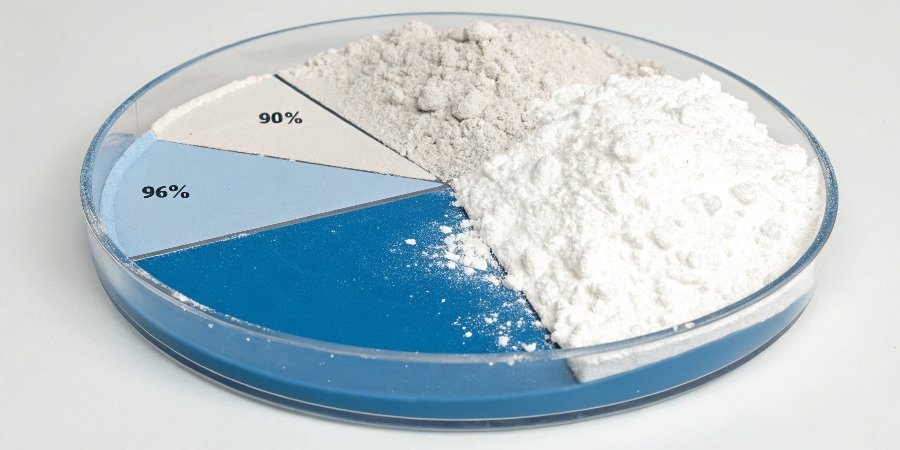
When a customer asks for our Certificate of Analysis, these are the impurities we test for. It’s important to know what they are and where they come from.
- Sodium Oxide (Na₂O): This is our biggest challenge. Because we use sodium hydroxide to dissolve the bauxite, some sodium inevitably gets trapped in the Al(OH)₃ crystals during precipitation. We use extensive washing to minimize this, but getting it to zero is impossible. The amount of sodium is a key indicator of quality.
- Iron Oxide (Fe₂O₃): This impurity comes from the bauxite ore4 and affects the product’s color. Even a tiny amount of iron can reduce the whiteness of the powder, giving it a slight off-white tint. Our clarification stage, where we remove the red mud, is designed to get rid of as much iron as possible.
- Silica (SiO₂): Silica also comes from the raw bauxite. Most of it is removed during clarification, but trace amounts can remain.
Common Impurities and Their Effects
| Impurity | Source | Effect on Product |
|---|---|---|
| Sodium Oxide | Sodium hydroxide (process chemical) | Can affect electrical properties in some plastics |
| Iron Oxide | Bauxite Ore (raw material) | Reduces whiteness, can cause a yellowish tint |
| Silica | Bauxite Ore (raw material) | Generally inert, an indicator of refining efficiency |
Can you really get 100% pure aluminum hydroxide?
For a highly advanced application, you may need the absolute highest purity possible. You wonder if it’s possible to find a supplier who can provide a completely pure, 100% Al(OH)₃ product.
No, it is not possible to produce a 100% pure chemical on a commercial scale. However, very high-purity grades (above 99.9%) are available. These are made using extra purification steps and are reserved for specialized applications like electronics or advanced ceramics.
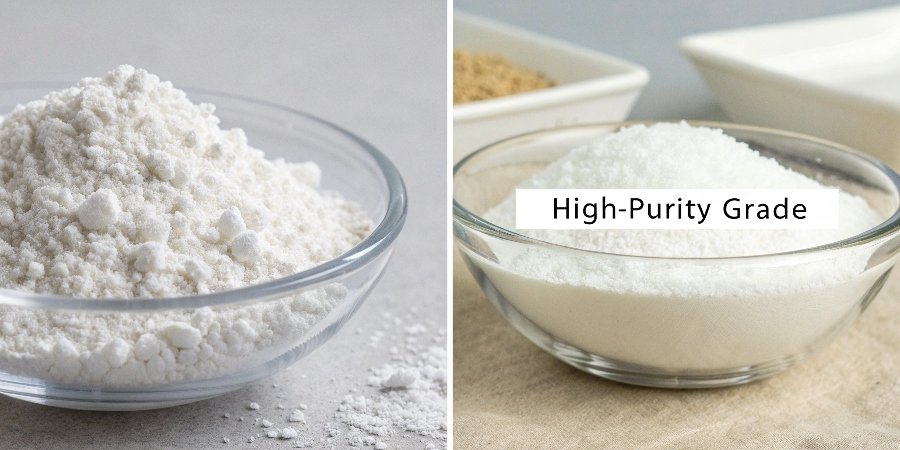
The idea of 100% purity is a theoretical concept. In the real world of chemical manufacturing, there will always be trace elements present in parts per million. Chasing that last 0.01% of purity can increase the cost dramatically. The key is to match the right purity level to the right application. Our standard grade is perfect and cost-effective for flame retardants and most fillers. However, for a customer making components for LED screens, the sodium content might need to be extremely low. For them, we can provide a special high-purity grade that has gone through extra washing and processing steps. This is a conversation I often have with buyers like Mr. Park. For his pharmaceutical customers, the most critical factors are low iron and meeting specific heavy metal limits5, not achieving an impossible "100% pure" standard.
Conclusion
The Bayer Process produces very pure aluminum hydroxide, but not 100%. Understanding the process and its resulting impurities is key to selecting the right grade for your specific manufacturing needs.
-
Learn about the Bayer Process, a crucial method for producing high-purity aluminum hydroxide. ↩
-
Learn about red mud, a byproduct of the Bayer Process, and its environmental implications. ↩
-
Explore the diverse applications of aluminum hydroxide in industries like pharmaceuticals and manufacturing. ↩
-
Discover the significance of bauxite ore in the aluminum production process. ↩
-
Learn about the critical heavy metal limits for aluminum hydroxide in pharmaceutical applications. ↩

You may also be interested in:

What protective measures should be taken when handling aluminum hydroxide powder in a factory?
Are you worried about worker safety when handling fine powders? Aluminum hydroxide is generally safe, but mishandling its dust can lead to serious respiratory issues and even create explosive conditions.

What Key Technical Indicators Should Be Considered When Purchasing Aluminum Hydroxide?
Are you struggling to find the right aluminum hydroxide for your needs? You might be paying for features you don’t even require. Let’s simplify the technical details. When buying aluminum

What are the market trends for aluminum hydroxide in 2026?
Are you planning your 2026 raw material purchases? Volatile markets make it hard. I will share insights from the factory floor to help you make better decisions for your business.
Is aluminum hydroxide toxic and is it harmful to the human body?
Worried about the word "aluminum" in your products? It sounds scary and can make you question its safety. I’m here to clear up the confusion with simple facts. Aluminum hydroxide

What are the side effects of long-term use of stomach medications containing aluminum hydroxide?
Struggling with constant heartburn? Reaching for that stomach medicine might seem like the only option. But what if that relief comes with hidden long-term costs? The most common side effect

Does ingesting aluminum (such as through aluminum hydroxide) cause Alzheimer's disease?
Are you worried that everyday products containing aluminum might be harmful? This fear connects to serious health concerns like Alzheimer’s, making you question what is safe. Let’s look closely. Based

Why do some vaccines contain aluminum hydroxide (aluminum adjuvant)?
Confused about vaccine ingredients? Seeing aluminum hydroxide listed can be unsettling. I’ll explain its crucial role and why it’s there to help your body build strong immunity. Aluminum hydroxide acts

Is the aluminum adjuvant in vaccines safe for infants or adults?
You read about vaccine ingredients and worry. The word "aluminum" sounds scary, especially when talking about babies. But understanding the facts can give you peace of mind. Yes, the aluminum

What environmental problems are generated during the production of aluminum hydroxide?
Worried about environmental compliance in your supply chain? Sourcing from China can be complex. You need a reliable, eco-conscious partner for your aluminum hydroxide needs. The main environmental issue is

Where are China's main aluminum hydroxide production areas?
Are you struggling to find the right aluminum hydroxide supplier in China? This confusion can lead to higher costs and unstable quality, which hurts your business and your reputation. China’s