You may think a chemical must be either an acid or a base, not both. This common misunderstanding can lead to confusion about how aluminum hydroxide works in different applications.
Aluminum hydroxide is amphoteric, which means it can act as a base by reacting with acids, and as an acid by reacting with strong bases. Its behavior is determined entirely by the chemical environment it is in.
In my factory, we produce aluminum hydroxide for customers in completely different industries. One customer might use it as a simple base1, like in an antacid2d](https://www.britannica.com/science/acid)[^3]. Another might use its acidic properties in a complex chemical process. For a buyer like Mr. Park, understanding this dual personality is key. It explains why this single white powder is one of the most versatile industrial chemicals available and how to use it correctly.
Is aluminum hydroxide a base or acid?
Does this question feel like a simple choice between two options? Giving the wrong answer in an industrial setting can be costly and shows a misunderstanding of the material’s properties.
Aluminum hydroxide is classified as amphoteric, meaning it can behave as both a weak acid and a weak base. It is not strictly one or the other; its role depends on the substance it reacts with.

This dual nature is the most important chemical fact about aluminum hydroxide. Here is how it works in practice.
-
When it acts as a base: If you put aluminum hydroxide into a strong acid like hydrochloric acid (HCl), it behaves like a classic base. The hydroxide parts of the molecule neutralize the acid. This is exactly how it works in an antacid tablet to calm stomach acid. The chemical reaction is:
Al(OH)₃ + 3HCl → AlCl₃ + 3H₂O. -
When it acts as an acid: If you put it into a strong base like sodium hydroxide (NaOH), aluminum hydroxide switches roles. It donates a proton and behaves like an acid. This is a fundamental step in its own manufacturing, the Bayer process, where we dissolve it in a strong caustic solution to purify it. The reaction is:
Al(OH)₃ + NaOH → Na[Al(OH)₄].
So, the answer to the question "is it a base or acid?" is always "it depends on what you mix it with."
Does aluminum react with both an acid and a base?
You might think of the aluminum in your kitchen foil as a stable ingredient. But assuming it’s unreactive can lead you to overlook its potential for some very strong chemical reactions.
Yes, aluminum metal is also amphoteric and reacts with both strong acids and strong bases. A very thin, tough layer of aluminum oxide protects the metal, but once that layer is broken, the metal reacts vigorously.
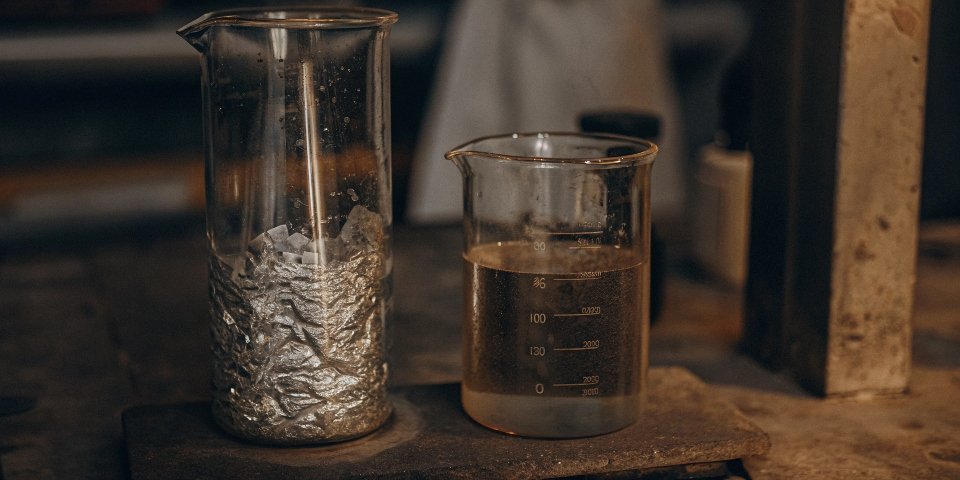
It’s important to separate the properties of aluminum hydroxide (our powder) from pure aluminum metal. While both are amphoteric3, the metal’s reaction is much more energetic. The metal is protected by a natural, invisible film of aluminum oxide (Al₂O₃) that forms instantly in air. This layer is called a passivation layer4, and it is very tough. However, very strong chemicals can break it down.
-
Reaction with Acid: A strong acid like HCl will eat through the oxide layer. It then attacks the metal itself, producing aluminum chloride and flammable hydrogen gas.
2Al + 6HCl → 2AlCl₃ + 3H₂ -
Reaction with Base: A strong base like NaOH also dissolves the protective layer. It then reacts with the aluminum to form sodium aluminate and, again, flammable hydrogen gas.
2Al + 2NaOH + 6H₂O → 2Na[Al(OH)₄] + 3H₂
This is critical safety knowledge in any industry that handles aluminum. Knowing that both acids and bases can cause the metal to release flammable gas is essential for preventing accidents.
How does aluminum hydroxide work?
You see aluminum hydroxide listed as an active ingredient in many different products. Its function seems to change from medicine to fire safety, which can seem confusing.
The function of aluminum hydroxide depends completely on the application. It can neutralize acid, release water vapor to stop fire, or clump together impurities in water, all based on its unique chemical properties.
In my factory, we produce different grades of aluminum hydroxide tailored for these different jobs. Mr. Park might buy a high-purity grade for pharmaceutical clients, while another customer needs a coarse grade for flame retardants5. Here is how it works in three key areas.
| Application | How It Works | Key Property Used |
|---|---|---|
| Antacids | It directly neutralizes excess stomach acid (HCl), relieving heartburn. It is a weak, slow-acting base. | Basic (Base) |
| Flame Retardants | When heated, it decomposes and releases water vapor. This cools the material and smothers the fire. | Endothermic Decomposition |
| Water Treatment | It is added to water to form a sticky, gelatinous mass called floc that traps dirt and other particles. | Flocculation |
The most impressive is its function as a flame retardant. The chemical breakdown starts around 200°C. The reaction 2Al(OH)₃ → Al₂O₃ + 3H₂O accomplishes two things at once: it uses energy (heat) to break the chemical bonds, cooling the plastic, and it releases water vapor, which dilutes the oxygen and flammable gases that a fire needs to burn.
How does hydroxide act as a base?
You know that hydroxides are bases, but you feel the reason is a bit fuzzy. This gap in understanding makes it hard to see why some bases are gentle and others are dangerous.
A hydroxide acts as a base because it can release a hydroxide ion (OH⁻). This ion is a proton seeker, and it will readily combine with a hydrogen ion (H⁺) from an acid to form a neutral water molecule.
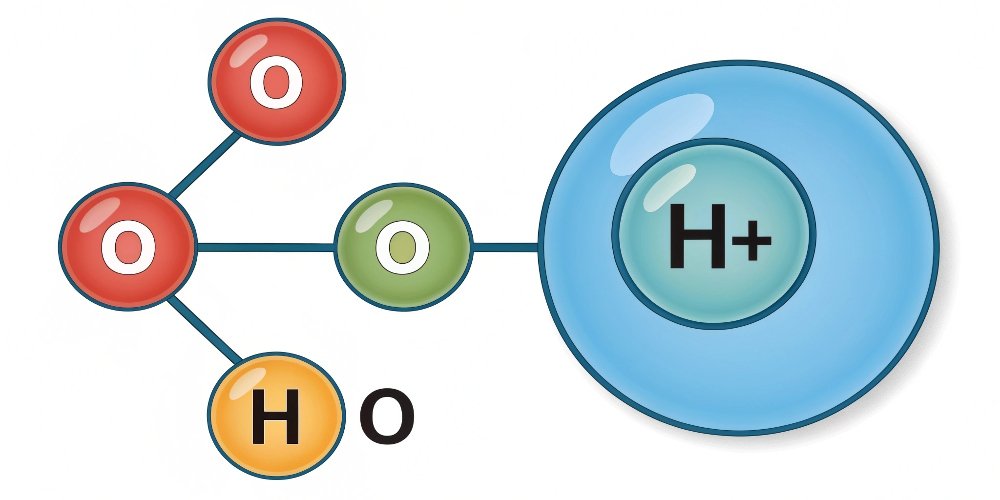
The entire concept of how a simple base works comes down to one simple, powerful reaction: H⁺ + OH⁻ → H₂O. This is called neutralization6. The hydroxide ion7 from the base cancels out the hydrogen ion from the acid, and the result is harmless water.
However, not all bases are created equal. The difference between a "weak" base and a "strong" one is all about how easily it releases its OH⁻ ions.
-
Strong Base: A chemical like sodium hydroxide (NaOH) dissolves completely in water and releases all of its OH⁻ ions at once. This makes it very powerful and corrosive.
-
Weak Base: Aluminum hydroxide (Al(OH)₃) is a weak base because it is not very soluble in water. It only releases a very small amount of its OH⁻ ions at any given moment. This makes it much gentler and safer. For an antacid, this is a perfect feature. It provides slow, controlled neutralization without suddenly making the stomach dangerously alkaline. This controlled reactivity is something we test for very carefully in our pharmaceutical grades.
Conclusion
Aluminum hydroxide’s special ability to act as both an acid and a base makes it very useful. This dual nature allows it to work in everything from antacids to advanced manufacturing.
-
Understand the properties of bases and their significance in neutralization reactions and other chemical processes. ↩
-
Find out how antacids neutralize stomach acid and relieve heartburn, improving your understanding of digestive health. ↩
-
Learn about amphoteric substances and how they can act as both acids and bases, enhancing your chemistry knowledge. ↩
-
Learn about passivation layers and their role in protecting metals from corrosion and chemical reactions. ↩
-
Learn about the mechanisms of flame retardants and their role in fire safety, crucial for various applications. ↩
-
Explore the concept of neutralization and its importance in acid-base reactions, enhancing your chemistry knowledge. ↩
-
Understand the significance of hydroxide ions in chemical reactions and their role in acid-base chemistry. ↩

You may also be interested in:

What protective measures should be taken when handling aluminum hydroxide powder in a factory?
Are you worried about worker safety when handling fine powders? Aluminum hydroxide is generally safe, but mishandling its dust can lead to serious respiratory issues and even create explosive conditions.

What Key Technical Indicators Should Be Considered When Purchasing Aluminum Hydroxide?
Are you struggling to find the right aluminum hydroxide for your needs? You might be paying for features you don’t even require. Let’s simplify the technical details. When buying aluminum

What are the market trends for aluminum hydroxide in 2026?
Are you planning your 2026 raw material purchases? Volatile markets make it hard. I will share insights from the factory floor to help you make better decisions for your business.
Is aluminum hydroxide toxic and is it harmful to the human body?
Worried about the word "aluminum" in your products? It sounds scary and can make you question its safety. I’m here to clear up the confusion with simple facts. Aluminum hydroxide

What are the side effects of long-term use of stomach medications containing aluminum hydroxide?
Struggling with constant heartburn? Reaching for that stomach medicine might seem like the only option. But what if that relief comes with hidden long-term costs? The most common side effect

Does ingesting aluminum (such as through aluminum hydroxide) cause Alzheimer's disease?
Are you worried that everyday products containing aluminum might be harmful? This fear connects to serious health concerns like Alzheimer’s, making you question what is safe. Let’s look closely. Based

Why do some vaccines contain aluminum hydroxide (aluminum adjuvant)?
Confused about vaccine ingredients? Seeing aluminum hydroxide listed can be unsettling. I’ll explain its crucial role and why it’s there to help your body build strong immunity. Aluminum hydroxide acts

Is the aluminum adjuvant in vaccines safe for infants or adults?
You read about vaccine ingredients and worry. The word "aluminum" sounds scary, especially when talking about babies. But understanding the facts can give you peace of mind. Yes, the aluminum

What environmental problems are generated during the production of aluminum hydroxide?
Worried about environmental compliance in your supply chain? Sourcing from China can be complex. You need a reliable, eco-conscious partner for your aluminum hydroxide needs. The main environmental issue is

Where are China's main aluminum hydroxide production areas?
Are you struggling to find the right aluminum hydroxide supplier in China? This confusion can lead to higher costs and unstable quality, which hurts your business and your reputation. China’s