
How can you determine if an aluminum hydroxide supplier is truly reliable?
November 29, 2025 by Lee On
Finding the right supplier feels like a huge risk. You need quality material, but you worry about inconsistent batches and unreliable partners. This uncertainty can cost you time and money.
To determine a supplier’s reliability, you must verify their qualifications and their product quality. Check for certifications like ISO 9001 and ask for third-party test reports. Most importantly, request data from their last three batches to confirm consistent purity and particle size.

Checking these documents is the first big step. It tells you if a supplier is serious about their business. But I know from my experience at our factory that reliability goes beyond paperwork. You probably have more specific questions about the product itself, from how long it lasts to its potential risks. Let’s look at those questions one by one. This will help you build a complete picture of any potential supplier.
What is the shelf life of aluminum hydroxide?
Storing raw materials is expensive. You worry about products expiring before you can use them. What if your aluminum hydroxide loses its effectiveness just sitting on the shelf?
Generally, aluminum hydroxide has a shelf life of one to two years if stored correctly. You must keep it in a dry, cool, well-ventilated area, sealed in its original packaging. Moisture is the biggest problem because it can cause caking and affect performance.
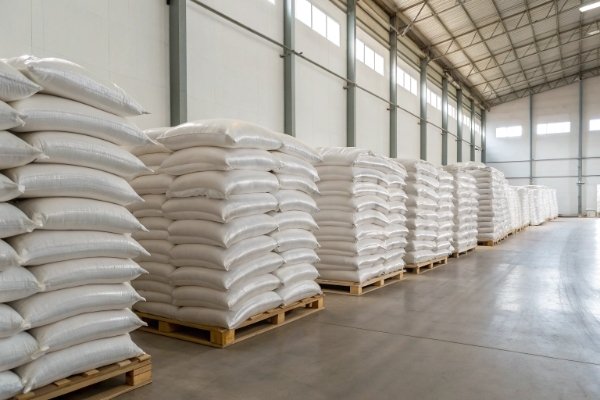
At our production plant in Henan, we see firsthand how important storage is. The shelf life isn’t just a date on a bag; it’s a promise of quality that depends on proper handling. Aluminum hydroxide is hygroscopic1, which means it loves to attract water from the air. When this happens, the fine powder can form hard clumps. This makes it difficult to handle, mix, and process in your own production line. It directly impacts flowability and dispersion2, which are critical for many applications.
Ideal Storage Conditions
To get the maximum two-year shelf life, you need to control the environment. We always tell our partners to store the bags off the floor, preferably on pallets, to avoid any ground moisture. The temperature should be stable and cool, and the humidity should be kept as low as possible. Re-sealing any partially used bags immediately is also very important.
Impact of Poor Storage
Here is a simple breakdown of what can go wrong:
| Storage Condition | Potential Problem | Impact on Your Product |
|---|---|---|
| High Humidity | Caking and clumping | Poor flow, difficult to mix, inconsistent results |
| Unsealed Bags | Contamination from dust, moisture | Reduced purity, potential for failed batches |
| Direct Sunlight | Can degrade packaging over a long period | Increased risk of moisture and contamination |
A reliable supplier not only provides a quality product but also gives you clear instructions on how to maintain that quality.
What are the risks of aluminum hydroxide?
Safety is always the top priority in your business. You handle many different chemicals every day. You absolutely need to know if aluminum hydroxide poses any significant danger to your team.
Aluminum hydroxide is generally considered low-risk and non-toxic. The main hazard comes from inhaling the dust during handling, which can cause respiratory irritation. It is not flammable or explosive. Always use proper protective gear like masks and gloves when handling the powder.

I’ve worked on the production floor for years, and we handle tons of this material every day. Safety is built into our process. The number one rule is to control the dust. When you’re pouring it from bags or mixing it, the fine powder can easily become airborne. While it’s not toxic like some chemicals, breathing in any fine dust is not good for your lungs over the long term. This is why we always provide our workers with the correct Personal Protective Equipment (PPE)3. A good dust mask is the most important piece of equipment.
Basic Safety Measures
Every reliable supplier should provide you with a Safety Data Sheet (SDS)4. This document contains all the critical safety information. You should read it carefully. But for day-to-day handling, the rules are simple.
Here’s a quick guide to managing the risks:
| Type of Exposure | Risk | Recommended Action |
|---|---|---|
| Inhalation | Respiratory Irritation | Wear a suitable dust mask (e.g., N95). |
| Skin Contact | Minor Dryness | Wear gloves. Wash hands after handling. |
| Eye Contact | Mechanical Irritation | Wear safety glasses. |
| Ingestion | Generally Non-toxic | Do not eat or drink in work areas. |
Interestingly, the fact that aluminum hydroxide is used in antacids shows just how low its toxicity is. However, the industrial-grade5 material we produce is not meant for human consumption. It’s all about handling it correctly to avoid physical irritation from the dust.
What is another name for aluminum hydroxide?
Chemical names can be very confusing. You might see different terms used in technical documents, lab reports, and supplier emails. Are you sure you’re talking about the same material every time?
Yes, aluminum hydroxide has several other names. You will often see it called alumina trihydrate (or ATH), hydrated alumina, or simply aluminum hydrate. Its chemical formula is Al(OH)₃. Knowing these names helps you avoid confusion when reviewing documents or talking to suppliers.

In my work talking to buyers from different industries, this question comes up a lot. The name people use often depends on their industry. For example, customers in the plastics and rubber industries almost always call it "ATH". This is because its main job for them is as a flame retardant. When heated, ATH releases water vapor (the "hydrate" part), which cools the material and suppresses smoke. It’s a very effective and common additive. People with a more academic or chemical background might use the term "aluminum trihydrate".
Common Names and Contexts
It’s also important not to confuse aluminum hydroxide with aluminum oxide6, which is often called alumina. Alumina (Al₂O₃) is what you get if you heat aluminum hydroxide and drive off all the water. They are two different chemicals with very different properties.
Here is a simple table to help you keep the names straight:
| Common Name | Chemical Formula | Typical Industry or Use |
|---|---|---|
| Aluminum Hydroxide | Al(OH)₃ | General, Pharmaceutical, Chemical |
| Alumina Trihydrate (ATH) | Al(OH)₃ | Plastics, Rubber, Flame Retardants |
| Hydrated Alumina | Al(OH)₃ | General Chemical, Water Treatment |
| Aluminum Oxide (Alumina) | Al₂O₃ | Ceramics, Abrasives, Refractories |
When you talk to a supplier, using the right name for your industry shows you know your business. But a good supplier will understand all these terms and can confirm you are ordering the correct product.
Is aluminum hydroxide available over the counter?
You work in the pharmaceutical space, so you know some materials are very tightly regulated. You might wonder if aluminum hydroxide is one of them, or if anyone can buy it.
Yes, aluminum hydroxide is a key active ingredient in many common over-the-counter (OTC) antacid medicines. It helps relieve heartburn and indigestion. However, the material used in these products is a highly purified, pharmaceutical-grade version that meets very strict regulatory standards.

This is a perfect example of why product grade is so important. As a source factory, we can produce different grades of aluminum hydroxide for different needs. The material that goes into an antacid tablet is chemically the same as what might go into a plastic wire coating, but it is produced and tested in a completely different way. For a pharmaceutical buyer like Mr. Park, understanding this difference is key to finding a reliable supplier. The standards are simply not comparable.
Industrial vs. Pharmaceutical Grade
A supplier’s reliability7 can be judged by how well they understand and meet the standards for your specific application. If a supplier cannot provide documentation proving they meet pharmaceutical-grade8 standards, they are not a reliable partner for you. This includes certifications9 like Good Manufacturing Practices (GMP)10.
Here is a comparison of what we look at for these two grades:
| Parameter | Industrial Grade Standard (Example) | Pharmaceutical Grade Standard (Example) |
|---|---|---|
| Purity (Al(OH)₃) | ≥ 99.5% | ≥ 99.8%, meets USP/BP/EP monograph |
| Heavy Metals (e.g., Pb) | ≤ 10 ppm | ≤ 1 ppm |
| Arsenic | ≤ 3 ppm | ≤ 0.5 ppm |
| Microbial Testing | Not typically required | Required (low bioburden) |
| Certifications | ISO 900111 | ISO 900111, GMP, ISO 13485 |
When you are looking for a supplier, you must be very clear about the grade you need. Ask for specific test reports12 that prove they can meet the strict limits for heavy metals13 and other impurities required for pharmaceutical use.
Conclusion
Choosing a reliable supplier means checking their certifications and their product quality. Now you can confidently ask the right questions to find your best long-term partner.
-
Understanding hygroscopic properties helps in managing storage conditions to maintain material quality. ↩
-
Flowability and dispersion are critical for the efficiency and effectiveness of material processing in production. ↩
-
Using the right PPE is crucial for protecting workers from potential hazards associated with chemical handling. ↩
-
An SDS provides essential safety information for handling chemicals, ensuring workplace safety. ↩
-
Understanding the differences helps in selecting the appropriate grade for your specific application. ↩
-
Knowing the difference between these two compounds is essential for selecting the right material for your application. ↩
-
Understanding how to assess a supplier’s reliability is crucial for ensuring quality and consistency in your materials. ↩
-
Pharmaceutical-grade materials meet strict standards, ensuring safety and efficacy in medical applications. ↩
-
Certifications indicate a supplier’s commitment to quality and compliance with industry standards. ↩
-
GMP ensures that products are consistently produced and controlled according to quality standards. ↩
-
ISO 9001 certification is a key indicator of a supplier’s commitment to quality management and customer satisfaction. ↩ ↩
-
Requesting specific test reports ensures that the supplier meets the necessary quality and safety standards. ↩
-
Understanding the risks of heavy metals helps in selecting safe and compliant materials for production. ↩

You may also be interested in:

What protective measures should be taken when handling aluminum hydroxide powder in a factory?
Are you worried about worker safety when handling fine powders? Aluminum hydroxide is generally safe, but mishandling its dust can lead to serious respiratory issues and even create explosive conditions.

What Key Technical Indicators Should Be Considered When Purchasing Aluminum Hydroxide?
Are you struggling to find the right aluminum hydroxide for your needs? You might be paying for features you don’t even require. Let’s simplify the technical details. When buying aluminum

What are the market trends for aluminum hydroxide in 2026?
Are you planning your 2026 raw material purchases? Volatile markets make it hard. I will share insights from the factory floor to help you make better decisions for your business.

Is aluminum hydroxide toxic and is it harmful to the human body?
Worried about the word "aluminum" in your products? It sounds scary and can make you question its safety. I’m here to clear up the confusion with simple facts. Aluminum hydroxide

What are the side effects of long-term use of stomach medications containing aluminum hydroxide?
Struggling with constant heartburn? Reaching for that stomach medicine might seem like the only option. But what if that relief comes with hidden long-term costs? The most common side effect

Does ingesting aluminum (such as through aluminum hydroxide) cause Alzheimer's disease?
Are you worried that everyday products containing aluminum might be harmful? This fear connects to serious health concerns like Alzheimer’s, making you question what is safe. Let’s look closely. Based

Why do some vaccines contain aluminum hydroxide (aluminum adjuvant)?
Confused about vaccine ingredients? Seeing aluminum hydroxide listed can be unsettling. I’ll explain its crucial role and why it’s there to help your body build strong immunity. Aluminum hydroxide acts

Is the aluminum adjuvant in vaccines safe for infants or adults?
You read about vaccine ingredients and worry. The word "aluminum" sounds scary, especially when talking about babies. But understanding the facts can give you peace of mind. Yes, the aluminum

What environmental problems are generated during the production of aluminum hydroxide?
Worried about environmental compliance in your supply chain? Sourcing from China can be complex. You need a reliable, eco-conscious partner for your aluminum hydroxide needs. The main environmental issue is

Where are China's main aluminum hydroxide production areas?
Are you struggling to find the right aluminum hydroxide supplier in China? This confusion can lead to higher costs and unstable quality, which hurts your business and your reputation. China’s